



The federal government of Nigeria is set to launch a new national television package on June 17. This was disclosed in a statement by the Nigerian Broadcasting Commission (NBC). According to the statement, the new package, simply called FreeTV, will be introduced as part of Nigeria’s Digital Switch-Over (DSO) programme. This, the NBC says, aligns with President Bola Tinubu’s Renewed Hope Agenda, which prioritises digital inclusion, job creation and access to opportunities.
In a statement on Tuesday, the government said the platform would provide Nigerians with free access to more than 100 national, regional and state television channels without monthly subscription charges.
Speaking about the initiative, Director-General of the National Broadcasting Commission (NBC), Charles Ebuebu, said the platform would improve access to digital content for families across Nigeria while creating opportunities for local creatives and media professionals.
“With FreeTV, families across Nigeria can enjoy quality digital television without a monthly subscription, while our local content producers, technicians and young creatives gain new platforms and new jobs.”
5 things Nigerians should know about the FreeTV service
1. Local stations
While the service promises to offer a range of programming, including news, sports, movies, music, children’s content, educational programmes, etc, all of them will come from local TV stations. This is because all 100+ stations on FreeTV will be local, which makes sense as the NBC can’t control what foreign stations to offer for free. Local stations with statewide or regional reach would therefore see this as an opportunity to expand beyond their locality and obtain a nationwide spread.
Thus, no CNN, Super Sport, Movie Magic, Nat Geo Wild and the other stations that have made platforms like DSTV and StarTimes a hit among Nigerians. But perhaps channels like Arise, Channels TV, TV Continental and other Nigerian big players would be there for users whose preferences are limited to them.
2. Many stations will be in local languages
The NBC always has the goal of propagating regional and cultural integration as one of its core functions. As such, Nigerians can expect to see many programmes on the national free digital TV in local languages. There may even be plans for new channels dedicated to Yoruba, Hausa, Igbo and other Nigerian languages.
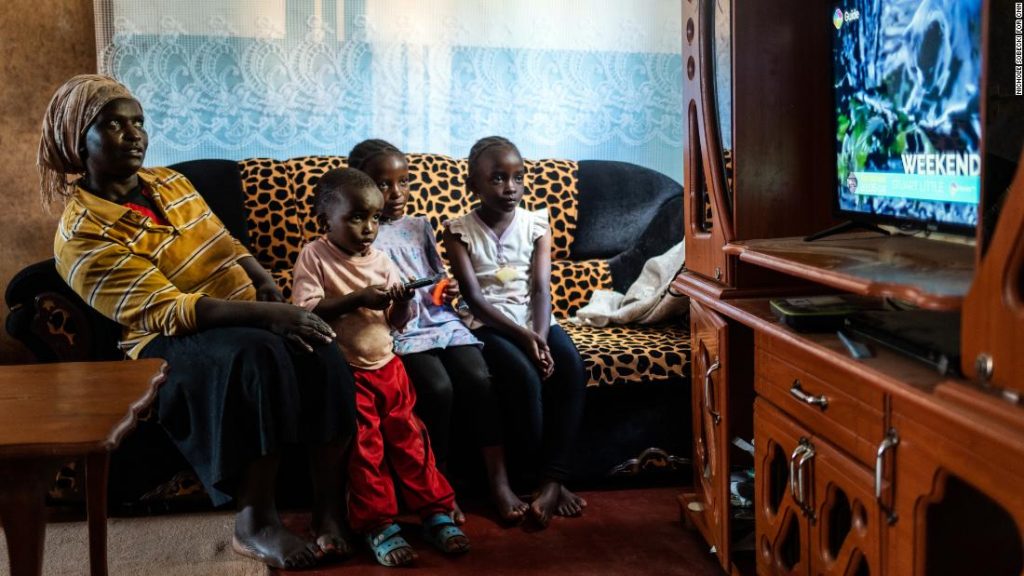
Thus, users who enjoy content in local languages can expect to see stations like Orisun TV, Dadinkowa TV, ARTV Kano, Afia TV, Isimbido, WapTV and Wazobia TV for pidgin broadcasting lovers, etc.
3. Creation of regional studios
To achieve its aim of increasing and improving local content as well as providing opportunities for local media practitioners and visual content producers, the FG will be establishing regional production studios. These production studios will be evenly spread across the regions of the country, with one in Lagos, Abuja, Kano, Enugu, Benin and Port Harcourt.
The studios are expected to create opportunities for content creators, editors, camera operators, sound engineers, technicians and other professionals within the broadcast value chain. With this, the NBC believes the platform would greatly support Nigeria’s creative economy.
4. New platform, old home equipment
The FG might be launching a new digital broadcasting service, but there will be no need for families to change their equipment to access it. As such, there will be no need to buy new television sets to access the platform. All they need is to have compatible decoders, precisely the second generation of terrestrial Digital Video Broadcasting (DVB-T2) or the satellite version (DVB-S2).
See also: 4 times Nigeria has missed a digital broadcast switch deadline since 2012 and what happened
Essentially, if you have a GoTV, DSTV, or StarTimes decoder, you should be able to access the FreeTV service. However, households that do not have GoTV or DSTV decoders but are already using compatible free-to-air decoders may not need additional equipment.
5. FreeTV will have an app
You read that right: FreeTV will also be available to watch on an app. So, while the service will be accessible through satellite and terrestrial transmission, there will also be a FreeTV mobile app. This will greatly personalise the experience, enabling users in urban and rural communities to access digital television services.
This also has the capacity to help Nigerians in the diaspora access the service and explore local content. With the final analogue switch-off scheduled for December 31, 2028, the FG is encouraging Nigerians to confirm their decoder compatibility and download the mobile app so as not to be left behind.
In conclusion
Just like every locally produced good and service, FreeTV will require huge local consumption to achieve its aim of both providing quality content for families and opportunities for media practitioners and creators. With a public already spoiled with foreign content, especially live sporting and entertainment events, one can only hope this change is not too much for Nigerians to massively key into.
