



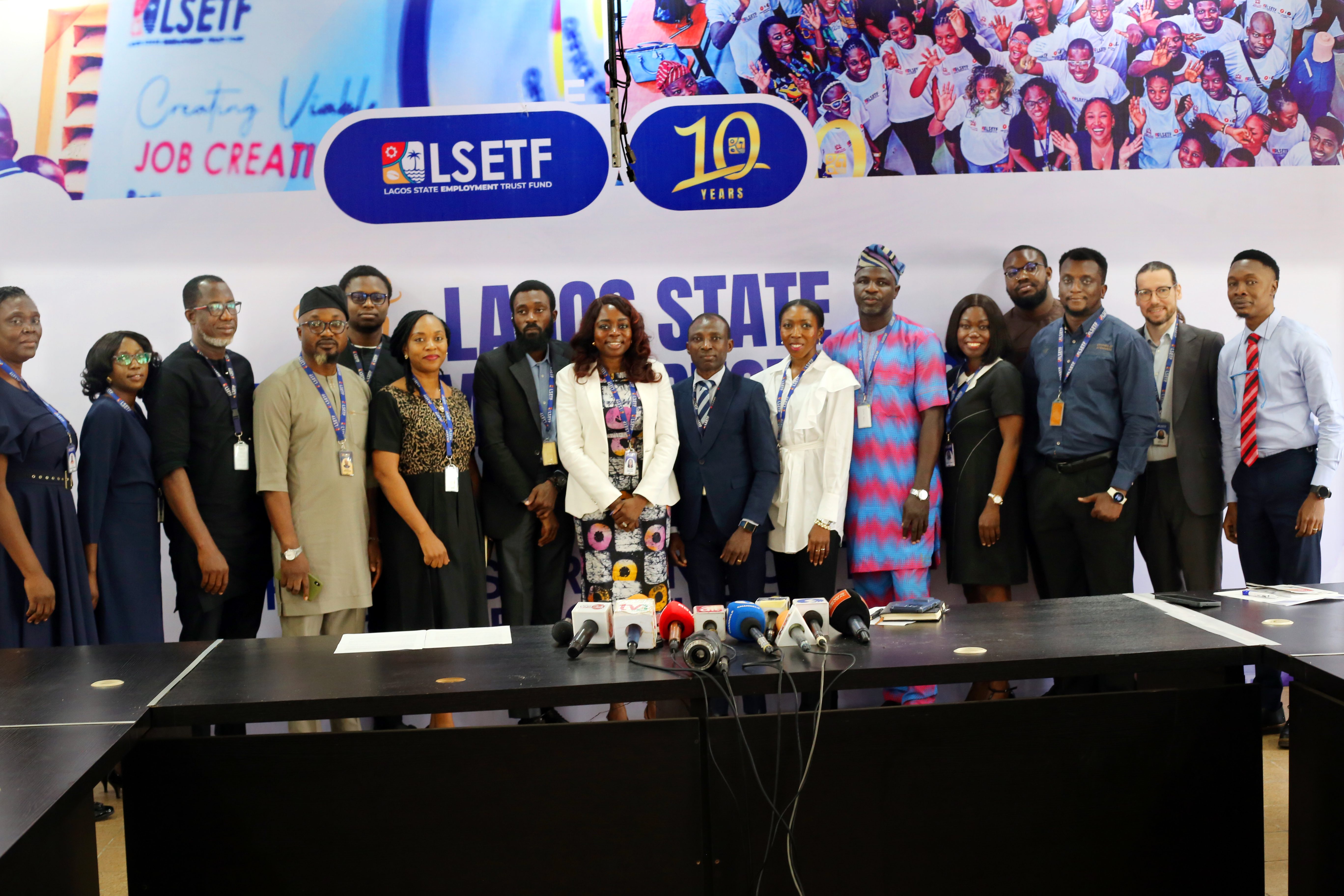
The Lagos State Employment Trust Fund (LSETF) marked its 10th anniversary last week with a media parley in which Executive Secretary Feyisayo Alayande walked journalists through a decade of figures and the institutional philosophy behind them, while also setting out where the fund intends to take its second 10 years.
LSETF was established in 2016 by the Lagos State Government to confront unemployment and support wealth creation among residents, and it was built around five pillars that have remained consistent since launch. These are access to finance, skills development, capacity building, market access, and technology ecosystem support, and together they have shaped the fund into one of the more closely watched state-level employment institutions in Nigeria.
The numbers Alayande presented were substantial.
LSETF has created over 320,000 direct and indirect jobs across Lagos State and preserved more than 173,000 jobs that might otherwise have disappeared, while disbursing over ₦15 billion through more than 20,000 loans to micro, small and medium enterprises.
Capacity building support has reached over 82,000 small businesses, and more than 30,000 young people have been trained and connected to employment opportunities.
Through the Lagos Innovates initiative, the fund has supported over 1,200 technology startups and developed 3,300 tech talents, and it has maintained a loan repayment rate of 94.53% across the period, a figure Alayande returned to repeatedly as evidence of how the institution has chosen to treat its beneficiaries.
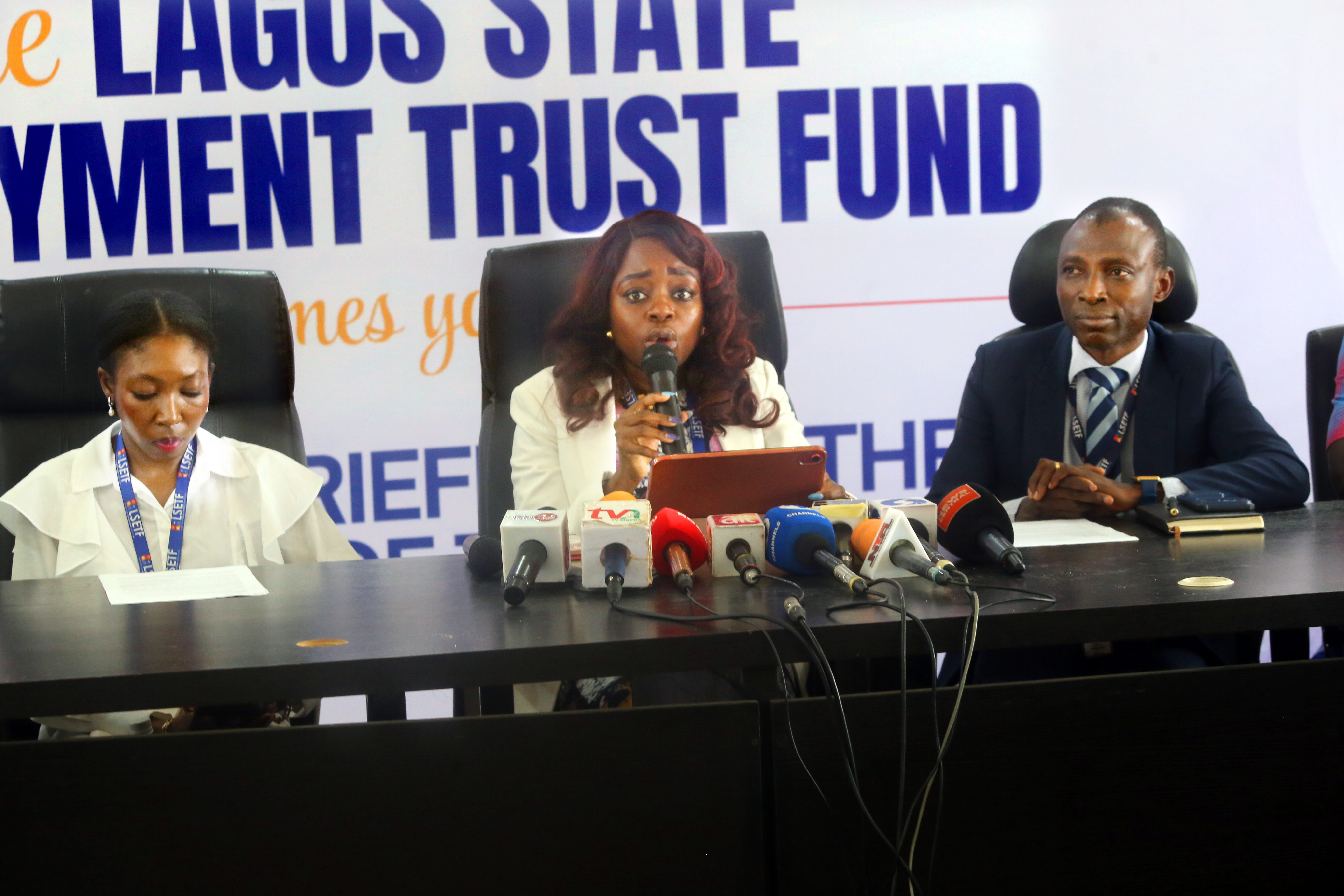
Alayande framed the entire decade around a single idea, which is that opportunity in Lagos is rarely a function of ability.
“The difference between a Lagos resident who builds something and one who cannot is rarely talent. It is almost always access. LSETF exists to close that gap,” she said, and the statement doubled as both a summary of the fund’s mission and a defence of its continued relevance.
She illustrated the figures with individual stories rather than letting them stand alone, describing a woman living with disability who acquired phone repair skills through a partnership with Lafarge and went on to build her own business, alongside beneficiaries who secured roles with organisations such as LG and Lagos Intercontinental Hotel and a female entrepreneur from the Lagos Innovates First Female Founders Programme who later exhibited her innovation at GITEX.
“These are not exceptional stories,” she said. “They are representative ones. They are what happens when you remove the barriers that stand between ambition and opportunity.”
Reflecting on what the institution has learnt, Alayande pointed to four lessons that now sit at the centre of LSETF’s approach, namely that access determines outcomes more than talent does; that trust accumulates slowly and disappears quickly.
That partnerships with organisations including GIZ, UNDP, King’s Trust International, Lafarge and Diageo have multiplied the fund’s reach well beyond what it could achieve alone, and that visibility around available programmes matters as much as the programmes themselves.
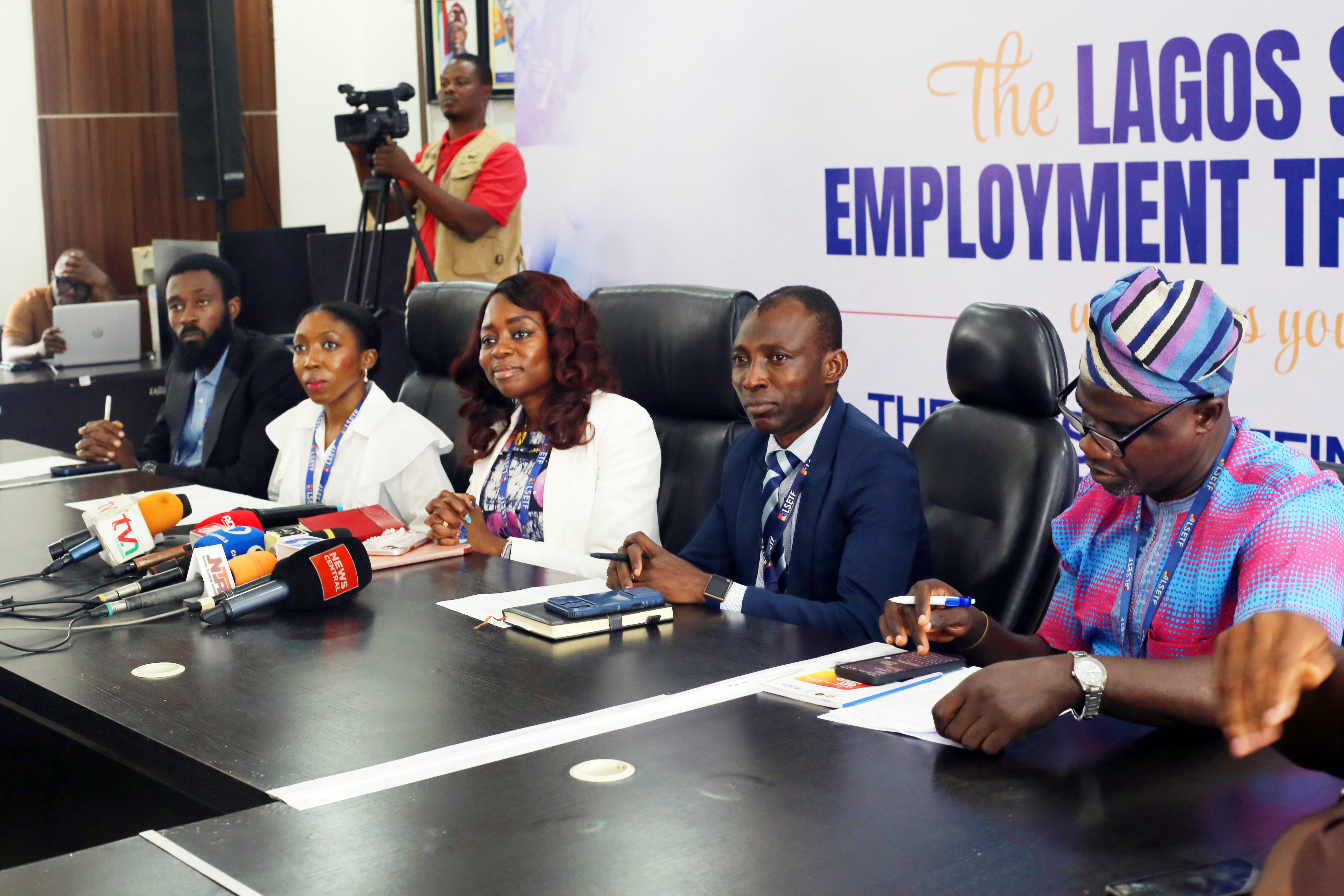
Looking ahead, LSETF announced plans to convene the Lagos Employment Summit 4.0 in the fourth quarter of 2026, bringing together government agencies, private sector leaders, development partners, academia and civil society to chart the next phase of employment and enterprise development in the state.
The fund also reaffirmed commitments to expanding access to finance for growth-oriented businesses, deepening skills and employability programmes for young people, and strengthening support for startups and innovation-driven enterprises.
Addressing the media directly, Alayande asked for accuracy rather than favour.
“We are not asking for favourable coverage,” she said. “We are asking for accurate coverage. Tell the story of what has actually been built here.”
