




There is a moment in every Lagos shopping trip that captures something true about Nigeria’s digital payments system. You walk into a store, the cashier swipes your card on a POS machine, and the money leaves your account before you have even finished bagging your items. It is instant. It is everywhere. It works.
Now try to buy that same item and pay for it over three months, using a credit card the way someone in London, Nairobi, or Dubai might. You probably cannot. Even if you wanted to, the bank may tell you no, or simply never offer you the option in the first place.
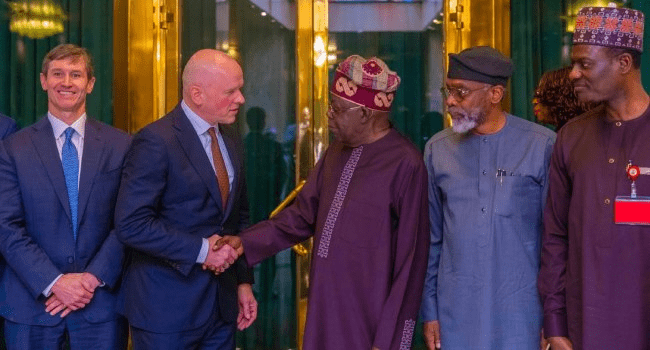
That contradiction sat at the centre of a conversation in Abuja this week between Nigeria’s Finance Minister and Coordinating Minister of the Economy, Taiwo Oyedele, and Mastercard’s global leadership, led by CEO Michael Miebach, during a delegation visit to President Bola Tinubu at the State House on June 23, 2026.
Oyedele, laying out where he sees opportunity for Mastercard in Nigeria, said something most Nigerians have felt but rarely heard a top government official admit out loud.

“It’s difficult, even for someone at my level, to get a credit card,” Oyedele said. He was not exaggerating for effect. He was describing a structural gap that has existed in Nigeria’s financial system for two decades, one that has nothing to do with Nigeria’s appetite for digital finance and everything to do with how credit, trust, and risk are built into an economy.
A payments giant with almost no credit cards
Nigeria did not fail at digital payments. It is, by most measures, one of the most digitally advanced cash economies in Africa. Bank transfers, USSD codes, and POS terminals have become so embedded in daily life that even market women in Onitsha accept transfers as casually as cash. Mobile money and fintech apps move trillions of naira every month.
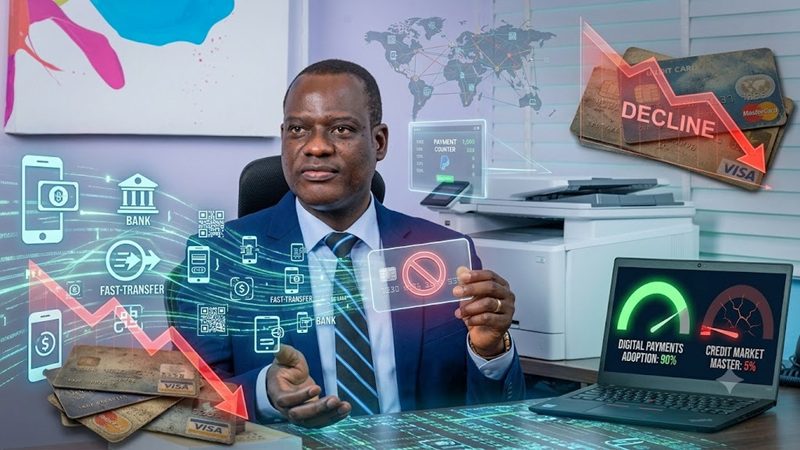
But credit cards, the digital payment product that lets you spend money you do not yet have, against a promise to pay it back, never took off. As of 2024, less than 2% of Nigeria’s population owns a credit card. The country ranks 115th out of 150 countries globally on credit card penetration. There were just 726,000 active credit cards in circulation as of the most recent industry count, in a country of over 220 million people.
Debit cards, by comparison, account for about 99% of card payment volume. Nigerians spend money they already have. They rarely spend money that they are trusted to pay back later.
Picture two people with identical monthly incomes, one in Lagos, one in London. The Londoner can walk into nearly any bank and walk out with a credit card within days, sometimes hours, because the bank can pull a credit score showing every loan, phone contract, and utility bill they have ever paid or missed.
The Lagosian, no matter how reliably they pay rent, school fees, or business suppliers, often cannot produce that same trail in a form any bank recognises. The infrastructure that would let a Nigerian’s good financial behaviour count for something, formally, on paper, in a system that banks trust, is still thin.

Why credit cards remain rare in Nigeria
The reasons are structural, not personal. Nigerian banks have historically treated credit cards as high-risk products, largely because of default rates experienced in the past, particularly after the 2008–2009 financial crisis, when many Nigerian banks were burned by unsecured lending.
Since then, most have simply chosen not to compete in that space, preferring to lend only against collateral, property, fixed deposits, and salaries paid directly into the bank, which immediately excludes the self-employed, the informally employed, and small business owners who make up the overwhelming majority of Nigeria’s workforce.
Credit scoring, the system that should solve this problem, is itself underdeveloped. The World Bank estimates that only 15% of Nigerian adults have access to formal loans of any kind. Without a mature credit bureau system that captures data the way bureaus in the US or UK do, banks default to the safest, simplest filter available: do you already have money sitting somewhere we can see and hold against you?
If the answer is no, the conversation ends there, regardless of how reliable you actually are.
This is precisely the gap Oyedele referenced when he told Mastercard that Nigeria’s payments policy reforms now span “mortgages, personal loans, consumer credit, auto loans, small-business credit, and student loans”, a full menu of credit products that exist on paper in most developed economies but remain rare or informal in Nigeria.
The cost to small Nigerian businesses that rely on digital payments
For Nigeria’s small and medium-sized enterprises, the engine room of the economy, numbering more than 40 million by Mastercard’s own estimate, the absence of accessible consumer and business credit is not an inconvenience. It is a ceiling.
Consider a fabric trader in Aba who needs ₦500,000 to restock ahead of the Christmas season, when sales typically triple. In a payments market with functioning small-business credit, she could borrow against her sales history, repay after the season, and grow her stock year over year.
In Nigeria today, her real options are limited: dip into personal savings, borrow informally from family or cooperative groups (often called “ajo” or “esusu”), or turn to digital lending apps, many of which charge punishing interest rates and have, in some documented cases, resorted to harassment tactics during debt collection.
The World Bank notes that informal payment lenders in Nigeria can charge annual interest rates as high as 300%. That is not credit. That is survival borrowing.
Read also: Is OPay the 3rd-largest bank in Nigeria, ahead of First Bank? Facts vs fiction
Multiply that single trader by millions of others, tailors, mechanics, food vendors, and online sellers, and you get a picture of an economy where a huge share of productive activity is being financed at exploitative rates, or not financed at all, simply because the formal system has no reliable way to assess and price their risk.
There has been real movement, though. Digital lending, powered by fintech apps that use alternative data, phone usage, transaction history, and even social media activity to assess creditworthiness, grew transaction volumes by 32% between 2022 and 2024, according to the Nigeria Inter-Bank Settlement System.

The Central Bank’s 2023 Consumer Credit Framework also introduced rules requiring lenders to check borrower history through licensed credit bureaus before approving loans. The foundation for a real credit economy is being laid. It is just laid thin and unevenly.
Seamless payments: “Naira to Kenyan shilling, without a third currency”
The second part of Oyedele’s remarks to Mastercard pointed to a different, equally significant problem: the cost and friction of payments across African borders.
For decades, a Nigerian business trying to pay a Kenyan supplier, or a South African distributor trying to pay a Nigerian manufacturer, has had to convert naira to US dollars, route payments through a correspondent bank in New York or London, then convert from dollars into the receiving country’s currency.
Each conversion costs money, takes time, and exposes the transaction to dollar volatility that has nothing to do with the actual deal being made. It also means African trade between African countries depends on the health of the American banking system and the dollar, even when no American party is involved at all.
This is precisely the bottleneck that has kept intra-African trade at roughly 15% of the continent’s total trade, compared to 60% for European countries trading with each other and 50% for Asian countries. Oyedele told Mastercard he hoped for a card “you can use to pay from naira to Kenyan shilling to South African rand without a third currency”, and the infrastructure to do exactly that already exists, even if most Nigerians have never used it.
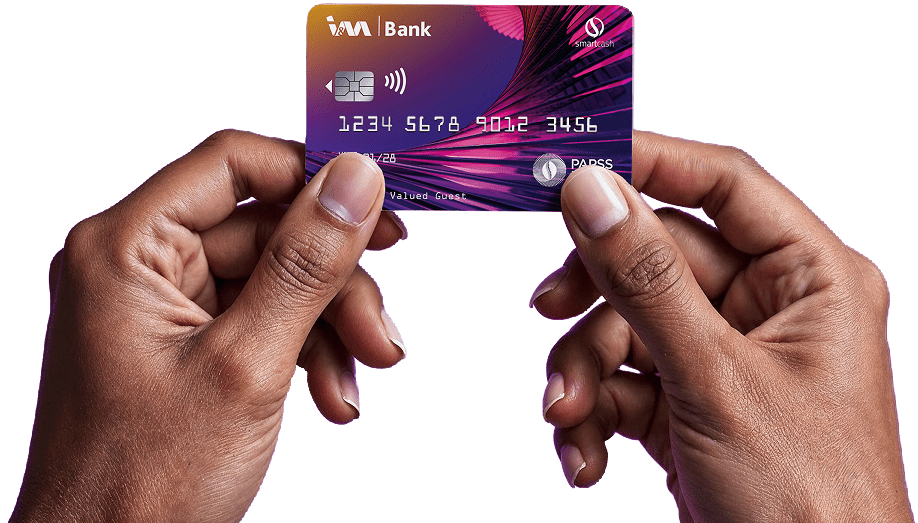
It is called the Pan-African Payment and Settlement System, or PAPSS, launched in 2022 by the African Export-Import Bank in partnership with the African Union, specifically to support trade under the African Continental Free Trade Area. Here is how it works in practice: a Nigerian exporter selling goods to a buyer in Ghana issues a payment instruction in naira through their local bank.
PAPSS receives that instruction, validates it, and forwards it instantly to the buyer’s bank in Ghana, where the Ghanaian buyer pays in cedi, their own currency. No dollar ever enters the transaction from the customer’s side. Behind the scenes, the central banks of both countries settle their net balance once a day, using Afreximbank as the settlement agent, so the system as a whole still resolves cleanly, but neither business ever has to touch a foreign currency to get paid.
A real example: Kenya Airways, which earns naira from ticket sales to Nigerian passengers, can now convert that naira directly into Kenyan shillings through a related PAPSS marketplace tool, instead of converting through the dollar first. During its pilot phase, more than 80 African corporates used the payments system across 12 different currency pairs.
What Oyedele appears to be asking Mastercard for is not new infrastructure, but wider adoption, a Mastercard-branded card, integrated directly into everyday consumer and business use, that taps into PAPSS-style settlement so that ordinary Nigerians, not just large corporates, can pay a supplier in Accra or a hotel in Nairobi without their naira ever touching a dollar.
Oyedele closed his remarks to Mastercard with a statistic that is easy to repeat and harder to sit with: Africa has nine fintech unicorns, privately held startups valued above $1 billion, and five of them are Nigerian. Nigeria has, by a wide margin, produced more of Africa’s most valuable financial technology companies than any other country on the continent. It has built the payment rails. It has built the user base. It has built the fintech talent pool that other African markets now recruit from.
What it has not built, at scale, is a credit payments system that lets that same population borrow, invest, and grow against their own proven financial behaviour, rather than against collateral they may not have.
