



Launching 26 June, EscrowPay holds a buyer’s money with a CBN-licensed bank until the goods arrive, all inside WhatsApp, aiming to remove the standoff that quietly kills online deals.
For all the attention paid to logistics and payment rails, the thing most likely to kill an online sale in Nigeria is simpler, and harder to engineer away: neither side trusts the other. The buyer hesitates to pay someone they have never met; the seller will not ship until the money arrives. In the gap between those two positions, the deal quietly dies.
That gap is bigger than any one transaction. Online shopping still accounts for only a small share of Nigerian retail, and a lack of trust is one of the main reasons it has not grown faster. The familiar workaround, cash on delivery, was never really a fix. It does not remove the risk so much as move it around: sellers absorb the cost of failed deliveries, rejected parcels and orders that are never paid for, while buyers still gamble on whether what turns up matches what they ordered. Increasingly, people who watch the sector argue that this dependence on pay on delivery is itself part of what holds Nigerian e-commerce back.
EscrowPay, which goes live on 26 June 2026, is built around a different premise: place a neutral party between buyer and seller, so neither has to trust the other first.
A bank holds the money, not the company
The mechanism is escrow, the same principle used in higher-value deals such as property, brought down to everyday online trade. When a buyer pays, the money does not go straight to the seller, and it does not sit on EscrowPay’s own books.
It is held in a designated account at Rubies Microfinance Bank, a CBN-licensed Nigerian bank, and stays there until the order has been delivered. Only then is it released. Both sides can watch each step happen, in real time, inside their WhatsApp chat. Delivery itself can run through the buyer’s own rider, a third-party courier with tracking, or EscrowPay’s own rider feature, which records both pickup and drop-off and gives any dispute the clearest proof of what happened.
“Sellers never ship into silence. Buyers never pay into nothing.”
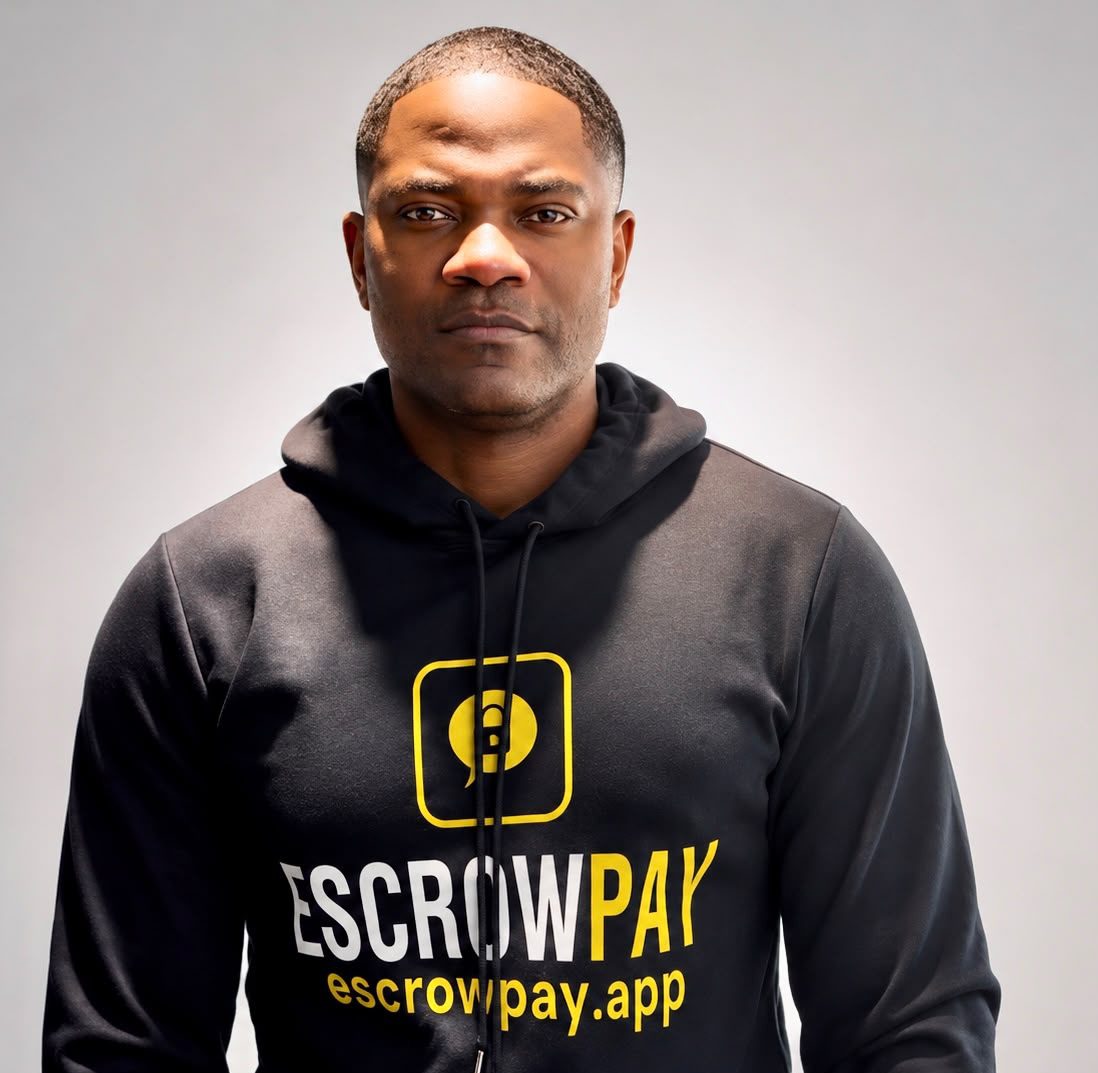
That line belongs to founder and chief executive Toye Akinwale. The governing rule he keeps returning to is blunt: no party should ever hold both the goods and the cash at the same time
Built where Nigerians already trade
EscrowPay’s second bet is that the safest place to add trust is the place people already do business. Rather than asking anyone to download an app or learn a new platform, the service runs through WhatsApp, built on the official WhatsApp Business API, the same channel where countless Nigerian buyers and sellers already negotiate every day.
That matters most for social commerce, the fast-growing world of selling through WhatsApp broadcasts and Instagram DMs, where there is rarely any protection at all.
Every user is verified by their National Identity Number through Prembly, a leader in Africa’s trust infrastructure, stripping out the anonymity that most scams depend on. If a buyer raises a problem, that an item never arrived, or is not what was described, EscrowPay pauses the payment and reviews verifiable facts: delivery records, verified identities and the transaction trail, rather than weighing one person’s word against another’s. Funds are released to the seller, or refunded to the buyer, only after that review.
When an order is delivered, the buyer gets a short window to confirm or flag an issue. Confirming pays the seller at once; doing nothing releases the money automatically after 48 hours, so sellers are paid without chasing and nothing is left in limbo.
A measured launch, and a bigger ambition
EscrowPay is starting simply. From 26 June it is open to anyone in Nigeria: there is no waitlist or cohort to join, and verification with NIN takes about a minute and can be done whenever a seller is ready to make their first sale via EscrowPay.
More than 300 sellers signed up ahead of launch. Toye, who has spent most of his career in finance in the UK and taught himself to build software alongside it when he was starting out, is candid that this is a long game. His aim is for EscrowPay to become the default trust layer for online trade in Nigeria, the step people reach for whenever they are dealing with someone they do not already know.
A second version of the product is already planned. Its headline feature is a free EscrowPay storefront, which a seller can set up in a few clicks, with their own branding, to get their business online almost instantly and EscrowPay’s protection built in from the first sale.
Also on the v2 roadmap are milestone escrow for service-based agreements such as freelance work, where payment is released in stages as work is delivered, and cross-border payments, extending that same protection to trade beyond Nigeria, where the trust gap is widest and hardest to close.
Several other features sit alongside these, but the free storefront and milestone escrow are central to the plan: lowering the barrier to selling online, and extending the same protection to service work, all on the same trusted guardrails.
“If we get this right,” Toye says, “‘send it through EscrowPay’ becomes a normal part of how Nigerians trade, and a lack of trust stops being the thing that kills the deal.”
EscrowPay’s own way of putting it is shorter still: it does not process goods, and it does not process payments. It processes trust.
At a glance
- What: WhatsApp escrow for Nigerian e-commerce; no app download
- Live: 26 June 2026
- Funds held: designated account at Rubies Microfinance Bank (CBN-licensed)
- Identity: NIN verification via Prembly (a leader in Africa’s trust infrastructure), a one time check done only before a buyer or seller’s first transaction
- Channel: WhatsApp Business API
- Availability: open to all buyers and sellers from 26 June; 300+ signed up ahead of launch
- Founder & CEO: Toye Akinwale
- Tagline: We process trust.
Find out more: escrowpay.app
Also read: From WhatsApp Group to Changing Lives: The Impact of Ladies with Radiance
