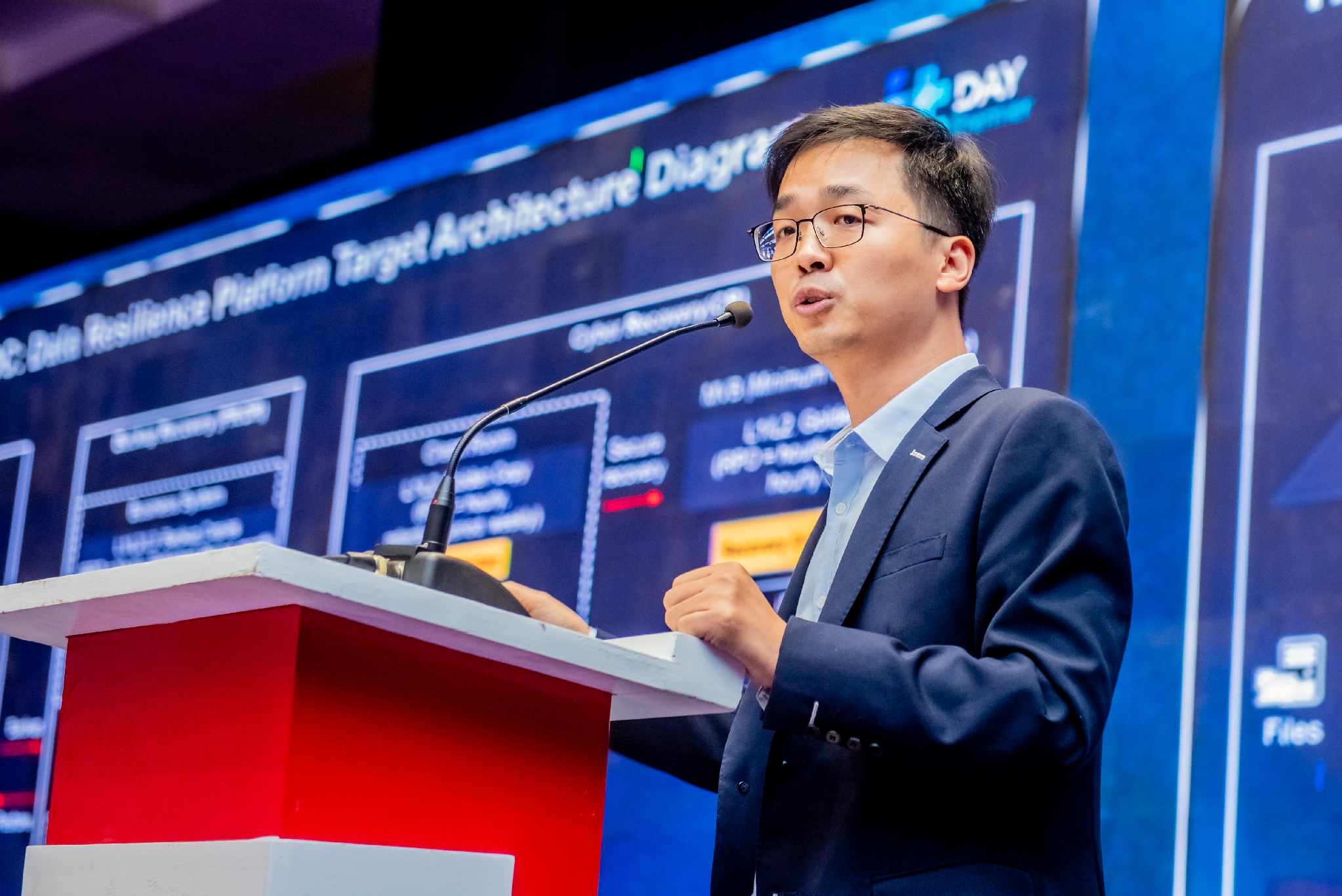
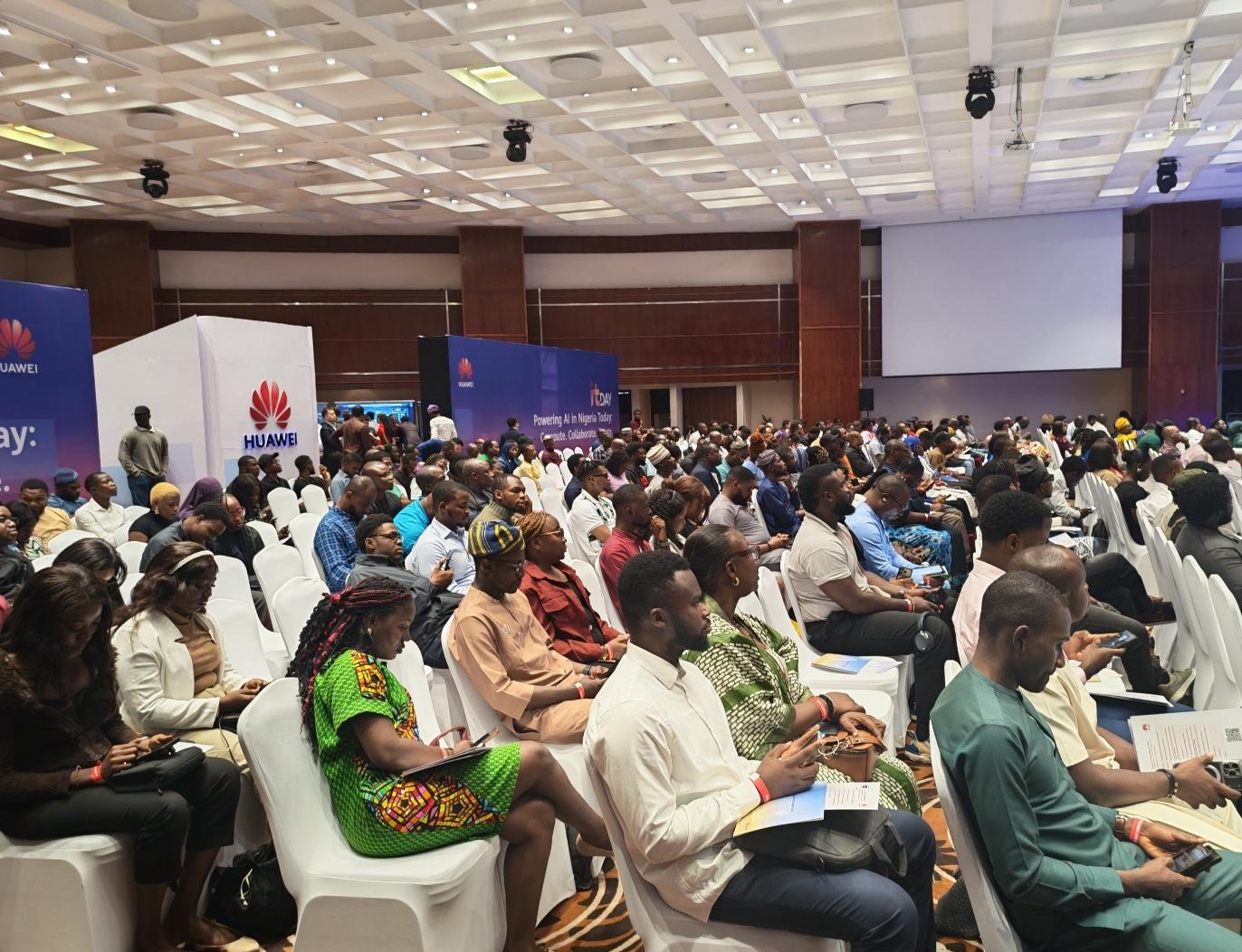
Huawei’s annual IT Day concluded in Nigeria under the theme “Empowering Nigeria’s AI Development Together: Compute, Collaborate, Create,” attracting more than 350 customers and ecosystem partners. With the framing “General Computing as the Foundation, AI Computing as the Enabler,” Huawei and its partners showcased end-to-end computing infrastructure from general-purpose to intelligent computing, as well as partner AI applications built on Huawei platforms.
General Computing
Furkan Elcelik (Huawei Turkey R&D) noted that in the Agentic AI era, CPU demand is expected to rise significantly, with the CPU:GPU ratio trending toward greater balance and continued growth in the overall CPU market. ARM-based servers are also projected to gain further market share in the coming years. Huawei’s Kunpeng 950 (96 cores) delivers strong performance relative to comparable solutions in internal benchmarks, while the TaiShan 950 SuperPoD offers large-scale interconnect and memory pooling capabilities. Through DevKit, DataKit and OpenLab, Kunpeng has been adopted across telecom, finance, government and internet sectors, demonstrating higher per-core efficiency and notable power savings in typical workloads.

Partner Momentum
Vennote CEO Azuka Onyia presented Stashio, a white-label cloud drive solution running on Kunpeng with an Ascend-powered AI assistant. The solution has been deployed with a Tier-1 operator, achieving strong user adoption, high availability and local data retention, with a rapid go-to-market cycle.Bluechip’s Soyoola Sodunke introduced the Bluechip Data Platform (covering data ingestion, lakehouse, MLOps and model governance), which can be deployed on Huawei infrastructure or Huawei Cloud. He emphasized that enterprise AI begins with trusted and governable data.
AI Computing
Li Chengyong (CTO, Huawei Nigeria Data Center Solutions) outlined the rapid evolution of Atlas AI over the past four years, supporting dozens of foundation models and major open-source model series including DeepSeek, GLM and Qwen. The latest NPUs support FP4/FP8 precision, with UnifiedBus enabling high-bandwidth, low-latency unified memory addressing. The air-cooled SuperPoD configuration delivers high-density AI computing capability. CANN has been fully open-sourced and is compatible with PyTorch and MindSpore.
Partner AI Applications
Odion CEO Mavino Ikein showcased Attentive (a multilingual voice agent supporting Yoruba, Hausa, Igbo, Pidgin and English), along with Covalence (code-fix agent) and Relay (QA agent), all accelerated on Ascend.

Seamfix’s Olajumoke Jackson-Emuraishe shared progress in digital identity solutions, including modular OCR, liveness detection, face matching, deepfake detection and contactless fingerprinting, jointly delivered with Huawei on Kunpeng + Ascend platforms under compliant frameworks.
Looking ahead, Huawei will continue to demonstrate joint solution value through scenario-based showcases and partner benchmarks, encouraging customers to consider Huawei computing platforms as a foundation for digital transformation.
Huawei’s Deputy Managing Director and Director of ICT Marketing and Solution Sales Department, Zhang Haijie, announced plans to further expand the company’s AI computing infrastructure in Nigeria by the end of the year, aiming to strengthen local innovation and support business development across West Africa.
Zhang said the company is transitioning from an ICT infrastructure provider to an AI computing and ecosystem enabler.
“For years, Huawei has served Nigeria as an ICT infrastructure provider. Today, we are stepping into a new era — evolving from an ICT supplier to an AI computing foundation and ecosystem partner,” he said.Zhang highlighted three priorities: providing high-performance and cost-effective computing platforms, supporting local partners, and building a sustainable AI ecosystem. He noted that Huawei will take local infrastructure conditions, including power availability, into account by prioritizing energy-efficient designs to help lower the overall cost of AI adoption. Additional computing resources will also be made available through Huawei’s local open laboratory, enabling partners to test and demonstrate their innovations.