





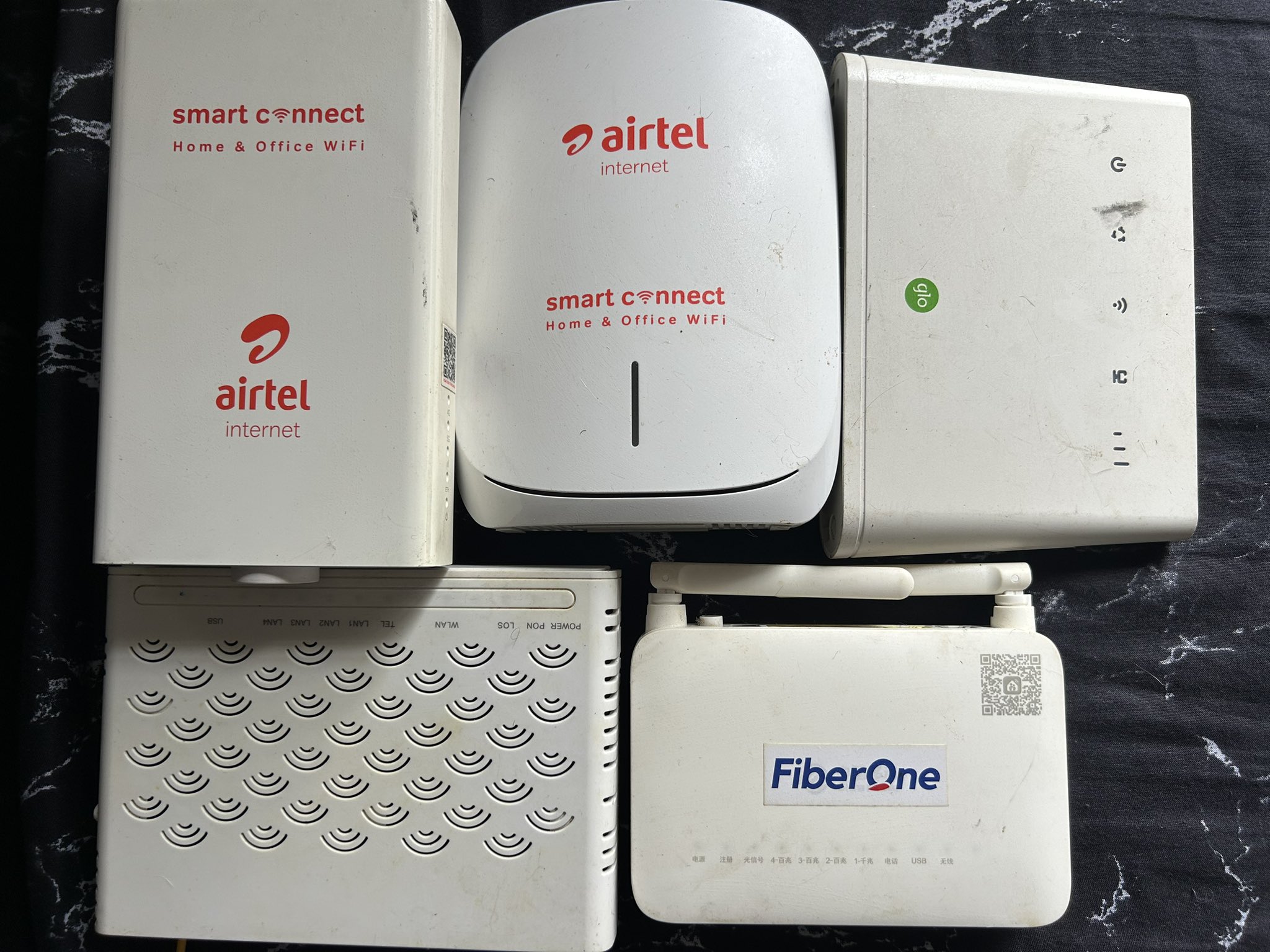
Amid intense competition to deliver better broadband services to Nigeria’s internet users, traditional internet service providers (ISPs) are shifting to fibre networks and wireless modes to deliver ultra-fast, unlimited data plans.
Notably, leading ISPs, Spectranet and Starlink, are extending their subscriber base. As of June 2026, Spectranet remained Nigeria’s top ISP with 111,384 active subscribers, ahead of Starlink’s 98,642 and FiberOne’s 56,486. Total subscribers are now 420,000.
However, mobile network operators are penetrating the ISP space. MTN is deploying fibre-to-the-home (FTTH) infrastructure with its FibreX, while Airtel is offering 5G-capable Outdoor Units (ODU). With the ODU, the telco is providing fibre-like speeds without the capital-intensive and time-consuming process of laying underground fibre optic cables.
MTN also has its version of the ODU: the FlyX broadband solution.
This way, both telcos are leveraging their vast cellular infrastructure to rapidly deploy reliable home broadband across unserved and underserved areas, and undercutting traditional ISPs on installation speed, hardware deployment costs, subscriber base and network coverage.
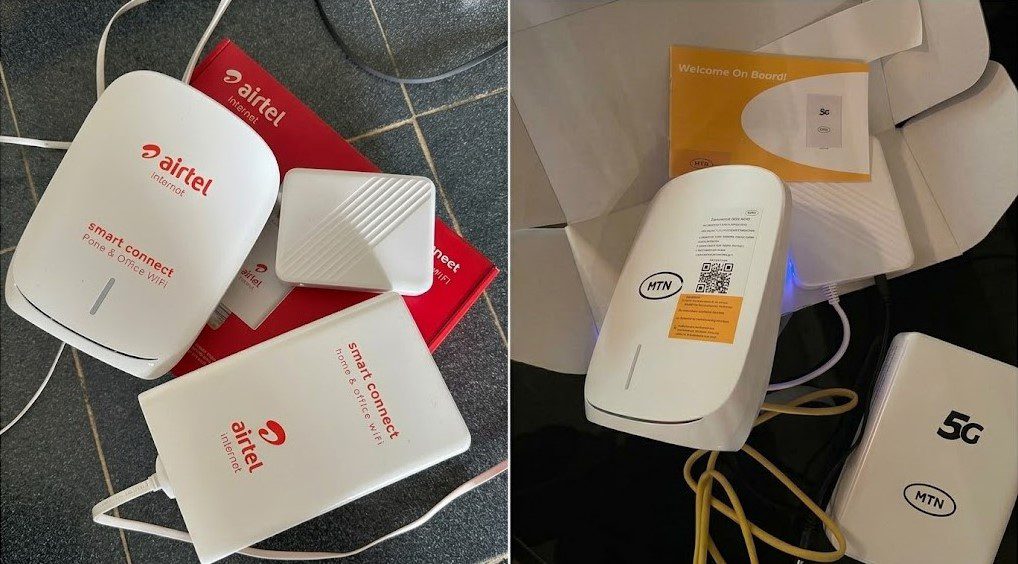
MTN and Airtel’s power game
MTN FibreX has received significant interest from Nigerians since its rebranding in early 2025. The product promises speeds of up to 1Gbps, unlimited data and ultra‑low latency for gaming, cloud, work‑from‑home and smart home devices.
The Nigerian Communications Commission’s (NCC) data (as of Q2 2026) shows that MTN controls 55% (176,468) of the Fibre-to-the-X (FTTX) market, leading the other 98 operators, that includes major ISPs such as FibreOne Broadband (56,486), Legend Internet (3,101) and Spectranet (1,344).
The growing need for data usage is obvious. Data usage in July 2025 stood at 1.662 million terabytes, the highest yet according to industry data. Internet usage is also growing in Nigeria, coming with the lengthy presence on online platforms, the shift to work and increasing penetration of digital access.
With over 158 million Nigerians on the internet and the number expected to significantly increase in the coming months, intense competition between MNOs and ISPs is reaching a new level, especially in the aspect of deploying unlimited data offerings.
“If we consider that data revenue is really where the larger share of service revenue is, then I expect MTN to go all in on home broadband,” said Olumuyiwa Olowogboyega, Head of Communications at Co-creation Hub (CcHUB), in a conversation with Technext.
In the first six months of 2026, MTN (₦1.7 trillion) and Airtel (₦691 billion) had a combined data revenue of ₦2.4 trillion, revealing the complete leapfrog of data over voice revenue. As mobile operators want to scale this revenue, there’s a substantial focus on ODUs.
While the talk of another tariff increase might not be in shape for the next five to ten years, Olumuyiwa believes competition is heading for a new dimension in the industry.
“I think we’re set for competition, and I expect some small pricing wars as all players really push to win customers,” he noted.
With competition comes the need for differentiation. For Isaac Sakyi, a Network Engineer, the battle is already won by MNOs, considering their established base and multiple offerings.
“It’s an industry where investment, numbers, access, and ability to adapt to changes in the market play a major role,” he said, adding that “MNOs offer more value, access to work tools, and entertainment that gives a user an obvious choice.”

MNOs vs ISPs: Who will control the broadband market?
The battle for internet dominance in Nigeria is heating up, and MNOs, with ODUs and Fibre, are targeting high-data consumers and business enterprises that dominate ISPs’ subscriber bases.
Funmilayo Ibidunni, a telecoms engineer, highlighted that subscriber habits and existing relationships will define the pace of early shifts.
“I believe the next two years will be interesting because people already have providers they are comfortable with and have used for years. So I don’t think everyone will suddenly leave their existing ISP just because MTN or Airtel is offering fibre or wireless broadband,” she said.
In the landscape, any eventual market shift will potentially come down to a combination of practical operational factors. While MNOs roll out wireless ODUs that bypass complex underground fibre installation, key friction points like setup speed and pricing become pivotal.
Highlighting factors that can make internet subscribers reconsider their choice, Funmilayo noted that cost is a leading factor, especially if the difference is significant.
“Coverage and availability will also matter because some customers may move to an option that is easier to access in their location. Installation is another factor. Some people may prefer a wireless option if they don’t want the hassle of fibre installation or cabling,” she added.
But there are established edges. MNOs hold clear advantages in capital scale, retail distribution, large customer base and existing billing relationships. For ISPs, retention will depend heavily on service uptime and user support.
“Reliability and customer service will also play a big role,” the telecom expert noted.
“If someone is already using an ISP and the service is stable, they may have no reason to change. But if they start experiencing frequent downtime, poor support or increasing costs while another provider is offering something more convenient, they may start looking elsewhere.”

Rather than signalling an immediate collapse for traditional ISPs, Funmilayo noted that the heightened competition is expected to force industry-wide improvements in service quality and pricing structure across Nigeria’s broadband ecosystem.
“I don’t see ISPs simply disappearing. I think the competition could push them to look more closely at pricing, service quality, customer experience and how they differentiate their offerings,” she concluded.
It will be interesting to see how existing ISPs respond and fight to retain their market share.
Also Read: 140 million Nigerians are offline despite internet access – GSMA.
