


Ghanaian fintech Affinity Africa has raised $8 million in seed funding to expand its financial products further across the country and Africa, where mobile money has become the new financial tool.
The seed funding round was led by European VC companies Grazia Equity (Germany) and BACKED VC (London), to mark their first African investment. Other investors include Enza Capital, Launch Africa, Renew Capital, Finca International, Attijariwafa Ventures, and Impact Assets, joining Eldon Capital as an early backer.
Andre de Haes, founder and managing partner of Backed VC, stressed that the company is founder-first and believes the best individual to build Africa’s local bank is Tarek Mouganie, the founder and CEO of Affinity.
“He (Mouganie) started his career investing in banks through the 2008 financial crisis, became an expert in regulation and strategy, and has built a world-class banking software stack for Affinity from the ground up. His ability to connect with and understand customers has driven impressive early user numbers,” Andre pointed out.
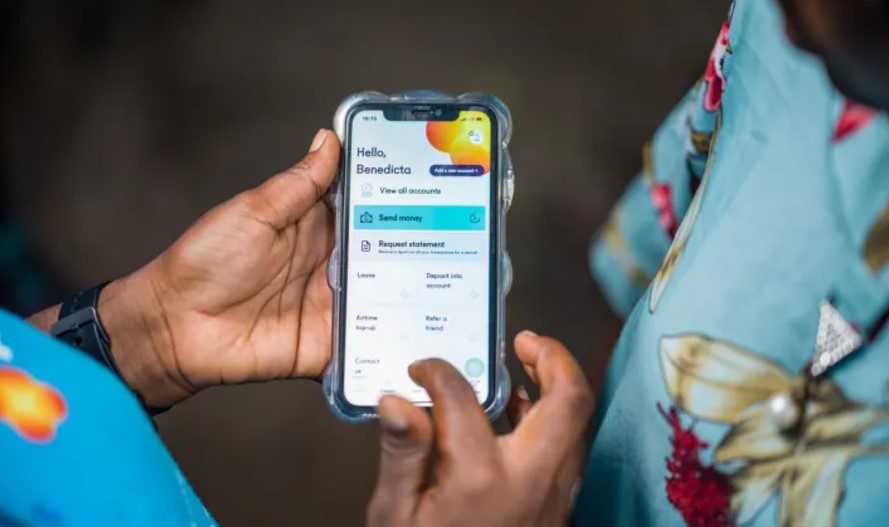
The digital banking startup blends online banking with offline touchpoints via its agent network like many digital banks in Africa. These agents, at least 30, meet small businesses and onboard them to the app. This has helped bridge the gap for new digital banking users.
According to the CEO, Affinity has onboarded over 50,000 customers since its launch last October where 65 per cent of its users had never accessed formal banking products before, and more than 60 per cent are women working in the informal sector.
Out of its 50,000 customers, 26,000 joined through the agency network, and 24,000 signed up using the mobile app. Interestingly, 55 per cent of agent-acquired customers have shifted to the app, supporting the strong digital adoption after onboarding.
“This shift has led us to rethink our agency strategy—focusing on using agents for onboarding, initial education, and driving digital literacy to encourage app adoption. We’re excited to refine this hybrid growth approach as we scale,” Mouganie said.
Also in its mobile banking services, customers can access other banking services such as savings, payments, investments, and transfers to banks and mobile money wallets.
Its records in January show that 89 per cent of deposit inflows, which have grown 54 per cent month-over-month since its launch, came from mobile money top-ups while bank transfers held the remaining 11 per cent.
Moreover, about 90 per cent of Affinity’s revenue is accustomed to loans, with the remaining 10 per cent coming from fees and commissions on services like utility bills and internet payments via USSD and the mobile app.
On a strong scale, Affinity’s revenue has increased 37 per cent month-over-month over the last six months, according to Mouganie.
Also Read: Nigerian fintech Raenest raises $11m in QED-led Series A funding, total funding now $14.3 million.
The rough ride
Tarek Mouganie comes from a fourth-generation Ghanaian family of Lebanese descent. He studied in the U.K., earning a bachelor’s and a doctorate before launching his career in academia and finance.
He later worked as a Director at Man Group, a $160 billion global investment fund, where he worked on major IPOs, including Visa and Compartamo – Latin America’s largest microfinance institution.
During Mouganie’s return to Ghana in 2015, he looked to solve Africa’s financial inclusion problem.
“Numbers like Africa’s $331 billion credit gap are still being quoted today. Nothing has really changed. That made me obsessed with building a full-fledged retail bank for MSMEs, similar to what Santander, Lloyds, or Chase Bank offer in Europe and the U.S.—but tailored for Africa’s majority,” he said.

Afterwards, he and a group of friends and family raised $2 million to acquire a microfinance bank in 2020 which included funds from selling his London house. The entity, which received a savings and loans license, the first of its kind granted in over 10 years, served as a testing ground for its current banking solutions.
Affinity later raised an additional $3 million in a pre-seed round to upgrade this license in 2022. After several months of testing, the fintech officially launched its app last October after following regulatory approval from the Bank of Ghana, the country’s apex bank.
The Accra-based fintech extends lines of credit with monthly interest rates of 3-7 per cent after its launch. The company has disbursed over $15 million in loans across various products, with instant loans growing 30 per cent month-over-month and a non-performing loan (NPL) rate of 3 per cent.
Affinity in a growing Africa space
Affinity has joined the circle of Africa’s top digital banking platforms within popular markets like Nigeria, South Africa, and Egypt.
Since the 2020 pandemic, banks in Ghana have recorded growth with an after-tax return on equity (RoE) that exceeds the global average.
While mobile money has emerged as the clear space for financial transactions, the traditional banking sector in Ghana and Africa still remains highly profitable. However, gaps like high operational costs, extensive in-person paperwork, and time-consuming processes have left millions underserved.
In a World Bank data report, less than 10 per cent of businesses in Africa currently have access to credit, and over 60 per cent of adults lack formal financial services. This growing gap is what startups like Affinity seek to address.
On why it has taken this long for a digital banking upstart to gain much traction in Ghana, Mouganie said the country’s regulator is focused on protecting consumers, especially in deposit-taking institutions.
“We had to prove strong risk management, break-even as a microfinance institution, and align our mission with the government’s goal of banking the unbanked. What ultimately convinced them was how our digital platform reduces friction and lowers banking costs for individuals and micro, small, and medium enterprises (MSMEs.)”
Unlike neighbouring Nigeria, where digital banks can easily operate with microfinance licenses, such licenses are rare, expensive and take time to get in Ghana, making it difficult for fintechs to explore the space.
