


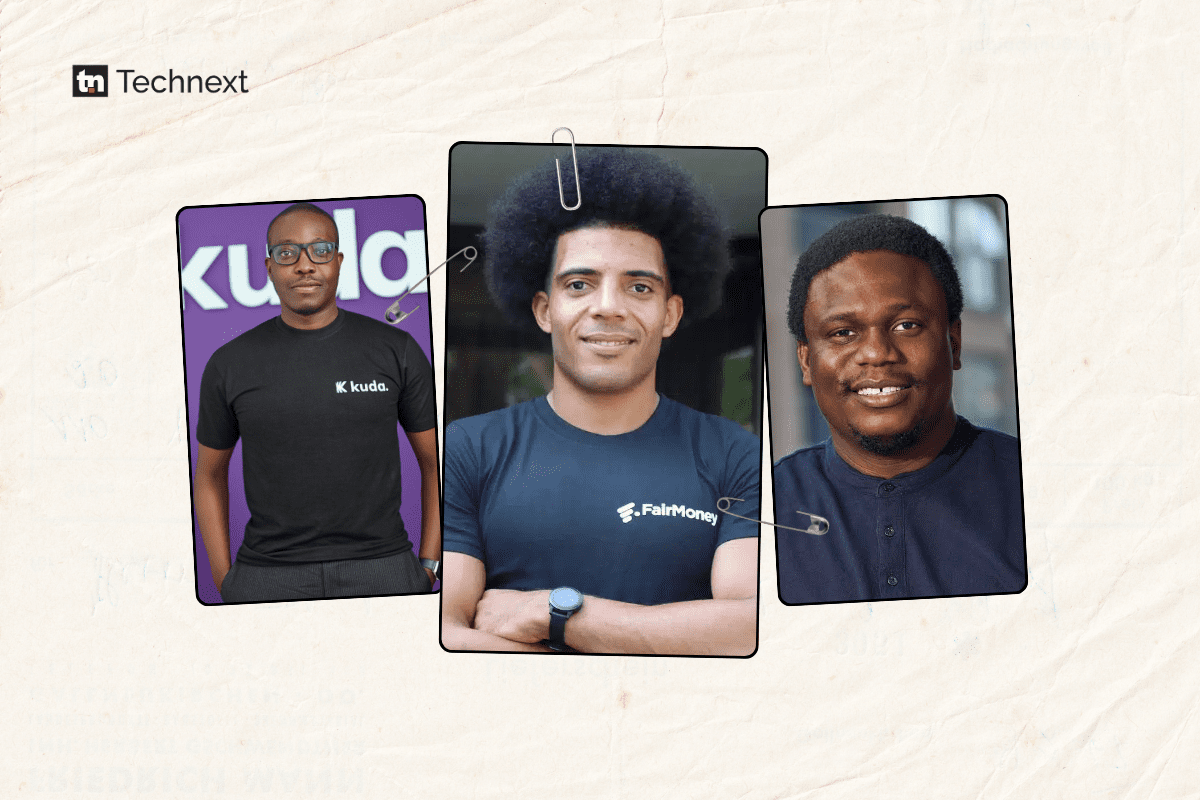
Three of Nigeria’s most consequential fintech founders sat on one stage in New York and said the kind of things founders rarely say about each other in public. Babs Ogundeyi of Kuda put it plainest. Talking about Tosin Eniolorunda of Moniepoint and Laurin Hainy of FairMoney, the men building businesses that compete directly with his, he admitted he needs them to survive, not necessarily to thrive.
“Even though I see them as competition, I actually also need them not to fail, because it kind of brings the whole house down,” Ogundeyi said. “We haven’t even really launched properly, and they would already be failing? So the smaller guys too, just be alive, be alive, be alive. I didn’t say I need them to succeed, I said I need them not to fail.”
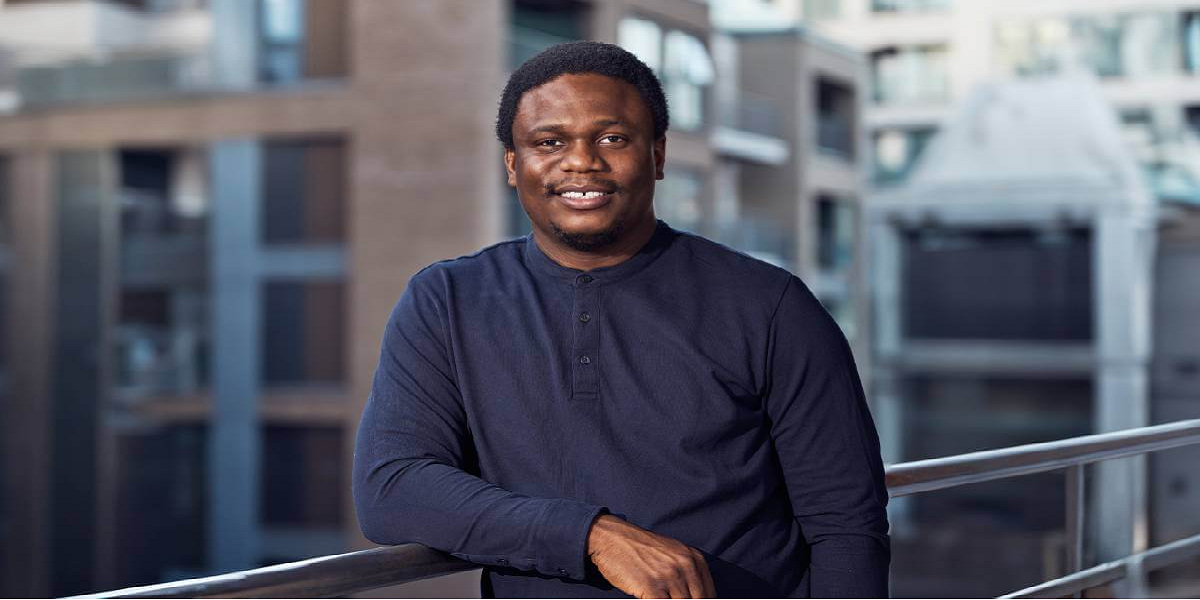
That admission was part of a conversation recorded live at the Fintech Africa Summit, where the three founders spoke with unusual candour about competition, currency risk and what counts as success when you are building a fintech business on top of one of the world’s most unstable currencies.
The convergence argument ran through most of the panel. Eniolorunda made it directly, arguing that growth eventually pushes every player toward the same products and the same geographies.
Read also: How a $5.5M cheque from Jim Ovia helped build Moniepoint into a unicorn
“I think, given enough time, we will all probably end up in similar places. Banks will be like fintechs, fintechs will be like banks, fintechs will be like each other,” he said, framing the divide as one of leadership rather than category. “Unless you change banking leadership to become a tech-first organisation, run with product, science, decision-making and engineering at the forefront, I think they will always be classic bankers.”
Hainy arrived at a similar place through family history. He recalled his older relatives describing a Nigeria where collecting a salary meant queuing at a bank branch with a cheque until a new generation of banks imported a then-unfamiliar technology.
“Prior to that, you would get a cheque; you had to go to the bank branch to collect the cheque and get the money. So what those new generation banks would do is they would start to import the new technology, which was called the ATM,” Hainy said. “The old guys didn’t understand it, they didn’t have the right leadership to say okay, we’ve got to change. Twenty years down the line, there’s probably going to still be some of the current guys that make the switch, and there will probably be two or three of us sitting here, maybe not even any of us, that are going to have some kind of scale.”
Ogundeyi’s reading on competition fits neatly alongside both arguments. He does not see the digital banking space as something that needs more entrants so much as a small number of strong, legitimate ones.
“I’m happy that there are strong players in the digital banking space because it makes it acceptable, it makes it mainstream, it brings credibility to it. There shouldn’t be too many, but just three [at the top], that’s enough,” he said.
Read also: How to beat inflation in Nigeria (2026), the “New Maths” of savings by FairMoney
Nigeria’s fintech struggle against a weak naira
Currency was the panel’s most uncomfortable thread, and the one all three kept circling back to. Hainy was the most explicit about the mechanics, describing expansion as fundamentally a resource allocation question that breaks down once the naira enters the equation.
“If your currency is heavily unstable, it’s hard to predict that output, because you could spend a lot of time and the product is proceeding exactly as you projected, but because the currency is shrinking by 300%, your real dollar ROI is actually negative,” he said.
Eniolorunda extended that into how outside capital views Nigeria altogether, arguing that volatility compounds a deeper problem of unfamiliarity.
“You are generally risk-averse to something that you don’t know, and the markets that are actually the most liquid, the US markets, don’t have a lot of knowledge about Nigeria or Africa. This increases your perceived risk in addition to the macros,” Eniolorunda said. “That’s why the investors that will eventually invest in you understand the risk, they price the risk, they’re comfortable with the risk. IFC is still investing, Proparco is still investing.”
Ogundeyi’s answer to the same problem was less about capital markets and more about discipline, drawn from watching the naira move across his own lifetime.

“I remember when the dollar was 120, I remember when it went to 150, it was crazy. But we still had big banks back then, and they were still worth a lot of money. Today it’s gone up to 450, 700, 1,500, and the big banks are still big banks, still extremely valuable,” he said. “You can become super successful today, or if you’re unlucky, like we have kind of been in this moment in time, it just elongates the time to true success. But if you fundamentally have a good business, it’s still a great story.”
That same hard-nosed practicality showed up when the conversation turned to what success actually looks like for venture-backed founders years into building. Eniolorunda was unsentimental about it, framing the honest measure as whether early backers end up wealthier for having taken the risk.
“Fundamentally, investors are interested in returns. There’s nothing less sentimental than finance,” he said, before turning to a second metric beyond pure return. “Success will also mean getting the company to a level of maturity where you don’t need to be donating a pint of your blood every week to keep it running.”
Hainy framed his own obligation almost identically, extending it from investors to the people who stayed through a genuinely difficult market.
“My first and foremost responsibility is the people who trusted me six years ago to build a business in Nigeria, when everyone told us we were crazy. I want to make sure they are very wealthy based on that decision. And I also want to make my employees wealthy, because these are guys that have been working with me for six, seven years,” he said.
Read also: Kuda and FairMoney tipped to aggressively snatch traditional bank customers in 2026
Ogundeyi closed the loop by widening who counts as a stakeholder and returned to the image that opened the conversation.
“Your investors, I see my employees as also my investors because they’re investing their time essentially to the vision, to the dream,” he said. “Sometimes it feels like you’re swimming against the tide. But even when you’re swimming against the tide, if you don’t give up, if you keep swimming, you will get to the other end. We just need not to drown in the middle, and we will get to the other side. I’m confident with that.”
Watch the full conversation below:

