


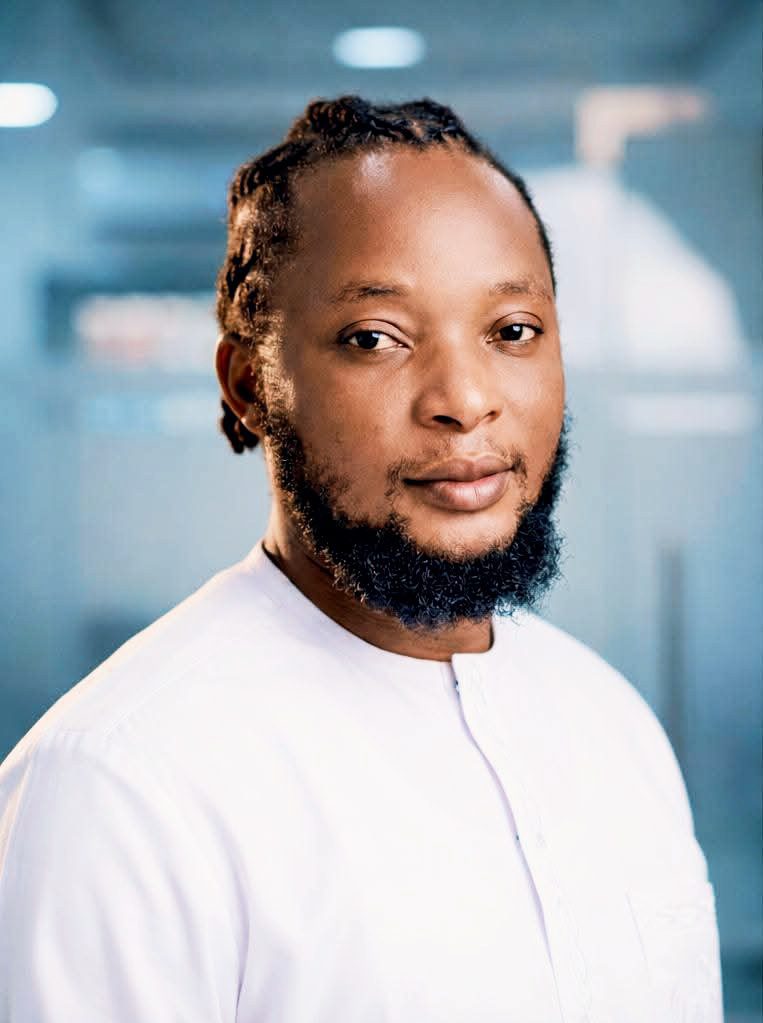

Jesam Michael, CEO of Afriq Arbitrage System (AAS), has been remanded in custody by the Federal High Court in Abuja following charges of fraud involving $854,416.36 and N590 million. The Economic and Financial Crimes Commission (EFCC) accuses Michael and his cryptocurrency trading platform of orchestrating an investment scam that defrauded investors between September 2022 and June 2023.
The case, which also includes allegations of money laundering and operating without regulatory approval, highlights Nigeria’s intensified crackdown on crypto-related fraud and raises questions about the oversight of digital investment platforms.
The EFCC filed a seven-count charge against Michael and AAS, alleging they illegally solicited funds from the public without authorisation, violating Section 44(1) of the Banks and Other Financial Institutions Act, 2020. Specific charges include defrauding Ladi Musa Audu of $844,416.36 USDT and Augustine E. Ibolo of $10,000 USDT by promising safe, refundable investments, which the EFCC claims were false representations.
Additionally, Michael is accused of converting N590 million from the sale of properties recovered from another suspect, Abayomi Oluwasesan, in Lekki, Lagos, knowing the funds were proceeds of unlawful activity, contravening the Money Laundering (Prevention and Prohibition) Act.

On May 9, 2025, Justice Emeka Nwite denied Michael’s bail application, ruling that arraignment must precede bail considerations due to the filed charges.
Michael, arrested on January 29, 2025, at Murtala Mohammed International Airport in Lagos by the Inspector-General of Police Special Investigation Unit (SIU), has been in custody since, with his legal team arguing he is a first-time offender willing to cooperate. The EFCC plans to call witnesses from the Central Bank of Nigeria (CBN), Securities and Exchange Commission (SEC), and financial institutions to testify that AAS lacked authorisation to conduct investment activities.
The rise and fall of Jesam Michael’s Afriq Arbitrage System
AAS, launched in January 2023, promised investors a 63.5% monthly return on investment through automated cryptocurrency arbitrage trading, leveraging price differences across exchanges.
Michael, a Cross River State native with over a decade of crypto trading experience, marketed AAS as a legitimate platform with a Binance liquidity pool and advanced algorithms. Initially, the platform attracted thousands globally, with events in Nigeria, the U.S., Canada, and the UK. However, by July 2023, investors reported an inability to withdraw funds, sparking allegations of a Ponzi scheme.
The unravelling began when Michael accused an employee, Abayomi Oluwasesan, of stealing $87 million, though Oluwasesan contested the amount. Investigations revealed that Michael transferred recovered assets into his personal name, raising suspicions about his motives. This led to his arrest and the EFCC’s probe, which uncovered AAS’s lack of regulatory approval and questionable financial practices. A 2023 fact-check by Technext reported that AAS was not built on blockchain technology, contradicting Michael’s claims, further eroding investor trust.

The case reflects Nigeria’s broader efforts to regulate its booming crypto market, which saw $56.7 billion in transactions in 2023. The CBN and SEC have tightened oversight, citing risks like capital flight and money laundering, especially after the naira’s 40% devaluation. The EFCC’s high-profile cases, including charges against Binance executives, underscore this trend.
Michael’s earlier ventures, including collapsed platforms like COTPS and DAIZY AI, have fuelled scepticism about his credibility. Despite his claims of fighting Ponzi schemes, the EFCC alleges AAS operated similarly, luring investors with unsustainable returns. The agency’s recovery of properties and ongoing investigations aim to protect investors, but the case highlights the risks of unregulated crypto platforms in Nigeria.
Meanwhile, Michael’s remand, with no bail hearing scheduled until after arraignment, signals a tough stance by Nigerian authorities on financial crimes. The case could deter fraudulent schemes, but also risks chilling legitimate crypto innovation.
Investors face ongoing uncertainty, with no clear timeline for fund recovery. Michael’s defence, led by Emmanuel Agabi, insists on his cooperation, but the EFCC’s evidence, including witness testimonies, poses a formidable challenge. As Nigeria balances economic growth with regulatory enforcement, the AAS saga underscores the need for robust oversight to protect investors while fostering digital finance innovation.
