



Across Africa, most profound technological adoptions happen at the grassroots, driven by necessity and community. For Nigerian crypto founder, Sir Mapy, the pseudonymous Chief Believer behind SMC DAO and WikiCat Coin, it was a dose of spiritual serendipity.
It is an ecosystem that grew from a WhatsApp group to a digital asset with a peak market capitalisation of $250 million and over 160,000 global holders. But, his beginning story wasn’t that grand.
In early 2021, before the bull run that would redefine global wealth distribution, Sir Mapy was a first-class graduate in urban regional planning from the University of Uyo. He made a living by acting as a middleman for online flight bookings, scraping by on ₦5,000 profit margins by re-booking flight tickets for stranded travellers. He earned a modest ₦50,000 to ₦100,000 monthly.
With no engineering background or prior crypto experience, he was far removed from the complexities of blockchain technology.
His journey to becoming one of the architects of a multi-million-dollar African decentralised finance (DeFi) ecosystem reads like a scene from a magical realist novel, a masterclass in risk, resilience, and the sheer unpredictability of the blockchain. The pivot came during a service at The Pistis Place, his local church in Uyo.
During a session, his pastor delivered a startlingly specific prophetic word, saying that he saw Sir Mapy crying on his laptop, warning him not to make any investments without informing him and prophesying that a large sum of money would soon enter his account.
Three months later, a family crisis struck.
His mother, a civil servant, had fallen into a ₦1.5 million debt. Sir Mapy reached out to his younger brother in Lagos, who transferred the funds, but due to banking limits on their mother’s account, the money bounced and was then sent into Sir Mapy’s account. It was at that exact moment that he received a message from his pastor that would change his life forever: “Buy Shiba Inu.”
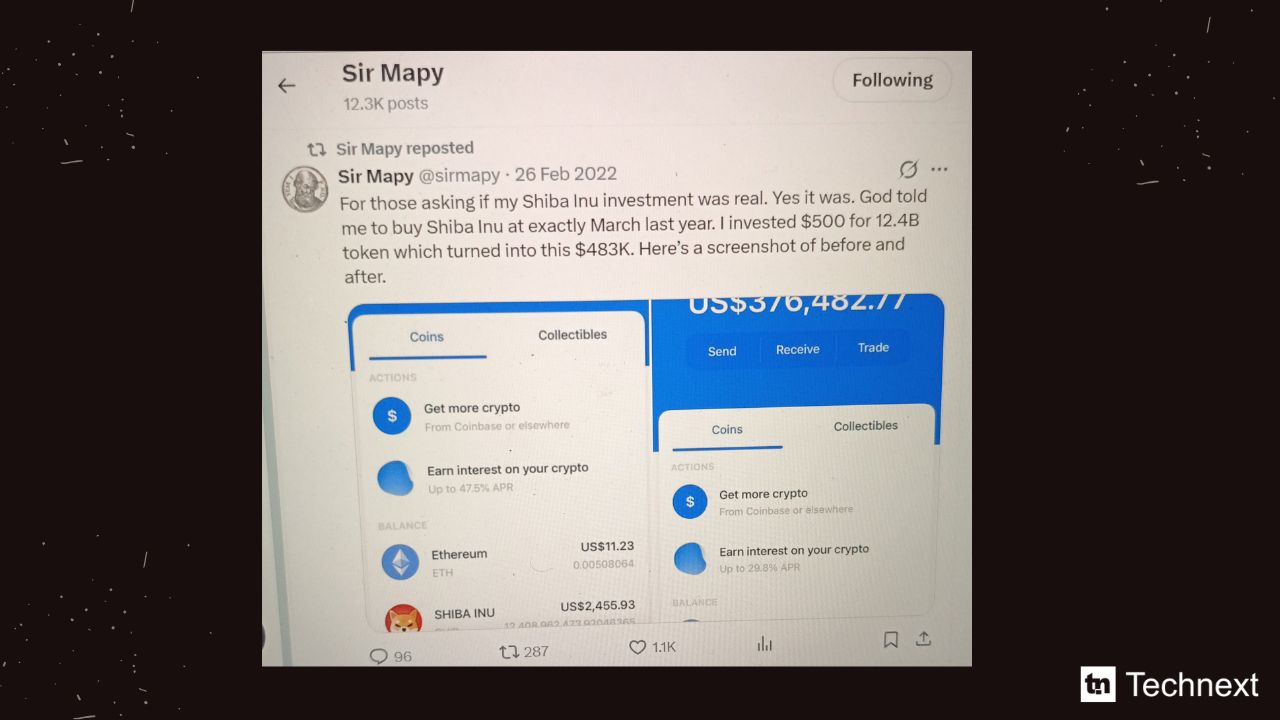
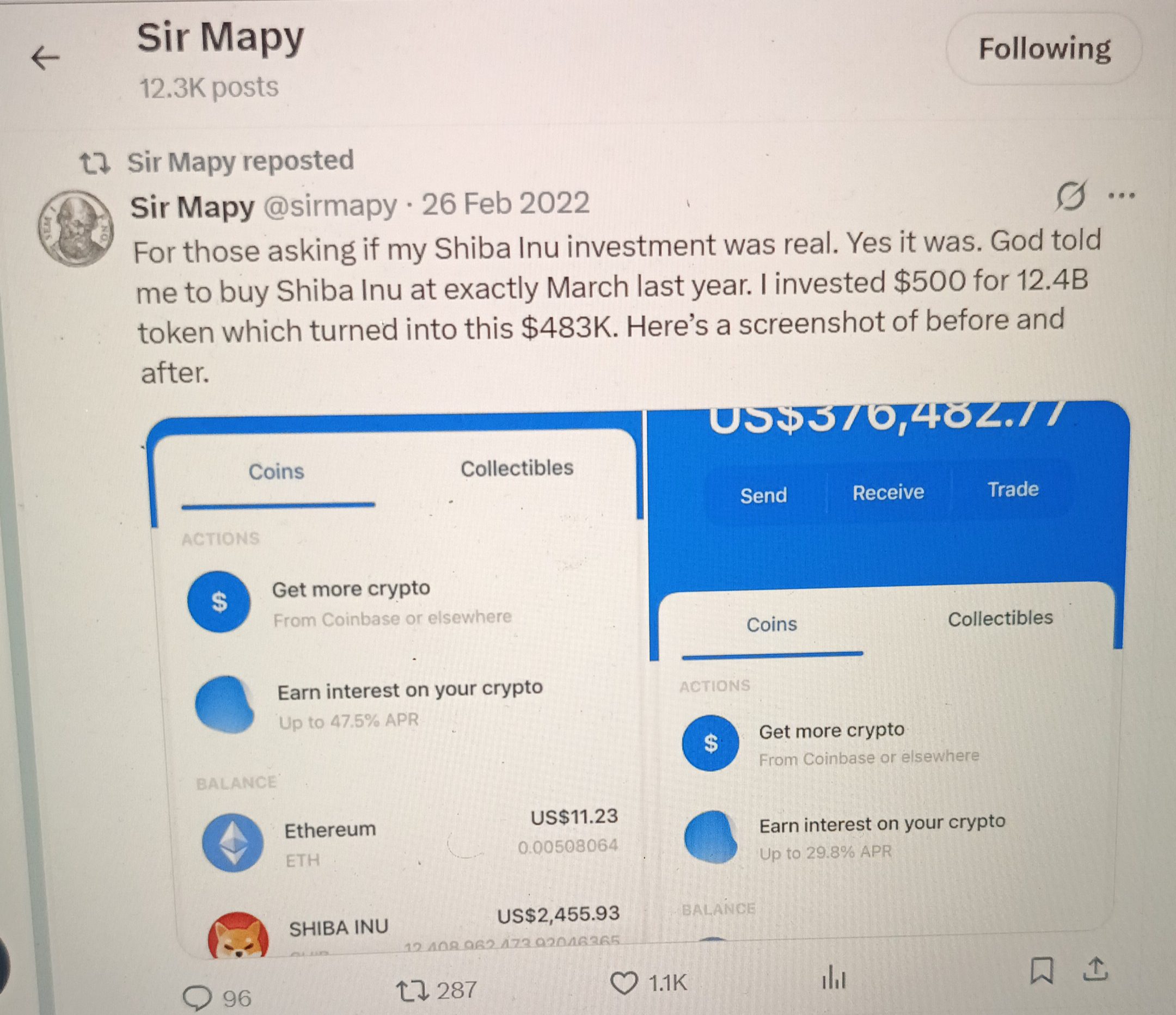
Faced with a moral and financial crossroads, he took a monumental leap of faith. He carved out ₦300,000, roughly $500 at the time, from the bailout funds to buy the then-obscure meme coin, using the remaining ₦1.2 million to service the loan.
To hedge his bets and spread the word, he added all 400 of his WhatsApp contacts to a group dubbed ‘Sir Mapy and Co’ (SMC). While many exited the group, dismissing the venture as madness, a loyal cohort of about 200 stayed. Then, the market moved. Driven by Elon Musk’s tweets and retail mania.
“I saw this thing go from $500 to $2,500 in one night after Elon Musk tweeted,” he recalls, the disbelief still palpable in his voice. “By that week, it had reached $50,000. When Binance listed it, my portfolio jumped to $500,000. I was sitting inside a Keke Napep in Uyo with half a million dollars sitting in my account, trying to understand what was happening.”
The fall, the rebirth and the launch of WikiCat
It is said that sudden wealth magnifies inexperience.
Flush with cash, Sir Mapy went on a philanthropic and personal spending spree, buying a car for his pastor, funding a few fixes in church, moving out of his mom’s house to rent his own, furnishing a new home, and subsidising his family. He also reinvested heavily, blind to the brutal cyclical nature of crypto markets.
The turning point was a devastating ‘rug pull’. He invested heavily in a project called Stray Cats, bringing his trusting WhatsApp community along with him. The developer vanished with the liquidity, wiping out his capital and his followers’ investments.
Within months, his half-a-million-dollar fortune dwindled to a mere $1,500. Carrying the heavy burden of collective failure, consumed by shame, he locked himself in his room for two weeks.
“I felt like God had betrayed me,” he admits. “How do I grow $500,000 and finish it in less than seven months? The shame of knowing nothing remained; I locked my door.”
It was out of this crucible of isolation that WikiCat was born.
Desperate to recover and driven by a desire to build a transparent ecosystem, he decided to launch his own proprietary coin. Initially lacking the technical know-how, he was introduced to CoinTools, a smart-contract deployment platform, by a serendipitous visit from his younger brother.
Driven by what he described as divine intervention, he spontaneously changed the project’s name from ‘Mapy Token’ to ‘WikiCat’. He launched it on a quiet Sunday in March 2022 with a mere $700 liquidity pool.

Without any formal marketing budget, he simply tweeted the launch to his 2,800 followers. The response was a digital wildfire. Backed by the tight-knit trust cultivated in his SMC community, the token’s market cap rocketed from $700 to $50,000 in a single day.
Soon, it hit $1 million, ultimately peaking at $250 million. This cemented its status as one of the most heavily traded African digital assets globally.
“I didn’t even tell my community,” he admits. “But the next morning, I tweeted about it to my 2,800 followers. That $700 market cap exploded to $50,000 the same day. By the end of the week, we hit $1 million.”
Unlike the developers who had previously defrauded him, Sir Mapy stayed. He watched his personal wallet swell to millions of dollars but refused to cash out at the expense of his community. He viewed WikiCat not just as a financial instrument but as a ‘prophetic token’, a vehicle for generational wealth transfer within his community of ‘believers’.
What began as an accidental meme coin has since evolved into a sprawling Web3 ecosystem, challenging the narrative that grassroots African tokens lack fundamental utility. With a 2% transaction fee baked into its smart contract (1% burnt, 1% redistributed as revenue), WikiCat generated immense capital.
At its height, it was trading $4 million in daily volume. The revenue allowed SMC DAO to pivot from survival to infrastructure building.
Bridging Web3 and the real economy
Today, WikiCat has shed its meme coin origins, evolving into the foundational layer of a sprawling Web3 ecosystem.
Recognising the infrastructural gaps in the African crypto space, Sir Mapy has transitioned from a charismatic community leader to an astute tech executive, systematically acquiring and building infrastructure to bridge the crypto-fiat divide in Africa.
The SMC DAO ecosystem now boasts an impressive product suite, including:
Peniwallet: A custodial wallet born out of the frustrations users faced with gas fees on decentralised alternatives. It currently generates steady daily revenue for the DAO.
StableNaira (SNR): An upcoming stablecoin pegged to the Nigerian Naira, designed to solve the liquidity bottleneck. “If we hit a billion dollars, the entire P2P market in Nigeria won’t be able to handle the off-ramp,” Sir Mapy explains. “We need our own stablecoin to bridge that wealth into the real economy.”
Bread & Peniremit: Web-based applications designed to bypass stringent app store crypto policies, allowing users to “swap everything” and spend their digital assets in the real economy seamlessly.
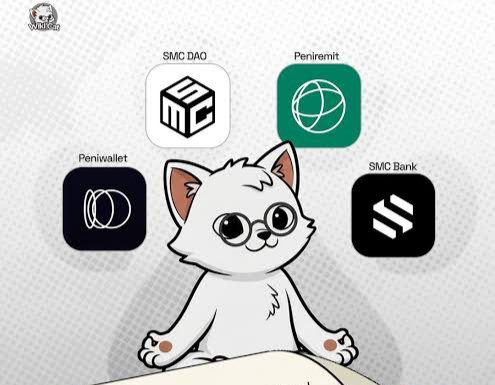
Yet, his most audacious goal lies ahead, the acquisition of a traditional microfinance bank, internally dubbed ‘SMC Bank’. In a regulatory climate where traditional banks remain hesitant to interface directly with crypto, often citing compliance risks and technical complexity, Sir Mapy believes the only solution is to build a compliant bridge from the inside out.
The community recently crowdsourced a substantial war chest from its ‘whales’ and ‘sharks’, the top-tier holders in the ecosystem, to fund the bank acquisition.
“We don’t want to just go to banks and beg them to use Web3,” he notes. “We want to come to the table. And how do you get to the table? By buying a bank. Inside the financial system, you can start to dictate how to improve and accept liquidity on the blockchain.”
His vision for the Nigerian tech ecosystem is uncompromising. He is not merely building an app; he is laying the groundwork for an alternative financial infrastructure.
“Success for us is becoming the Wall Street of crypto in Africa,” he states firmly. “I want a situation where no government can say they want to do cryptocurrency without coming to see SMC DAO. If you don’t keep an open mind and innovate, you will be passed away. The blockchain will replace the financial market as it is today.”
