




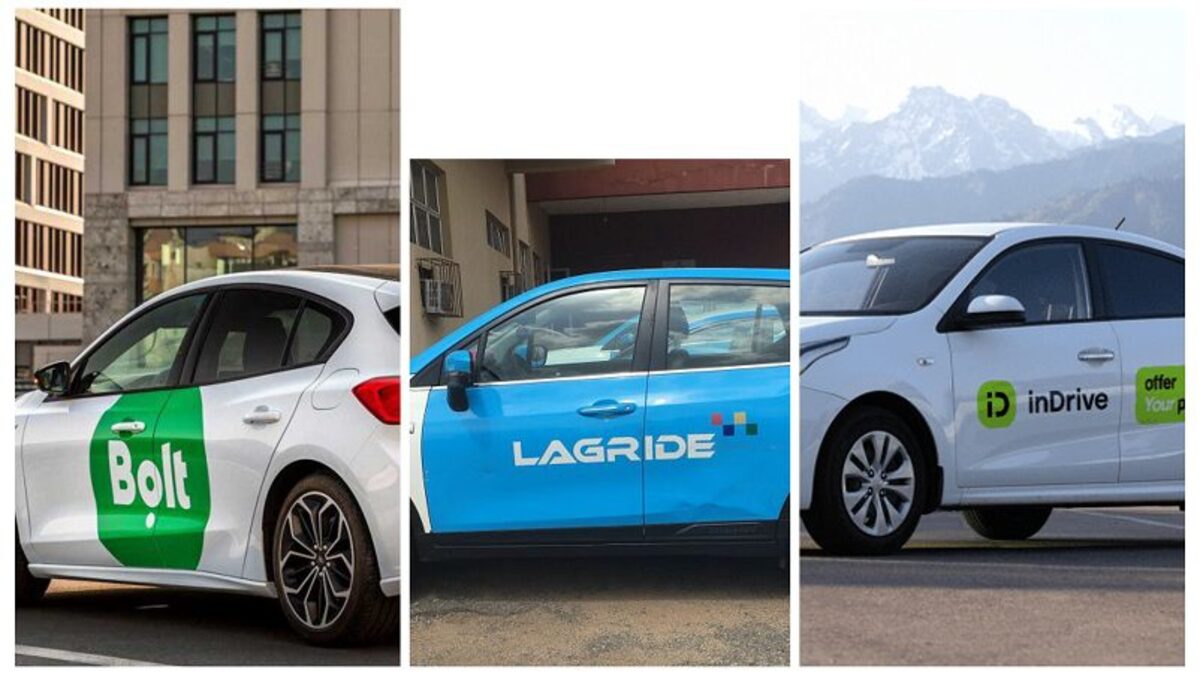
Uber’s decision to wind down its ride-hailing operations in Nigeria after 12 years has triggered reactions on X, with users debating what the exit could mean for competitors Bolt and inDrive as well as the country’s wider business environment.
While some believe the departure presents an opportunity for rival platforms to attract Uber’s riders and drivers, others fear the economic and operational pressures linked to the exit could eventually affect the remaining players.

Reactions to Uber’s exit from Nigeria
One X user, @Onu_Slim, described Uber’s exit as a failure to adapt its global business model to the Nigerian market. The user argued that Bolt and inDrive understood local realities better, particularly around pricing and flexibility. While inDrive allows riders and drivers to negotiate fares, the user said Bolt had adapted its pricing, promotions and driver incentives to the market. “It wasn’t bad luck but arrogance thinking they had a strategy,” the user wrote.
@the_popemichael shared a similar view, arguing that Uber was “a bit stubborn in their model”. According to the user, Bolt gained ground by adapting faster to the local market, while inDrive’s fare negotiation model made it a better fit for Nigerian users.
“Personally, despite all its crooked ways, inDrive is the perfect Nigerian fit,” the user added.
Another user, @Duke, said Uber’s exit could create an opportunity for competitors to target its remaining customers. “The smart thing now is for one of these companies, LagRide, Bolt or inDrive, to get/buy the data of all loyal Uber customers who have stuck with them till now,” the user wrote.
However, other reactions suggested that Uber’s departure may not automatically mean an easier market for the remaining ride-hailing platforms.
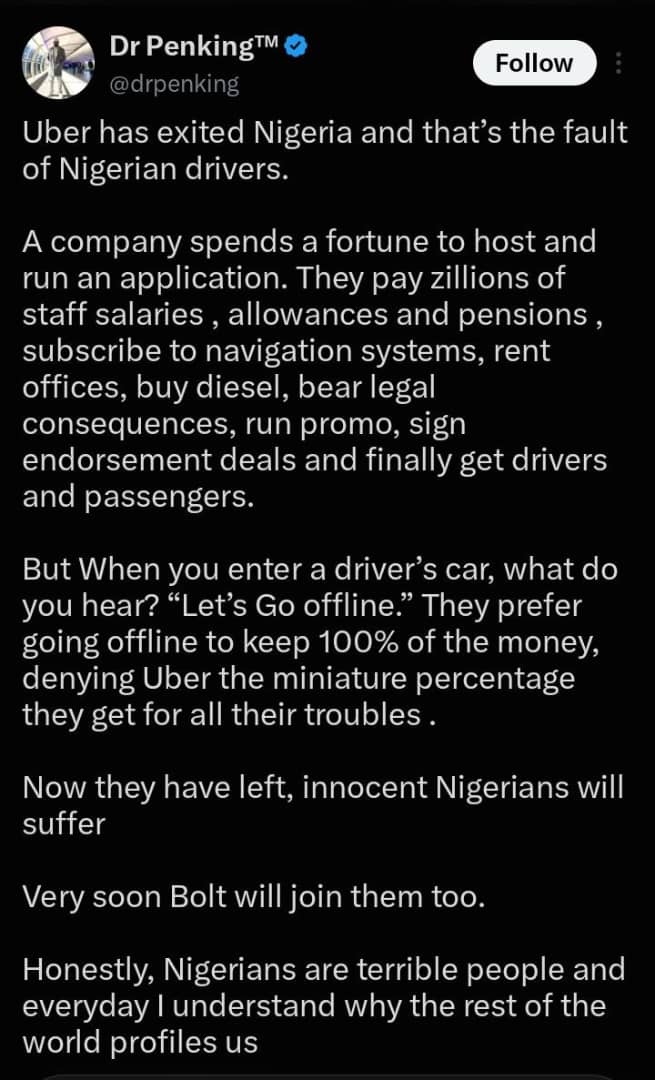
@dr_penking blamed drivers who negotiate trips outside ride-hailing apps, arguing that such arrangements reduce the commissions platforms earn from trips. “When you enter a driver’s car, what do you hear? ‘Let’s go offline’,” the user wrote, adding that drivers sometimes use the platform to find passengers before negotiating directly with them. The user warned that Bolt could eventually face similar challenges.
@DavounPrice made a similar observation in reaction to Olasinde’s analysis, saying that some Uber drivers did not support the company’s business model. “Uber to them was just a matchmaking app for the drivers to locate their passengers,” the user wrote.
Rising costs and weak purchasing power
Other users focused on Nigeria’s broader economic conditions.

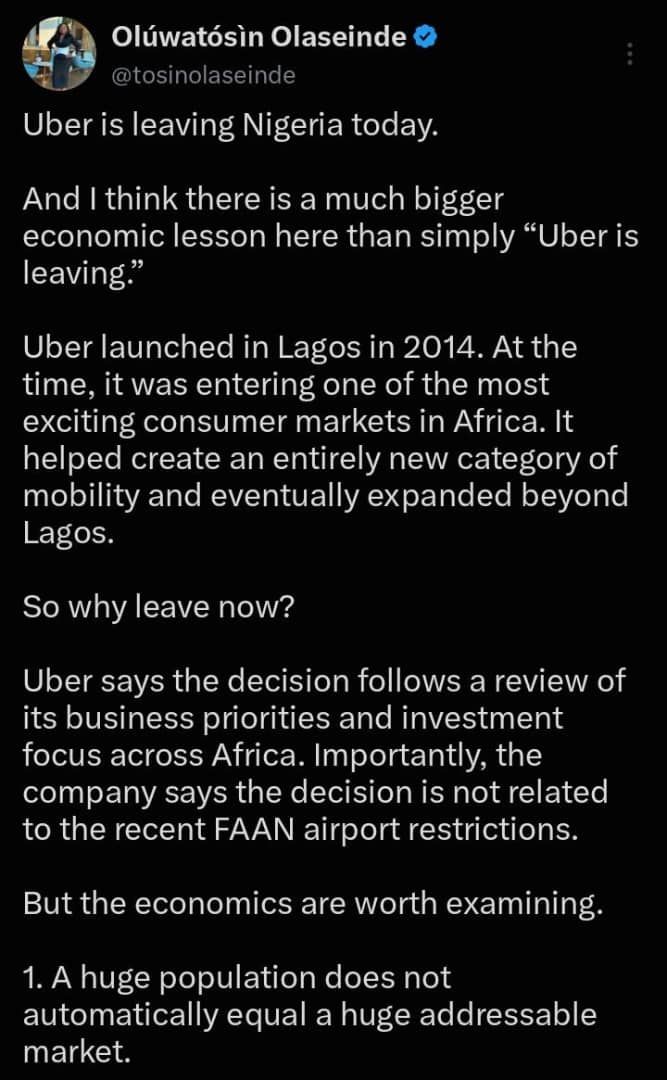
@Adeblownboy said Uber’s exit should challenge the assumption that Nigeria’s population automatically makes it a large and viable market for every business. “Population is not purchasing power,” the user wrote, arguing that millions of people needing a service means little if the provider, worker and customer cannot all sustainably benefit from the economics.
Read also: Uber and Bolt airport ban: FAAN assures of speedy resolution
Jesse Ozone also said the exit was “bad news”, arguing that it could signal that the risk-adjusted returns from operating in Nigeria no longer justify the capital required.
The user cited inflation, declining purchasing power, intense price competition, regulatory friction, driver economics and weak margins as possible factors. “200M+ people doesn’t automatically mean a 200M person market,” Jesse Ozone wrote.
@TomolaGroup also pointed to the gap between the rising cost of operating a vehicle and what passengers can afford to pay. The user noted that while drivers face higher fuel, vehicle and spare-parts costs, fares remain sensitive to consumers’ purchasing power. “Passengers want cheap. Drivers want more. The platform needs a margin. Something had to give,” the user wrote.
@FOLVSHO, meanwhile, listed global strategy, rising operating costs, competition and regulation as four major factors behind Uber’s exit.
Not all users agreed on whether the economy or Uber’s business model was the bigger problem. @afolabihakim, responding to Olasinde’s analysis, argued that declining disposable income was central to the company’s decision to leave. The user said Uber had previously survived periods of intense competition because consumers had stronger purchasing power and more disposable income.
Uber’s exit: A warning or an opportunity?
The reactions show no clear agreement on what Uber’s exit means for Nigeria’s ride-hailing market. For some users, the departure could give Bolt, inDrive, LagRide and other operators a chance to win more customers. Others believe Uber’s exit exposes pressures that could affect any platform struggling to balance affordable fares for passengers, sustainable earnings for drivers and enough revenue for the business.
For @ukwu_ada, the bigger lesson is that companies should not mistake Nigeria’s population for the size of its actual paying market. The user argued that businesses need models designed around “the economic realities of African consumers”.
That is perhaps the biggest divide in the reactions. Some Nigerians on X believe Uber was beaten by competitors that adapted better to local realities. Others see its exit as a warning about the difficult economics of doing business in a market where demand exists but purchasing power, costs and profit margins remain under pressure.
