





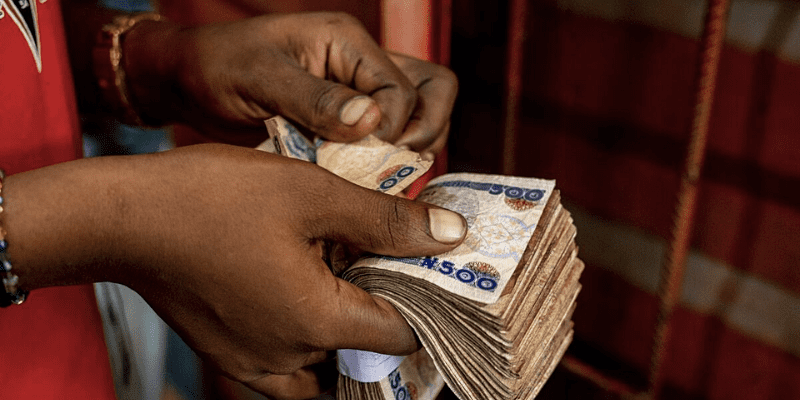
Over 200 mobile loan apps currently operate in Nigeria. Many are unregistered. Most offer loans between ₦5,000 and ₦200,000 with repayment cycles as short as seven days.
According to the Federal Competition and Consumer Protection Commission (FCCPC), only 211 of these apps have provisional approval or full licences as of Q2 2024. The rest? Shadows with download buttons.
Between 2021 and 2023, the FCCPC received over 11,000 complaints about harassment, data abuse, and unethical recovery tactics by digital lenders. That’s not counting those who never reported, because they were too ashamed, too confused, or too used to being exploited.
In this piece, we answer the question: Are loan apps deepening financial inclusion or digging deeper informal, unregulated debt holes for users?

The typical journey of the Nigerian loan app user
For many, the journey starts with a need. A parent needs to pay school fees. A market woman needs to restock inventory. A gig worker needs data to work.
Traditional banks demand BVNs, collateral, and salary slips. Apps like Palmcredit, FairMoney, Okash and Carbon offer a shortcut. But shortcuts, especially financial ones, often come with hidden tolls.
A look at the terms reveals interest rates that can climb above 30% for a 14-day loan, plus late penalties and non-transparent deductions. Some users report receiving ₦20,000 and are expected to repay ₦27,000 in two weeks.
For instance, Ademola, a 9–5 customer care officer in Ibadan, earning ₦280,000 monthly, took a ₦50,000 loan from a licensed digital lender to offset a medical emergency in March 2024. He repaid it in full within 30 days. Encouraged by the smooth experience, he used similar short-term loans three more times to cover car repairs, a niece’s school fees, and an emergency relocation.
Each time, he repaid early or on time.
By December, his profile had earned him lower interest rates and longer repayment windows. Ademola didn’t overuse the apps or borrow to fund lifestyle expenses. For him, the digital loans served as a revolving financial cushion, not a trap.
“I never take more than I can return from my next salary,” he said.
Conversely, a Lagos-based hairdresser shared anonymously that she borrowed ₦15,000 from an app to buy braiding extensions.
“They said 10% interest but added more fees I didn’t understand. I ended up paying over ₦20,000 in 10 days. Then they started messaging my contacts. I was crying at work.”
Her story is not unique. Over 70% of mobile loan complaints tracked by consumer rights groups in 2023 involved privacy violations through contact-harvesting and third-party shaming.
The apps access users’ contact lists, SMS, photo galleries and even GPS location. In exchange for a loan, borrowers give up their digital selves. What the apps can’t secure through legal collateral, they extract through surveillance and shame. This digital asymmetry turns inclusion into exposure, and access into exploitation.

Read this one: Data privacy: How loan apps create ghost accounts for rejected applicants
Consider the case of Chinedu, a 34-year-old civil servant in Lagos who earns ₦300,000 monthly. After rent, utilities, school support for his siblings, food, transportation (from Orile to the secretariat), and unexpected health bills, his monthly expenses climb to ₦450,000.
Every month, the deficit forces him to borrow from loan apps just to stay afloat. The first loan of ₦50,000 helped him pay part of his rent. But by the next month, the app demanded ₦63,000 in return. To avoid defaulting, he borrowed ₦70,000 from a different app.
In four months, Chinedu had borrowed from five different lenders, all with short cycles and rising penalties. Now, half his salary goes to repayments, and his contacts receive harassing messages when he delays.
“I feel like I’m working to feed loan apps,” he said.
The real problem with the loan apps
Still, the numbers suggest demand for digital financial services is growing. According to the 2023 EFInA Access to Financial Services survey, 45% of Nigerian adults used digital financial services within the past year, up from 34% in 2020.
While the report doesn’t break down digital credit usage specifically, the overall growth indicates rising engagement with mobile-based financial tools.
Industry reports and consumer feedback suggest that many users engage with multiple loan apps over short periods, often borrowing from one to settle another. It’s less a financial ladder and more a hamster wheel.

Let’s take another example. Eze started 2024 with a stock of imported sneakers and a small online store. Business slowed after the naira fell sharply and import prices surged. In February, he borrowed ₦300,000 from a digital loan app to restock a few pairs. Sales didn’t rebound, and by March, he was juggling repayments, borrowing from a second app to cover the first. By mid-year, Eze had active loans with five different lenders.
Have you seen this? Inside Nigeria’s loan app spam machine: how lenders use BCC to flood your inbox
The constant repayment pressure made him cut prices drastically, further eroding profit. In August, his apps began calling his customers and family, claiming he was a fraud.
“They messaged my sister on Facebook,” he said. By December, he had closed the store, sunk in ₦1,100,000 of debt and was unable to access fresh credit. He now uses a burner phone to avoid daily harassment.
Proponents of mobile lending say this is the price of access. The traditional financial system excluded too many for too long, and digital lending, however imperfect, offers a bridge. But a bridge built on punitive interest, opaque terms, and no regulatory safety net is not inclusion.
It is an entrapment with a glossy user interface.
The FCCPC has taken steps. It has blacklisted over 100 loan apps. It mandated that all apps register with the Commission and display approval numbers.

Google also updated its Play Store policy to delist non-compliant loan apps. Yet enforcement remains weak. For every banned app, two more spring up with new names and cloned interfaces. Many users don’t check licensing status before borrowing. They check if the app sends money fast.
Financial inclusion must be about more than access. It must include safety, dignity, transparency, and fair terms. It must ask: who benefits? A user who pays ₦25,000 to borrow ₦20,000 is not being included; they are being priced out of their poverty.
Until financial inclusion includes fairness, loan apps will remain what they are to many Nigerians today: fast, flashy traps dressed up as opportunity.
