



The physical borders slicing across the African continent have always been formidable trade barriers. Yet the financial borders have proven even more rigid. For decades, moving money from a trader in Accra to a supplier in Lagos has involved an exhausting labyrinth of correspondent banks, exorbitant fees, and punishing delays. The financial architecture of the continent was built to keep capital siloed. That architecture is now collapsing with the coming of stablecoins.
In its place, a new middleware is rising. It does not rely on the legacy clearing systems that have historically choked intra-African commerce. Instead, the continent is undergoing a financial reset driven by stablecoins. This shift is not a theoretical forecast. It is the immediate reality for millions of users and businesses adopting digital assets as their primary instrument of monetary value.
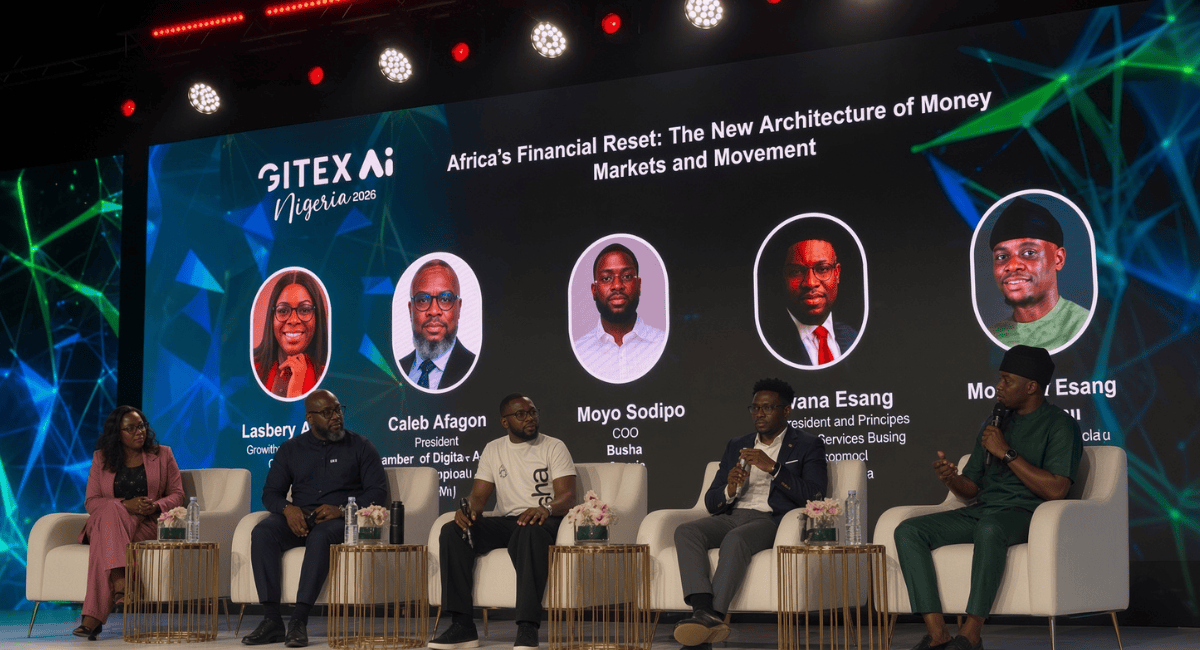
During a panel session titled Africa’s Financial Reset: The New Architecture of Money, Markets and Movement, on the Main Stage of the GITEX Nigeria event in Lagos on Thursday, industry leaders dismantled the assumptions underpinning traditional finance.
The consensus was striking. TechCabal’s Temitayo Jaiyeola posed a direct question to industry leaders: five years from now, when two African businesses in different countries settle an invoice on a single rail, will they use card networks, bank rails, or stablecoins? Every panellist rejected traditional bank networks. They all chose stablecoins.
The pivot towards digital assets is an organic response to market friction. Lasbery Oludimu, VP of Global Operations and MD at Yellow Card, argued that the speed and low cost of stablecoin transactions make them the undeniable choice for businesses. Yellow Card has already positioned itself at the vanguard of this shift.
Recent industry reports highlight that the company is building foundational cross-border payment infrastructure, leveraging tools like Fireblocks’ Wallets-as-a-Service to secure multi-party computation wallets at scale. This allows corporate treasuries to navigate foreign exchange risks and bypass inefficient legacy systems.
Moyo Sodipo, Co-founder and COO of Busha, echoed this sentiment. He mapped out a near future where a Nigerian trader could convert a naira-pegged stablecoin, like the cNGN, directly into a South African rand stablecoin. The transaction settles entirely on the blockchain, providing a transparent end-to-end audit trail that regulators can easily monitor.
Sodipo noted that stablecoins are already functioning as monetary value today. Users on platforms like Busha can buy airtime or groceries at retail outlets using digital assets, cementing their utility in daily life.
The trust deficit and traditional gatekeepers
If stablecoins offer a superior technological solution, why does the average consumer still default to fiat currency? Unwana Esang, Vice President and Principal Consultant for Services Business Development at Mastercard, offered a blunt diagnosis. It is fundamentally a trust issue.
Until that trust is established, even the most elegant payment solutions will fail to scale. To address this, global entities are investing heavily in cybersecurity and infrastructure stress-testing.
But Esang directed his sharpest critique at traditional financial institutions. He warned that legacy banks are still operating with an incumbent mindset, acting as gatekeepers rather than ecosystem partners. This reluctance to adapt means traditional finance is steadily losing ground to non-traditional players who are more agile and responsive to market needs.
A massive mindset shift is required for traditional operators to remain relevant.
Regulating a moving vehicle
The rapid adoption of digital assets places regulators in a difficult position. Caleb Afaglo, President of the Chamber of Digital Asset and Blockchain Innovations Ghana, characterises the current regulatory moment as an attempt to regulate a moving vehicle. Policy enacted through rigid, multi-year statutory acts inevitably fails the moment it is printed. Technology iterates daily; parliaments meet intermittently.
Afaglo advocates for omnibus legislative frameworks that empower central banks and securities commissions to deploy dynamic, living guidelines. Initiatives like the African Continental Free Trade Area (AfCFTA) and the Pan-African Payment and Settlement System (PAPSS) were drafted to foster unified commerce, but they risk falling back into the same fiat bottlenecks if they fail to harmonise digital asset frameworks.
If a trader in Accra cannot freely exchange value with a merchant in Lagos because national policies diverge wildly, Africa will simply duplicate the inefficiencies of fiat bureaucracy on top of digital tokens.
Nigeria is currently setting an interesting precedent for the rest of the continent. The Central Bank of Nigeria has progressively shifted its stance on digital assets. The Payments System Vision 2025 specifically noted the need for a regulatory framework for stablecoins.
Oludimu praised Nigerian regulators for focusing on the actual functionality of stablecoins as a means of payment rather than just treating them as speculative tokens. By initiating regulatory sandboxes, the CBN is attempting to understand how cross-border stablecoin flows impact national monetary policy before imposing blanket restrictions.
Sodipo added that responsible operators have always anticipated this regulatory scrutiny. From its inception in 2018, Busha implemented bank-grade Know Your Customer protocols, long before any formal mandate existed. This proactive compliance ensures that when regulators finally arrive at the table, operators are ready to demonstrate a secure, transparent environment.
The consensus among the panellists is that the transition to a digital, borderless financial architecture is inevitable. However, reaching full maturity will require deliberate action. The ecosystem needs harmonised standards across the African free trade zone so that digital value can move as seamlessly as data.
When asked to summarise the future of this space in a single word, the panellists provided a clear roadmap. Oludimu called for collaboration. Afaglo demanded unity. Sodipo highlighted adoption. Esang concluded with interoperability.
The days of isolated economies and fractured payment systems are numbered. The new architecture of money in Africa is already being built. It is being coded on the blockchain, pegged to local currencies, and driven by a young population that simply refuses to wait for the old gatekeepers to catch up. The financial reset is here, and it is entirely borderless.
