




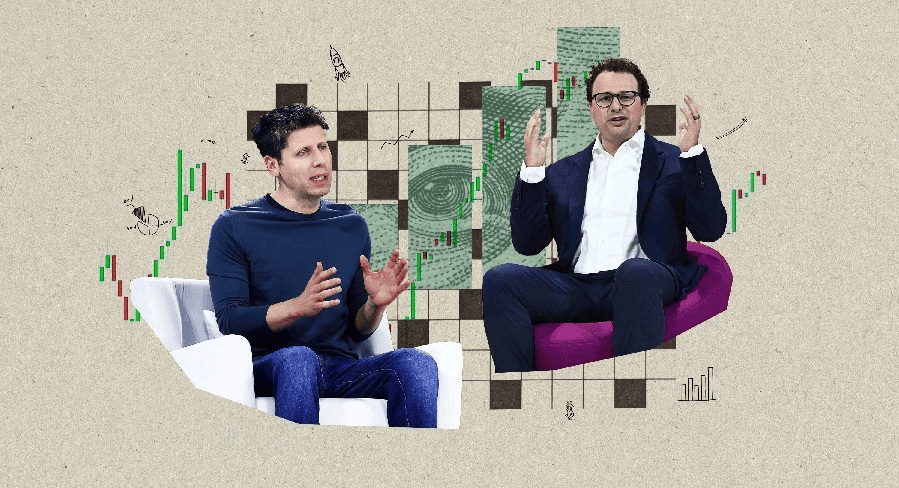
The loudest conversation in artificial intelligence (AI) right now is about the end of the world. Sam Altman, Elon Musk, and the rest of the industry’s famous names keep circling the same question: could AI one day turn on us?
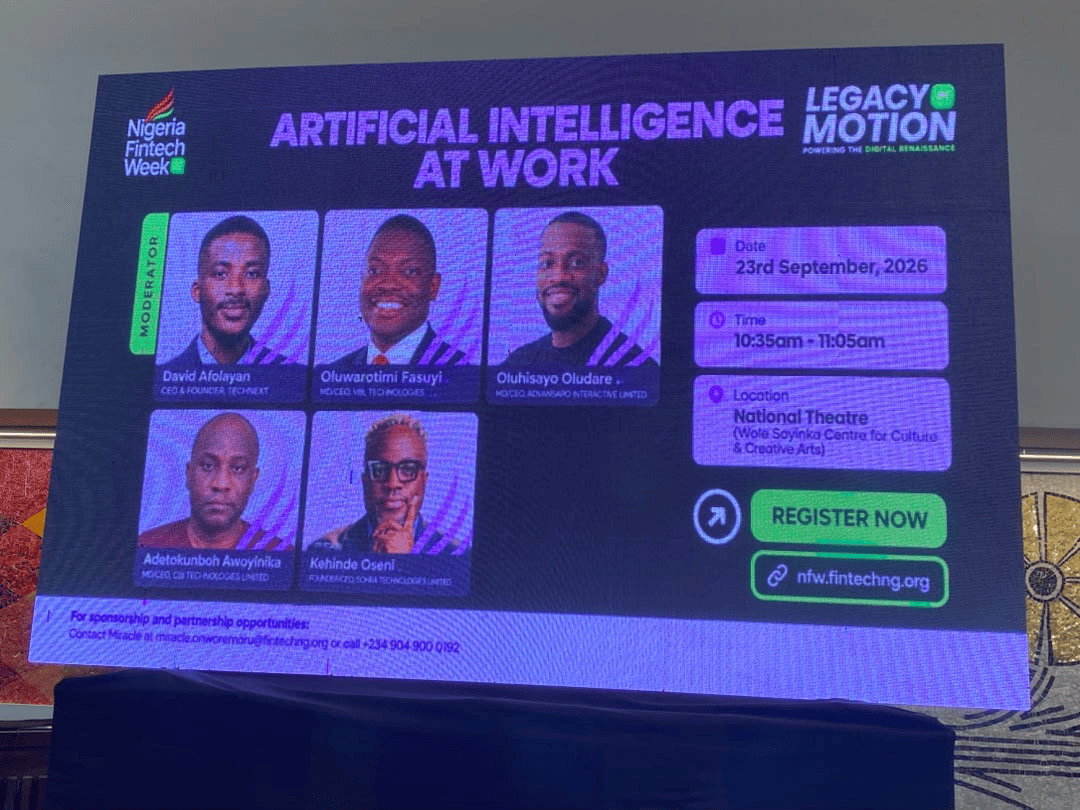
In Lagos, the question sounds different. It’s not whether AI will destroy humanity, but whether it can approve a loan faster, catch a fraudulent transaction sooner, or serve a customer who has never set foot in a bank branch. That gap between the doomsday debates abroad and the daily grind at home framed the conversation at Nigeria Fintech Week 2026 on Wednesday, September 23, during a panel aptly titled “Artificial Intelligence at Work.”
The session brought together three operators with little patience for abstraction: Oluwarotimi Fasuyi, MD/CEO of VFD Technologies; Adetokunbo Awoyinika, MD/CEO of CBI Technologies; and Olufisayo Oludare, Founder/CEO of Advansio.
Their range was wide: AI infrastructure, credit decisions, fraud detection, data quality, and the real cost of adoption. But before any of that, moderator David Afolayan, co-founder and CEO of Technext, planted a different question in the room: How much are we actually willing to trust machines?
He started with a show of hands. “Who here uses ChatGPT, Gemini, Claude or Grok?” Most hands went up. Then came the sharper follow-up: Who checks what these tools tell them? The room grew quieter.
Afolayan had a name for the gap between those two answers. He called it “cognitive surrender”: the habit of taking an AI’s answer at face value simply because it arrived quickly and sounded confident.
It was a neat way to name the dilemma at the heart of artificial intelligence at work. Yes, the technology can make decisions faster than any human team. But speed isn’t the same as certainty, and someone still has to decide which of those decisions deserves trust and which ones need a second look.
Similar read: Trump announces ‘Super Intelligence’ as new name for AI
That tension ran under everything the panel discussed. As Nigerian fintechs race to put artificial intelligence into production, the harder questions are rarely about whether the tools work. They’re about what happens when they’re wrong, and who is paying attention when they are.
AI is already doing more than generating text
For Fasuyi, the real change isn’t on the screens customers tap. It’s underneath them.
Traditional banks run on older systems built for deposits and savings. Fintechs handle far more digital transactions, and they need infrastructure that can absorb huge amounts of data without slowing down or leaving it exposed. Artificial intelligence can help carry that load, but only if the foundation is strong enough to hold it.
“Organisations should invest in what is secure, what is flexible, that can make use of or consume a lot of data, and also that adds value to the business,” Fasuyi said.
It’s a point that gets lost in the hype. A model is only as good as what it’s fed, and financial data is often messy or stuck in systems that don’t talk to each other. Bad data in, bad decisions out, and in lending, bad decisions cost money.
The CBN’s 2025 fintech report found that 37.5% of surveyed Nigerian fintechs use artificial intelligence for credit scoring and risk modelling, while 87.5% use it for fraud detection. When asked what would help them scale, access to high-quality data and infrastructure topped the list. So the tools are here. The raw material they need isn’t.
That’s why fraud has become the clearest use case. As finance goes digital, so do the people trying to break it. CBN figures cited in its Payments System Vision 2028 show that banks and customers lost ₦134.48 billion to fraud between 2020 and 2025.
No human team can watch that much activity in real time. Artificial intelligence can flag suspicious patterns before they turn into losses. Oludare, of Advansio, wants fintechs to pause before writing the cheque.
“Is it a vanity play, or is there a genuine business case for it?” he asked. Plenty of companies adopt artificial intelligence because competitors did, or because it looks good in a pitch deck. Oludare offered a simpler test: does it cut losses, make staff more productive, or bring in new customers?
“If you can answer those questions properly,” he said, “then that’s your ROI.”
Three plain questions. For many fintechs, the honest answers are the difference between a tool that pays for itself and one that just looks impressive.
AI could change how Nigerians get credit
The panel also tackled one of AI’s most consequential uses: deciding who deserves a loan. Traditional credit checks lean heavily on salary, past loans and repayment history. That shuts out people with thin or imperfect records, the very people who most need financing.
Awoyinika argued that artificial intelligence can read a wider picture. Take a trader in Agege who wants ₦500,000 but has defaulted once. A traditional system sees a bad borrower and stops there. The tech could look at the rest of her financial behaviour and conclude that while ₦500,000 is too much, a smaller loan might be perfectly safe.
“Let’s adopt it so that we can start taking decisions that will build businesses, not the ones that will destroy businesses,” he said.
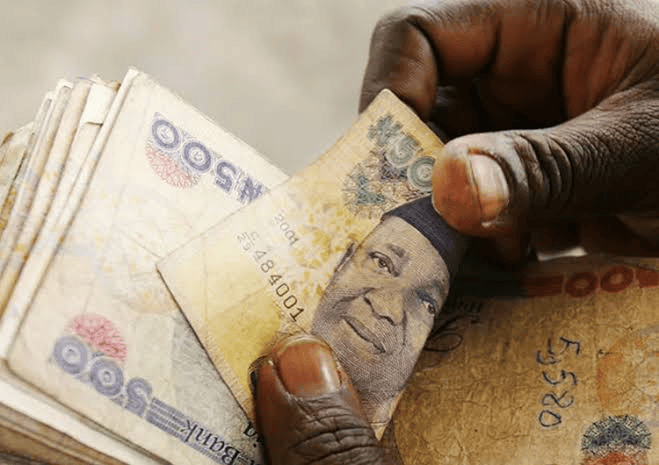
But the same power cuts both ways. Bad data produces bad decisions, and an AI trained on incomplete or biased information will repeat those mistakes faster and at a far greater scale than any human ever could.
That’s why data quality, transparency and human oversight matter as Nigerian institutions wire artificial intelligence into credit, fraud and compliance. The CBN has flagged it too, warning that AI-driven decisions in these areas will need stronger governance and closer supervision.
The end-of-the-world question nobody can answer yet: P(doom)
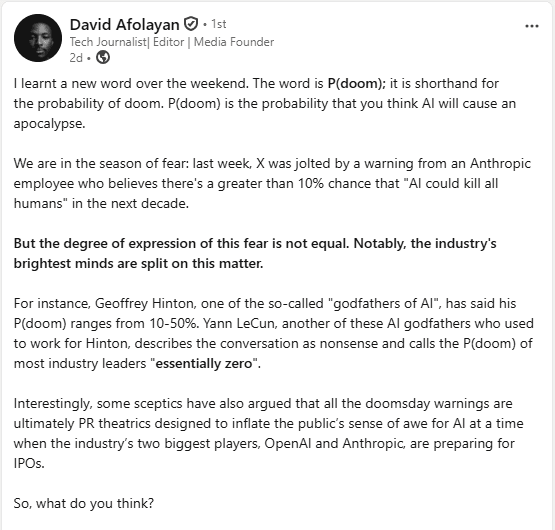
The AI conversation isn’t only about getting more work done. Afolayan also raised “P(doom)“, the probability that someone assigns to AI eventually destroying humanity.
The idea has gone mainstream, as big names in the field publicly disagree about how dangerous advanced AI could become. Geoffrey Hinton puts his estimate as high as 50%. Anthropic’s Dario Amodei has said 10% to 25%. Yann LeCun, one of the field’s most respected researchers, puts it close to zero. These are personal guesses, not settled science.
Afolayan’s point was simpler: obsessing over a hypothetical apocalypse can distract from the problems already sitting in front of businesses and consumers. For Nigerian fintechs, those problems are right there on the desk: fraudulent transactions, messy data, biased credit decisions, expensive AI tools, and the hard work of building systems that can safely handle large amounts of financial information.
So the panel wasn’t really asking whether AI will one day take over the world. It was asking what companies are doing with it today.
AI can help a fintech process information faster. It can flag suspicious transactions, support credit decisions and handle repetitive work. But none of that removes the need for good data, secure infrastructure or human judgement. If anything, as AI takes on more financial decisions, those things matter more, not less.
For Nigerian fintechs, the AI conversation has already begun. The real challenge now is making sure the technology solves today’s problems without creating bigger ones tomorrow.
