


In July 2025, more than 1,400 people gathered in London to watch two Nigerian women talk. There was no elaborate performance to sell, just Feyikemi Abudu and Jola Ayeye doing what they had been doing for years on their podcast, I Said What I Said: discussing relationships, everyday experiences and the complications of being a young Nigerian adult.
Only this time, their listeners had become a live audience. The show had moved from people’s headphones to a packed venue, attracting sponsors, including Ruka Hair and Kai Collective. By the end of the year, the podcast had held similar events in Toronto, New York, Abuja and Lagos.
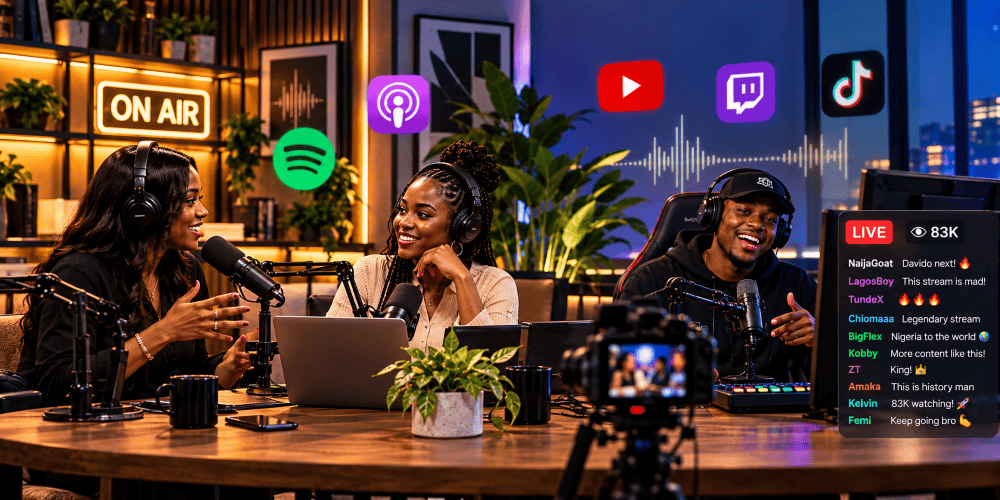
Five months later, Nigerian comedian Carter Efe demonstrated another side of this emerging business. On December 17, 2025, he hosted Afrobeats superstar Davido on Twitch, drawing approximately 83,000 concurrent viewers. Within a day, his account had surpassed 406,000 followers, making him Africa’s most-followed Twitch streamer at the time.
Together, these two events offer a glimpse of where Nigeria’s creator economy is heading.
Podcasts and livestreaming are offering the possibility for audiences to spend more time with creators, interact with them directly and go as far as paying for the experience.
In February 2026, Spotify disclosed that Nigerians had streamed almost 60 million hours of podcasts since the platform launched locally in 2021. Meanwhile, YouTube reported more than one billion monthly active podcast viewers globally as of January 2025.
These are different measurements, but they point to the growing appetite for content that goes beyond a few seconds of entertainment.
Podcasts are becoming businesses, not just conversations
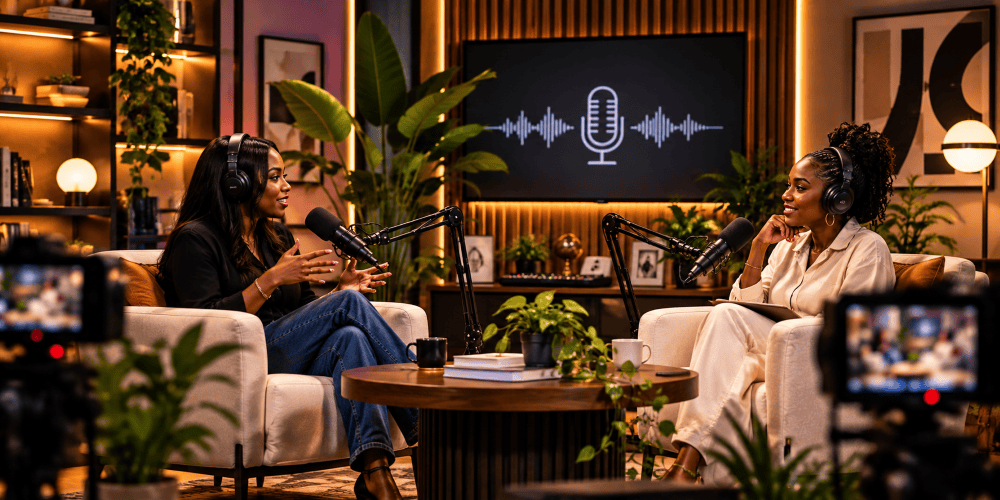
Relationship advice, celebrity gossip, politics and everyday Lagos experiences have long provided material for Nigerian conversations. Podcasts are giving some of those conversations a commercial life of their own.
The I Said What I Said podcast began in 2017 as a conversational show but has now grown into a media brand with international events, sponsors and a loyal community of listeners. The economics are different from those of a typical Instagram influencer. A sponsored post might earn a creator money once, but a successful podcast can develop several revenue streams around the same audience.
There are sponsorships within episodes, advertising opportunities, partnerships, merchandise and ticketed events, and more importantly, creators can develop businesses around audiences who return regularly rather than those who encounter their content accidentally.
Shows such as Tea With Tay, hosted by Temisan Emmanuel, and The Honest Bunch have also helped make long-form conversations a recognisable part of Nigeria’s entertainment culture, and it’s safe to say that audiences are responding.
The Nigerian Podcast Index’s October 2026 report documented 604 Nigerian and diaspora podcasts, compared with 329 in its previous edition. Although the increase partly reflects better identification of existing shows, it demonstrates the expanding catalogue of Nigerian audio content. Society and culture accounted for 172 shows, followed by religion and spirituality with 108 and business with 73.
But podcasts are also changing visually.
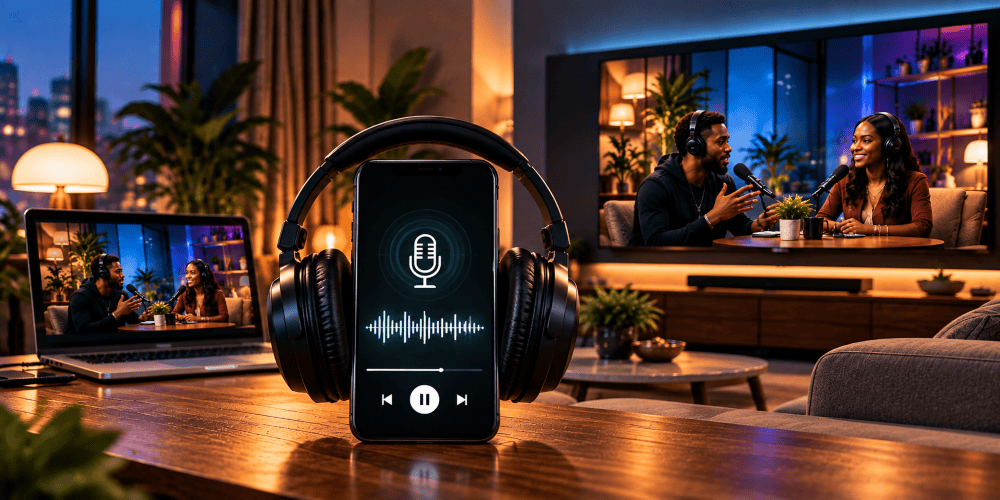
A conversation that would traditionally have been released as an audio episode can now be turned into a full YouTube video, several Instagram Reels and multiple TikTok clips. A viewer who discovers an interesting exchange on TikTok might eventually watch the full episode on YouTube or listen to it on Spotify. For creators, this means one recording can reach audiences across different platforms.
Globally, YouTube reported that viewers watched more than 700 million hours of podcasts on television devices in October 2025, compared with 400 million hours a year earlier. This shows that podcasting is gradually becoming as much a viewing experience as a listening one.
Livestreaming is giving creators something viral videos cannot
While podcasts are encouraging audiences to spend more time listening, livestreaming is turning content consumption into a shared experience.
Consider Peller, whose spontaneous TikTok livestreams have made him one of Nigeria’s recognisable online entertainers. Unlike traditional skit-making, which often involves hours of planning, recording and editing, his appeal is built largely around unscripted interactions
The audience is not simply watching a finished piece of content; with livestreaming, viewers can comment, react and sometimes influence what happens next.
Carter Efe’s December 2025 Twitch session with Davido demonstrated the potential of livestreaming by combining celebrity access, entertainment and direct audience engagement in a single broadcast.
That real-time engagement can also translate into income. On platforms such as Twitch, eligible streamers can earn through paid subscriptions and advertising. At the same time, YouTube offers eligible creators options including channel memberships and Super Chat, which allows viewers to pay to highlight messages during livestreams.
These features offer Nigerian creators another way to earn directly from their audiences instead of relying entirely on advertisers
The global appetite for livestreaming also continues to grow. In September 2026, YouTube disclosed that more than 600 million logged-in viewers watched live content, including archived streams, daily on average in August.
Building a sustainable creator business remains difficult
For all the excitement around podcasts and streaming, the financial realities of creating content in Nigeria remain difficult. Producing a quality podcast requires equipment, editing, research and, in some cases, studio rentals and production teams.

Livestreamers face similar expenses, alongside the recurring costs of electricity and internet connectivity.
Then there is the case of sustainability. The Nigerian Podcast Index found that only 268 of the 604 podcasts it documented were active in 2026, while the remaining 334 were classified as being on hiatus. That means more than half of the indexed podcasts were no longer publishing regularly.
Longer formats give creators more room to build relationships with their audiences, but that does not automatically make them profitable. They still need reliable revenue, workable agreements with sponsors and content that gives people a reason to return.
Read also: Spotify has officially expanded its Audiobook offering to Nigeria
