




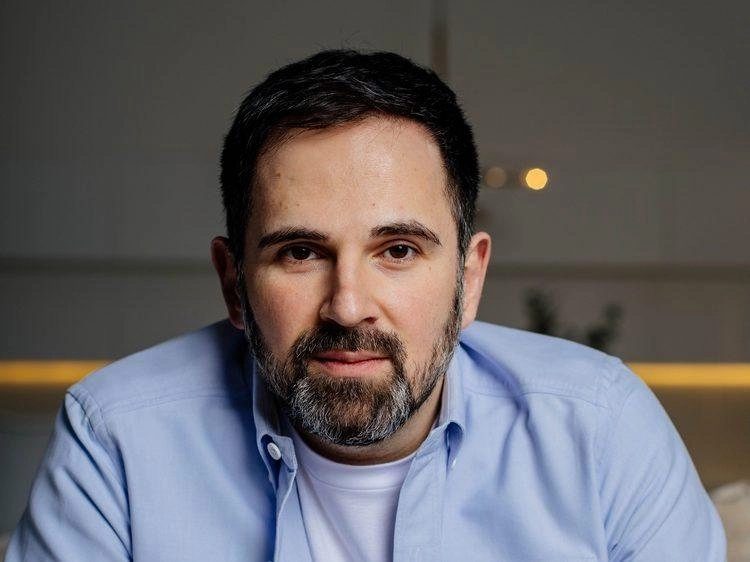
Vladimir Smerkis, co-founder of the Telegram-based cryptocurrency project Blum and former head of Binance’s CIS division, has been arrested in Moscow on suspicion of large-scale fraud, according to Russian state-owned news outlet TASS. The Zamoskvoretsky District Court approved a request from investigators to detain Smerkis while the investigation continues, citing Article 159 of the Russian Criminal Code, which addresses fraud and carries potential penalties of two to 12 years in prison.
While formal charges are yet to be filed, the allegations are reportedly linked to Smerkis’ earlier companies, The Token Fund and Tokenbox, rather than his involvement with Blum. However, the arrest has shocked the crypto community, especially Blum’s 5.3 million users, who are now questioning the future of the project’s highly anticipated BLUM token airdrop.
The fraud allegations centre on The Token Fund and Tokenbox, two crypto companies Smerkis co-founded in 2017. These projects allegedly led to investor losses totalling about $15 million, raising speculation of a possible exit scam.
The Token Fund was marketed as a crypto-asset fund, while Tokenbox aimed to provide a platform for tokenised funds and ICOs. Both initiatives garnered significant attention during the 2017 crypto boom but faded into obscurity amid reports of mismanagement and unfulfilled promises. Smerkis’ high-profile role at Binance, where he led operations in Russia and the Commonwealth of Independent States (CIS), added to his credibility at the time, but the collapse of these ventures has now come under renewed scrutiny.
Blum distances itself from Smerkis
Blum, a tap-to-earn crypto project integrated into Telegram Mini Apps, was quick to distance itself from Smerkis following his arrest. On Sunday, May 18, the project announced via X that Smerkis had resigned from his role as Chief Marketing Officer (CMO) and was no longer involved in any capacity.
“We would like to inform our community that Vladimir Smerkis has stepped down from his role as CMO and is no longer involved in the development of the project or in any co-founder capacity,” the statement read.
Blum emphasised that its day-to-day operations would continue unaffected and that the team remained committed to its roadmap, which includes a decentralised exchange and reward-based games.
The company’s swift response reflects the project’s efforts to mitigate fallout from the arrest, but it has not fully quelled community concerns. The project, which gained traction in 2024 amid the tap-to-earn frenzy sparked by Notcoin’s record-breaking airdrop, has positioned itself as a leader in the $511 million tap-to-earn market, according to CoinGecko. Its flagship “Drop Game”, launched in May 2024, allows users to earn Blum Points by tapping falling snowflakes on their mobile screens, with the promise of converting these points into BLUM tokens during a token generation event (TGE).
Blum’s airdrop journey and community sentiment
Blum’s BLUM token airdrop has been a focal point for its community since the project’s inception. On April 3, 2025, Blum hinted via X at a potential token listing in the third quarter of 2025, generating significant excitement. The Drop Game, supported by Binance Labs through its Most Valuable Builder accelerator programme, became a viral hit, attracting millions of users eager to accumulate Blum Points. The game’s simple mechanics, tapping snowflakes to earn points, mirrored the addictive appeal of Hamster Kombat, which executed the largest token airdrop in crypto history in 2024.
However, the road to the TGE has been bumpy. The Drop Game closed on May 14, 2025, earlier than anticipated, and the airdrop, initially slated for Q2 2025, faced delays. The project introduced additional “seasons” of the Drop Game to keep users engaged, but the lack of concrete updates on the TGE timeline frustrated many. Posts on X reflect growing unease, with users like @Basit_Adetolu noting that the TGE was expected before May 31, 2025, but Smerkis’ arrest has cast further doubt. Crypto influencer RK Gupta expressed the community’s frustration, writing, “No airdrop. No updates. Just silence. Was it all for nothing?” Another user demanded, “Blum owes its users a clarification on the planned airdrop.”

The mood within its community has shifted from enthusiasm to scepticism. The project’s Telegram and X channels, once buzzing with excitement, now feature heated discussions about the airdrop’s feasibility. Some users speculate that Smerkis’ departure and the fraud allegations could derail Blum’s plans, while others remain optimistic, citing the project’s strong backing from Binance Labs and its active development team. Blum’s recent announcement of plans to relaunch the Drop Game has been met with mixed reactions, with some users viewing it as a distraction from the lack of TGE progress.
Meanwhile, Smerkis’ arrest comes at a critical juncture for Blum and the broader tap-to-earn sector. The arrest of high-profile crypto executives, such as Celsius Network’s Alexander Mashinsky, who was sentenced to 12 years for fraud, has heightened scrutiny of the industry. Blum’s association with Smerkis, even if severed, risks damaging its reputation. Industry experts warn that regulatory compliance and transparency will be crucial for tap-to-earn projects to sustain growth.
“With continued transparency, especially regarding the much-awaited token airdrop, the project could go past Vladimir’s arrest with ease,” wrote Harsh Notariya, Editorial Standards Lead at BeInCrypto.
Blum has sought to reassure its community, stating, “We are committed to providing a safe and enjoyable experience for our users.” However, rebuilding trust will require clear communication and tangible progress on the TGE. The project’s ability to deliver on its airdrop promise will likely determine its long-term success in the tap-to-earn market that has since lost its euphoria.
