





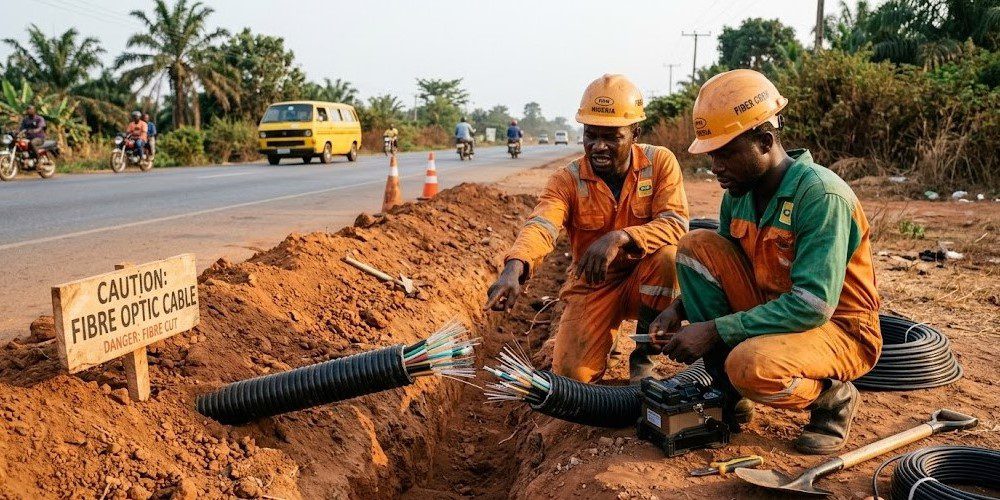
Nigerian Telecoms industry suffered 245 major cases of network outages in May 2026, revealing how Nigerians continue to experience significant disruptions in voice and data services.
Data available via the Nigerian Communications Commission (NCC) uptime portal shows that the reported service interruptions affected operators such as MTN, Airtel, T2mobile (formerly 9mobile), BCN, FibreOne, Layer3, IPNX and Tizeti.
Fibre cuts, power outages and equipment failures were the major causes of the disruptions. About 183 cases of fibre cuts were reported, accounting for 75% of the total causal agents. This also means that 7-8 in every 10 cases of network outages were attributed to fibre cuts.
Power outages are a distant second with 32 cases. This accounts for the number of times base stations were down due to loss of electrical power, when generators ran out of fuel or when there was a battery or diesel theft.
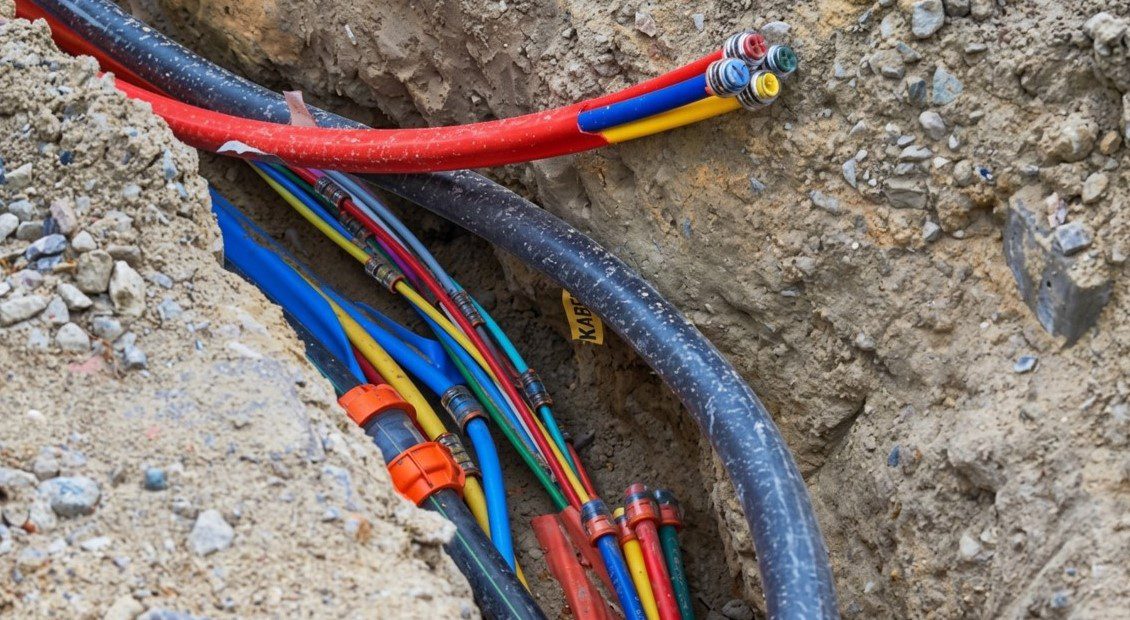
Also, operators recorded 15 cases of equipment failures, driven by faulty transfer switches, battery, and rectifier malfunctions, resulting in the malfunction of a backup system.
Other reasons for the outages are equipment theft, core network failure, delayed responses on electronic recharge applications that affected USSD services, fallen masts, vandalism and other unspecified items.
To an average Nigerian, the extent of the disruptions in voice and data services depends on the time and urgency of service usage.
A user experiencing a poor network while flipping through news feeds on a social media platform will experience less frustration compared to another who is struggling to place a call to raise money for emergency health reasons.
But the extent of the impact shouldn’t be a yardstick; every subscriber deserves to enjoy the maximum quality for their airtime recharges or data costs.

While the uptime portal is essentially for reporting major outages and is designed to track real-time network disruptions, the overall data for a month can be underestimated because, most of the time, not all operators report an outage, and the platform is for “major” outages.
This brings about the realisation that the 245 outages reported in May 2026 via the uptime portal are only major outages and represent a fraction of the network disruptions experienced in the telecoms industry during the month.
Also Read: Why telecoms theft and vandalism are still on the rise despite 10-year jail term for offenders.
CNII protection amid rising network outages
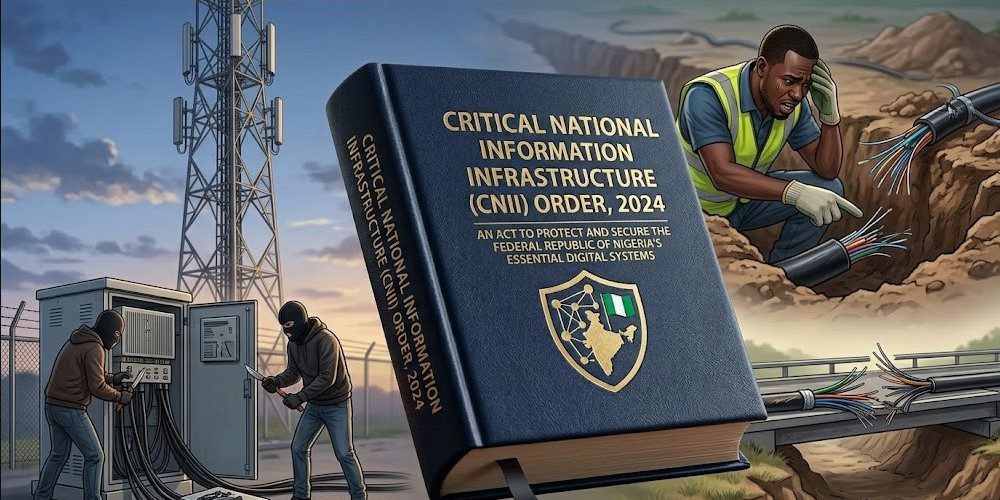
The ‘Designation and Protection of Critical National Information Infrastructure (CNII) Order, 2024’, designed to punish vandals of critical national infrastructure has been in effect for two years. Despite this, cases of vandalism to telecoms equipment designated as national assets continue to rise.
While the framework stipulates that anyone who damages CNII is liable, upon conviction, to a prison term of up to 10 years without a fine, this part has seemed ineffective, with available records indicating weak legal sentences. This has continued to influence the corrupt supply channel where equipment stolen by bad actors and vandals is being restocked into the market.
With weak CNII implementation, stakeholders have warned that the industry risks having more sophisticated attacks on telecom infrastructure, a factor that could further pose a threat to network quality, widen the connectivity gap, and delay economic stability.
In a communique seen by Technext, which was issued after the Advocaat Communications Infrastructure Summit 2026 held in Lagos, stakeholders present identified weak enforcement and prosecution mechanisms as a major obstacle. And evidence lies in the persistent record of vandalism, telecom thefts and growing numbers of preventable fibre cuts.
They argued that offenders are often prosecuted under general criminal laws that fail to adequately recognise the importance of telecom infrastructure as designated in the CNII framework. This was also linked to coordination gaps between agencies, ministries and authorities.
To bridge the gaps, stakeholders called for dedicated legal provisions and codified penalties for CNII theft or vandalism. While there’s a 10-year sentence provided in the framework, they demanded transparency in the judicial process for telecom infrastructure-related crimes.
In addition, they noted that the CNII must be properly recognised while the offence is officially treated as national threatening matters at both state and federal levels.
