




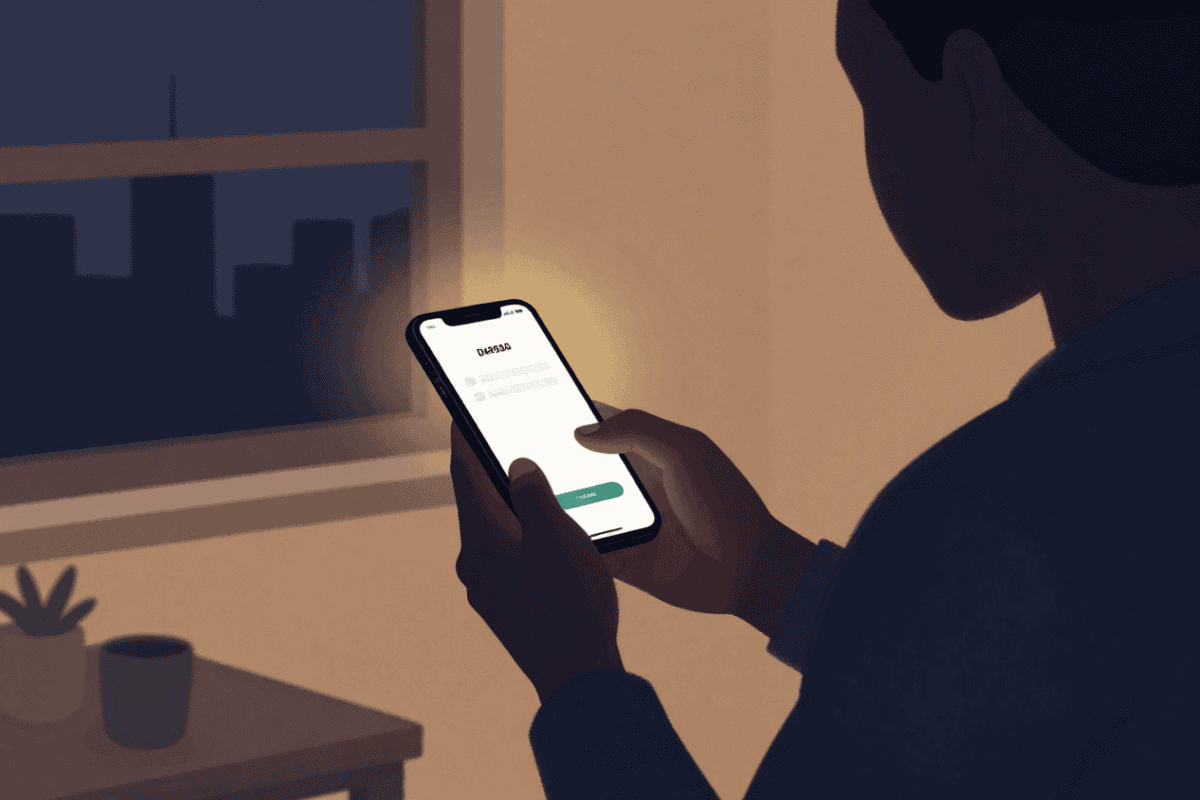
On the evening of Friday, September 6, 2024, a trader in Lagos checked her phone and saw an alert that ₦487,000 had entered her account. A client had been promising payment for weeks, so she did not question it. She paid her supplier, bought rice for the weekend and went to bed satisfied that the money had finally come through.
She did not know that the money had been generated by a software error, that no one had sent it and that no account anywhere had been debited to fund it. She did not know that 20 months later, a court would label her a fraudster and move to freeze every account tied to her name.
This is the story of how ₦13.66 billion appeared from nowhere and why ₦4.19 billion of it will never come back.
How a ₦13.66 billion NIBSS glitch became a ghost
Nigeria Inter-Bank Settlement System Plc, known as NIBSS, processes more money in a year than Nigeria’s entire economy produces. In 2024 alone, it handled over 12 billion instant transfers worth more than ₦1.07 quadrillion, most of them clearing in ten seconds or less. To the user, this feels like magic. Behind the interface, it runs on deferred net settlement.
When a customer sends ₦50,000 from Bank A to Bank B, Bank B credits the recipient instantly, but no actual money moves between the banks at that moment. Instead, NIBSS records a debit for Bank A and a credit for Bank B on its central ledger, and four times daily it settles the net difference by moving funds between the banks’ accounts at the Central Bank of Nigeria.
The instant transfer, in other words, is an accounting promise that gets settled in batches.

Read also: The hidden engines behind Nigeria’s ₦1 quadrillion payment boom
This architecture works efficiently under normal conditions, and it is also fragile, as the weekend of September 6 to 9, 2024, showed.
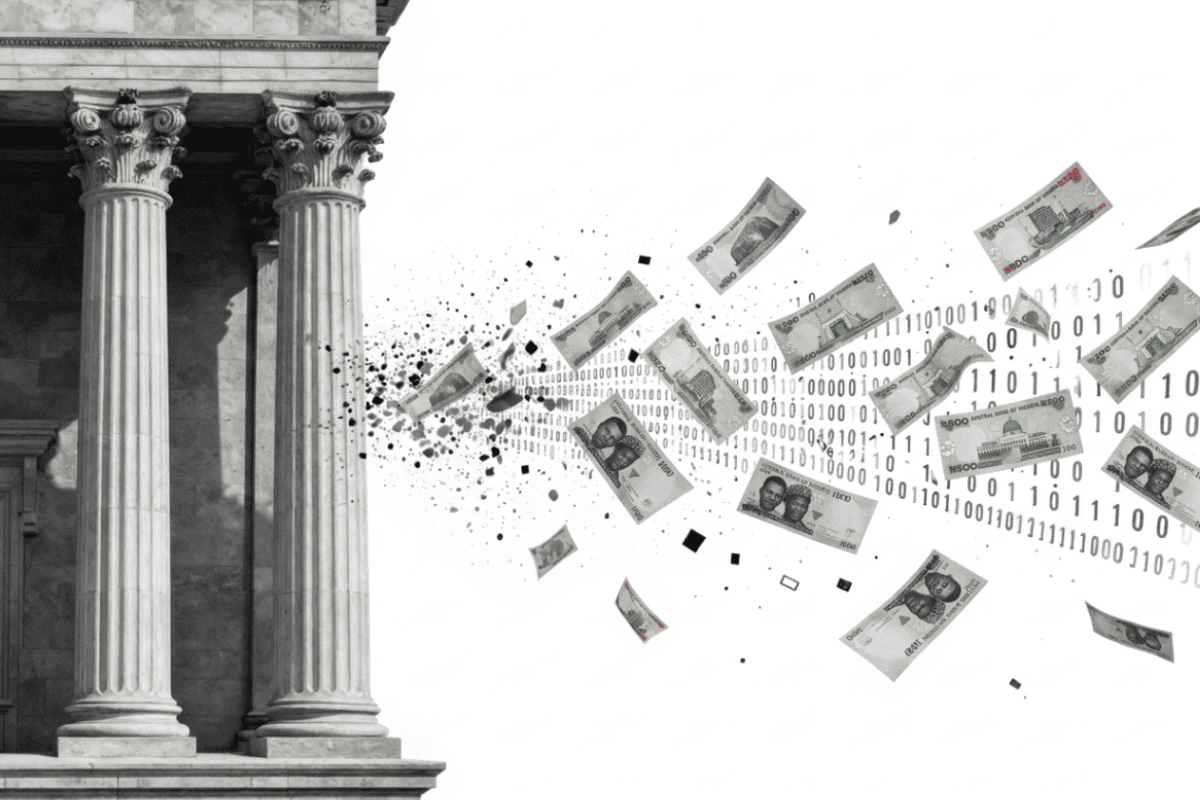
A technical accounting logic error in the NIP engine caused the system to credit beneficiary accounts without executing the corresponding debit instructions, so the money was generated outright rather than transferred from anywhere.
It landed in 176 accounts across 19 banks and fintechs, including Access Bank Plc, Ecobank Nigeria Limited, FairMoney Microfinance Bank, First City Monument Bank Ltd, Fidelity Bank Plc, Globus Bank, Guaranty Trust Bank, Kuda Microfinance Bank, Lotus Bank Limited, Moniepoint Microfinance Bank, Parallex Bank, Polaris Bank Limited, Providus Bank Limited, Sterling Bank Ltd, TAJ Bank, Titan Trust Bank, United Bank for Africa Plc, Wema Bank Plc and Zenith Bank Plc.
By the time the error was discovered on Monday, September 9, the money had already moved through the real economy: rent paid, school fees settled, business stock purchased.
NIBSS asked the banks to freeze the 176 accounts, and the banks refused, for good reason.
A recent Court of Appeal ruling in First Bank of Nigeria v. DKN Investments & Ors held that only courts can freeze customer accounts, and banks that act unilaterally face liability for damages, as First Bank discovered when it was ordered to pay ₦10 million for doing exactly that.
So for 20 months the money sat where it had landed, or where it had already been spent.
Of the total, ₦8.15 billion was traced but not recovered, and ₦4.19 billion was gone for good, withdrawn, transferred or otherwise absorbed into ordinary life.
In May 2026, NIBSS filed suit at the Federal High Court in Lagos, naming the 19 institutions and the 176 beneficiaries and asking for something unprecedented: BVN-linked Post-No-Debit orders that would freeze every account nationwide tied to a beneficiary’s Bank Verification Number (BVN) if granted.
One glitch, under this order, becomes total financial paralysis for 176 people.
NIBSS’s legal standing here is worth sitting with.
It is a switch, not a bank, and it does not hold deposits; it is jointly owned by the CBN and all licensed banks and was incorporated in 1993. It is now suing to recover money it never technically lost, money that its own software created, spent by people who very likely had no idea it was an error, moving through a system they did not design and could not have audited.
Who absorbs this ghost?
The question no other outlet has answered is who actually lost ₦4.19 billion.
In a normal failed transfer, the sender’s account is debited, and the recipient’s is not credited, so the money hangs in NIBSS limbo until it is reversed and someone is out of pocket in the meantime. Dry posting works differently: the debit never happened at all. The originating accounts were never charged. No sender anywhere lost money.
The beneficiary banks credited accounts with money that appeared to come from the settlement system. The CBN settlement accounts never received the corresponding debits to offset it, and NIBSS, sitting in the middle, recorded an imbalance.
The loss, then, is an accounting gap rather than a theft. Money that should not exist but now does, spent on rent and rice and school fees by people acting in good faith. If the 176 beneficiaries cannot repay, which is likely for many of them two years on, the loss has to be absorbed somewhere in the system, whether that is NIBSS’s reserves, the banks’ shared ownership structure or the CBN’s balance sheet. The public has not been told which.
An accounting gap at NIBSS’s scale carries real consequences, since NIBSS must present balanced books to the Central Bank four times daily to settle inter-bank obligations. When the ledger showed ₦13.66 billion in credits to beneficiary banks with no matching debits, the settlement system fell out of balance, and NIBSS had to inject real money, drawn from reserves or shareholder contributions, to complete settlement and prevent a cascading liquidity crisis.
The ₦4.19 billion that was spent and cannot be recovered functions as a real cash outflow that NIBSS, and ultimately its bank shareholders, absorbed, rather than as a phantom figure sitting harmlessly on a balance sheet. The same banks that refused to freeze accounts in September 2024, citing legal risk, are now paying for that refusal through their ownership of NIBSS.
NIBSS frames the glitch as a rounding error, at 0.0012% of ₦1.07 quadrillion, and at that scale the framing holds. But 0.0012% of a number that large is still a catastrophe at the individual level, and for the trader who received ₦487,000, it represents the entirety of her legal exposure.
This was not an isolated event either.
- In October 2024, GTBank mistakenly credited customers with ₦1.9 billion.
- A NIBSS-related issue reportedly worsened a ₦21 billion Flutterwave incident in 2023.
- On April 16, 2026, NIBSS suffered a nine-hour, 26-minute outage affecting all outward transfers, direct debits, Pay-with-Transfer and virtual accounts.
- On May 26, 2026, the eve of Eid al-Adha, when Nigerian Muslims buy rams, travel home and send money to family, the system failed again, and for ten hours transfers were debited without any matching credit reaching the other side.
The public reaction that day, captured in posts from users on social media, reads as a record of ordinary trauma: complaints of money hanging in transit, of frantic attempts to pay before a holiday, of the fear of public embarrassment over a transaction the system itself had broken.
A lawyer in Lagos needed three bank apps and two reversal attempts before she could leave a supermarket with her groceries.
A content creator watched a client’s ₦5.1 million investment deposit vanish mid-transfer. Neither of them was among the 176 beneficiaries, as they were ordinary Nigerians whose own money failed to move on the same system that had, 20 months earlier, generated money that did not belong to anyone.
The asymmetry sits at the centre of the story. When the system fails a user, the user waits. When a user unknowingly benefits from the system’s failure, the user goes to court.
The 176 beneficiaries now face the label of unjust enrichment for spending money the system placed in their accounts.
If the BVN Post-No-Debit strategy succeeds, a single mother’s salary account freezes, a student’s school fee savings freeze and a trader’s business capital freezes, not because any of them stole anything, but because a software error landed in an account on a Friday night and each of them did what almost anyone would do with an unexpected credit: they spent it.
