


The Democratic Republic of Congo has filed a criminal suit against Apple subsidiaries in France and Belgium. The Central African country accused the tech firm of exploring conflict minerals in the countries for its operations.
The Central African Country is a major source of tin, tantalum, and tungsten (3T minerals) used in computers and mobile phone production. Meanwhile, the United Nations and some human rights groups have warned that some artisanal mines are illegally exploited by armed groups. These groups often involve in mass rapes, massacres of civilians, looting and other crime.
In a complaint filed to the Paris prosecutor’s office and to a Belgian investigating magistrate’s office on Monday, Congo accused Apple’s local subsidiaries – Apple France, Apple Retail France and Apple Retail Belgium of some offences.
The complaints range from covering up war crimes and the laundering of tainted minerals, handling stolen goods, and carrying out deceptive commercial practices to assure consumers that supply chains are clean.

“It is clear that the Apple group, Apple France, and Apple Retail France know very well that their minerals supply chain relies on systemic wrongdoing,” says the French complaint, after citing U.N. and rights reports on the conflict in east of the country.
In the complaints prepared by the lawyers on behalf of Congo’s justice minister made allegations not just against the local subsidiaries but against the Apple group as a whole.
Congo’s Belgian lawyer, Christophe Marchand felt that Belgium had a particular moral duty to act as the looting of Congo’s resources began during the 19th-century colonial rule of its King Leopold II. “It is incumbent on Belgium to help Congo in its effort to use judicial means to end the pillaging,” he said.
Moving forward, Judicial authorities in both nations will decide whether to investigate the complaints further and proceed to criminal charges.
A U.S.-based lawyer for Congo, Robert Amsterdam, said that the French and Belgian complaints were the first criminal complaints by the Congolese government against a major tech company.
In a similar case in March, a U.S. federal court rejected an attempt filled by private individuals to hold tech giants companies such as Apple, Google, Tesla, Dell, and Microsoft accountable for their dependence on child labor in Congolese cobalt mines.
Since the 1990s, Congo’s mining in the east has been threatened by a series of fighting between armed groups between neighboring country Rwanda and the Congolese military.
Earlier in April, foreign lawyers representing the country claimed that they had evidence gathered from whistleblowers that Apple could be mining minerals from conflict regions in the east of Congo.
In addition, they argued that Apple uses minerals exploited from Congo and laundered through international supply chains. This they say proves the firm’s involvement in the crimes taking place in Congo. The lawyers demanded Apple to respond to the allegations or face strict legal actions.
In response to the allegations, Apple in its 2023 filing on conflict minerals to the U.S. Securities and Exchange Commission argued that none of its smelters or refiners of 3T minerals or gold had benefited or financed a group in Congo or neighboring regions.
On how it sources mineral materials, Apple claimed that it does not directly source primary minerals but ensures proper auditing of suppliers, publication of findings, and funding of bodies are done to improve mineral traceability.
Illegal mining in Congo
The struggle for the illegal mining of minerals has always been the main driver of conflicts between armed groups. According to UN experts and Amnesty – a human rights organization, they finance themselves with proceeds of exports, often smuggled via Rwanda. Though Rwanda denies benefiting from the trade.
Congo’s complaints focus on ITSCI, a metals industry-funded monitoring and certification scheme designed to help companies perform due diligence on suppliers of 3T minerals exported from Congo, Rwanda, Burundi, and Uganda.
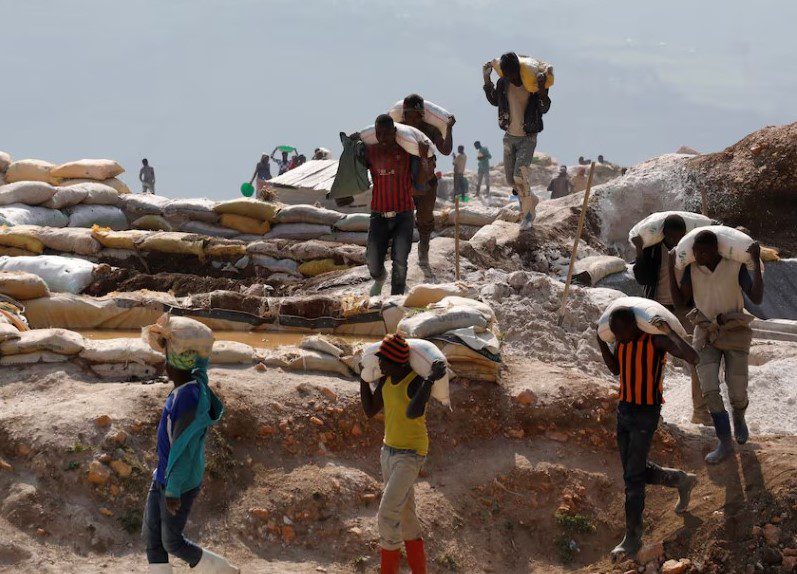
The lawyers argued that ITSCI has not been actively involved, including by the Responsible Minerals Initiative (RMI) of which Apple is a member. They expressed that Apple uses ITSCI as an undercover to falsely present its supply operation as clean.
RMI, which has more than 500 companies members, announced in 2022 that it was removing ITSCI from its list of approved traceability schemes. It prolonged the suspension in July until 2026. It claimed that ITSCI had not provided field observations from high-risk sites or explained how it was making efforts to curb the escalation of violence in North Kivu province, which borders Rwanda and is a key 3T mining area.
The U.S. State Department in July added that existing gaps in traceability schemes have not had sufficient engagement and attention to provide credible solutions to fill these flaws.
Also Read: Google may be forced to sell Chrome for up to $20 billion.
