


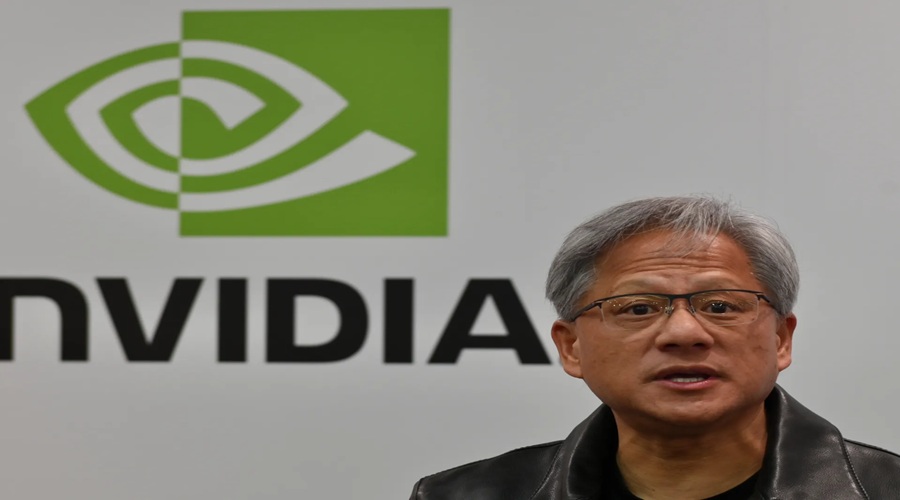
Nvidia has once again outpaced Wall Street’s projections, forecasting second-quarter revenue of $91 billion, well above analyst estimates of $86.8 billion. This comes as the world’s most valuable company continues to ride the extraordinary wave of global investment in artificial intelligence infrastructure.
The results, announced on Wednesday by CEO Jensen Huang, cap a first quarter in which Nvidia reported revenue of $81.6 billion, beating the average analyst estimate of $78.9 billion.
Data centre revenue, the division that powers everything from ChatGPT to Google’s AI products, came in at $75.2 billion, above the $72.8 billion analysts had expected. On an adjusted basis, the company earned $1.87 per share, compared to market estimates of $1.76. Alongside the results, Nvidia announced an $80 billion share repurchase programme and raised its quarterly cash dividend from $0.01 to $0.25 per share.
The numbers are staggering, but they make sense when you consider what is driving them. Analysts estimate that Alphabet, Amazon, and Microsoft could collectively spend more than $700 billion on AI infrastructure this year, a sharp increase from around $400 billion in 2025. Nvidia’s chips sit at the centre of almost all of it, powering the data centres that train and run the world’s most advanced AI models.

Huang pointed to a new and fast-growing segment of customers in the data centre business, AI-specific cloud companies, as a key growth driver. He said sales to those customers were roughly equal to Nvidia’s biggest tech clients but were growing faster quarter-over-quarter.
“We should be growing faster than hyperscale capex,” he told analysts on a conference call.
The company also unveiled its new “Vera” central processing units, which Huang described as giving Nvidia access to a new $200 billion market. He expects $20 billion in Vera chip revenue by the end of this fiscal year, a figure that was not included in Nvidia’s earlier $1 trillion forecast for its flagship Blackwell and Rubin AI chips between 2025 and 2027. “I expect Vera to be the second largest sales contributor,” Huang said. “All of our customers are quite excited about Vera.“
Despite the strong numbers, Nvidia shares fell 1.6% in extended trading, a sign that investors are beginning to ask harder questions about how long this growth can last.
“Nvidia delivered another beat, but at this point that’s essentially priced in,” said eMarketer analyst Jacob Bourne. “The lingering question is whether it can convince investors the AI buildout has durability into 2027 and 2028, especially as the narrative shifts toward inference workloads and competing silicon from Google, Amazon, AMD and Intel.”
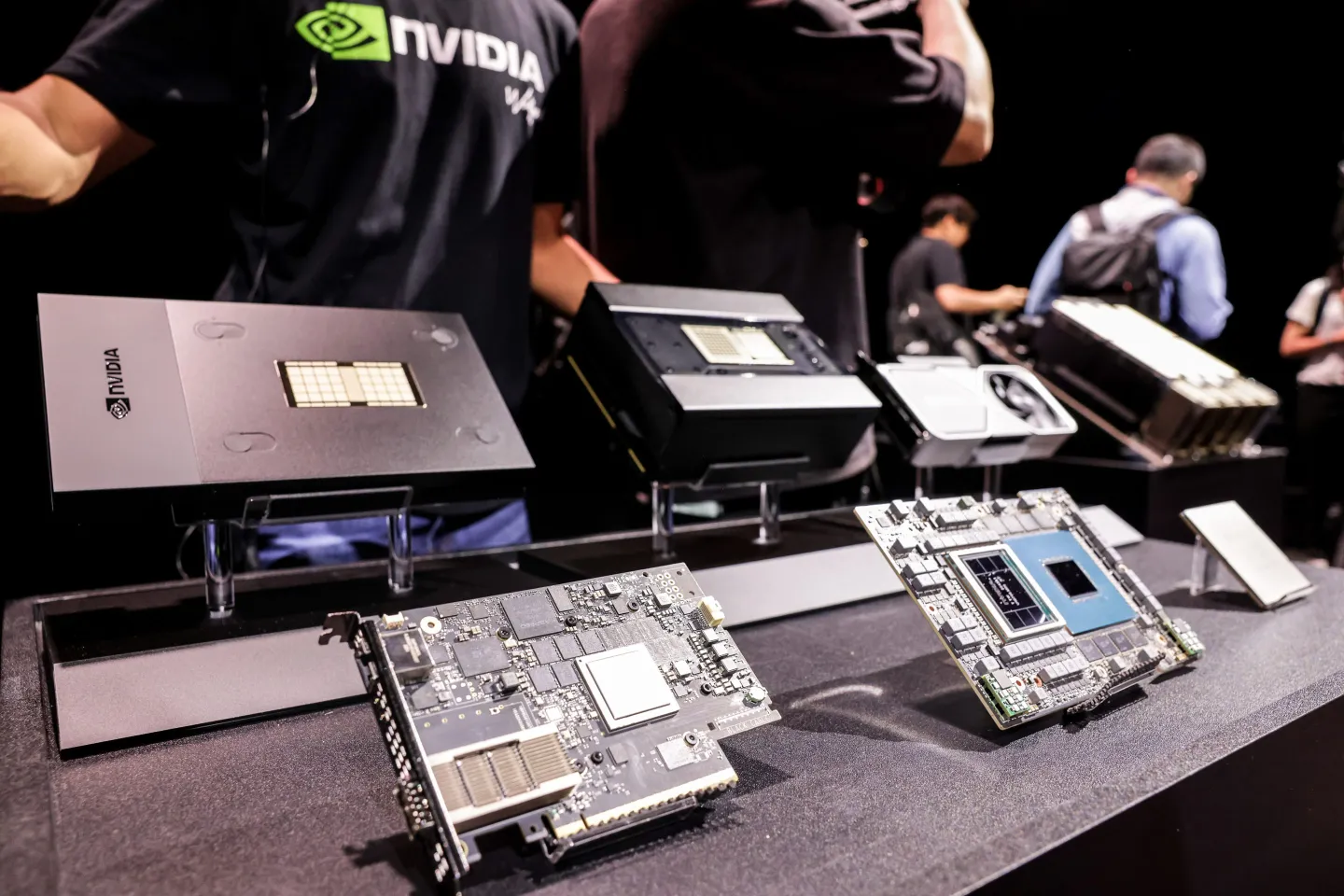
Huang also acknowledged a persistent challenge: supply. “My sense is that we’ll be supply-constrained through the entire life of Vera Rubin,” he said, referring to the combined technology platform set to launch later this year.
Why Nvidia’s results matter to the industry and beyond
For tech and business stakeholders, Nvidia’s results are effectively a health check on the entire AI industry. When Nvidia beats estimates quarter after quarter, it signals that the AI spending wave is not slowing down, that companies are still pouring money into the infrastructure needed to build, train, and run AI systems.
That has knock-on effects for cloud computing firms, software companies, chip manufacturers, and anyone whose business intersects with technology.
For the common person, the connection is less direct but still real. Every time you use a chatbot, get a recommendation on Netflix, ask your phone to translate something, or interact with any AI-powered service, there is a very good chance Nvidia’s chips are somewhere in the background making it happen. The company’s ability to keep growing means AI tools will continue to be built, improved, and made available, many of them free or low-cost for everyday users.

For Africa specifically, the relevance is growing. As Nigerian and African startups increasingly build on AI infrastructure, from fintech fraud detection to health diagnostics to customer service automation, the availability, cost, and performance of the chips powering those systems matter directly.
Also read: Palantir beat Nvidia to record the largest AI stock gain, with 876% growth
A constrained Nvidia supply chain means more expensive cloud computing globally, which eventually reaches the prices African companies pay to run AI workloads on platforms like AWS, Google Cloud, and Azure.
Nvidia’s success is not just a Wall Street story. It is the story of who controls the engine room of the modern digital economy, and for now, that remains Jensen Huang’s company.
