




For five years, Paris sold itself as Europe’s undisputed cryptocurrency capital. President Emmanuel Macron’s administration courted global exchanges, celebrated homegrown hardware giant Ledger, and persuaded Circle to anchor its European stablecoin operations in the French capital ahead of the European Union’s Markets in Crypto-Assets (MiCA) rules. Now, inside a fractured National Assembly, lawmakers had advanced legislation imposing a 31.4% capital gains tax on crypto-to-stablecoin transactions.
A closer reading of the 2027 Finance Bill (Projet de loi de finances pour 2027) reveals that French legislators are not merely adjusting a tax bracket, but through three interlocking amendments, the left-wing lawmakers are attempting to tax investors when they hedge against volatility, catalogue their private self-custody wallets, and bill them on paper profits if they try to leave the country.
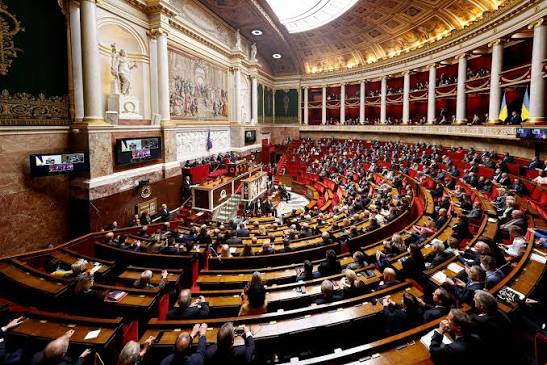
The immediate flashpoint is Amendment I-3898, authored by left-wing deputy Nicolas Sansu. During a sparsely attended floor session on October 16, where 477 of the Assembly’s 577 deputies were absent, the measure passed by a single vote: 38 in favour, 37 against, and 25 abstentions.
France is not exactly imposing a new 31.4% tax; the figure represents the existing flat tax (Prélèvement Forfaitaire Unique) triggered when retail investors cash out digital assets into fiat euros. Since 2019, Article 150 VH bis of the General Tax Code has granted tax deferral (sursis d’imposition) on crypto-to-crypto trades, allowing traders to rotate out of volatile tokens like Bitcoin into stablecoins without owing tax until those funds hit a bank account.

Amendment I-3898 revokes that deferral from 1 January 2027, turning a routine risk-management trade into an immediate taxable liquidation. During the same sitting, deputies voted 75 to 18 to kill a proposal allowing retail investors to carry forward realised crypto losses over ten years. In short, the state wants 31.4% when you lock in gains during a bull run but refuses multi-year relief when a crash wipes out your principal.
The legislative drafting also creates an extraordinary regulatory tipping point. The text defines taxable stablecoins strictly as Electronic Money Tokens (EMTs) authorised under MiCA, which carry a direct contractual claim for fiat redemption at par. That definition squarely hits compliant tokens like Circle’s USDC and euro-backed EURC. However, offshore giant Tether (USDT) and decentralised protocol DAI do not hold MiCA EMT licences. Under a literal reading of the text, swapping Bitcoin into regulated EURC triggers a 31.4% tax bill, while swapping into unregulated USDT remains tax-deferred.
François Volpoët, CEO for France at blockchain analytics firm Chainalysis, warned that taxing regulated stablecoins directly undermines MiCA’s goal of bringing traders onshore. Meanwhile, Léa Mastrolillo, a tax partner at Paris law firm ORWL Avocats, pointed out that the amendment also scraps France’s global portfolio valuation rule for these swaps, forcing taxpayers to calculate cost basis token by individual token.
Wallet surveillance and the exit toll
If taxing stablecoin hedges pushes investors toward self-custody or foreign jurisdictions, two companion amendments waiting in the budget queue aim to block both routes.
Also read: Crypto tax: 6 things you need to know about Nigeria’s new virtual assets taxation framework
The first is Amendment I-2701, which mandates that French tax residents declare the balances of all self-custodial wallets if their combined value exceeds €100,000 ($112,000) during the tax year. In any other country, this would read as standard tax enforcement. In France, which has suffered a documented wave of violent home invasions and kidnappings targeting crypto holders over the past two years, industry groups view a centralised government registry of high-value hardware wallets as a physical security loophole.
The second is Amendment I-CF1822, a proposal to extend France’s corporate-style “exit tax” to digital assets. Approved at the Finance Committee stage earlier in October, before the committee rejected the broader tax bill 31 to 3 and forced a floor reset, the measure targets anyone who has lived in France for six of the past ten years and holds more than €800,000 in crypto. Moving one’s tax residence abroad would trigger capital gains tax on unrealised paper profits, even if not a single token has been sold.
Fiscal desperation meets a 24/7 market
Why is Paris reaching so aggressively into its citizens’ digital wallets? The answer lies in France’s grim fiscal arithmetic. According to official INSEE figures, French public debt has climbed past €3.64 trillion, or 119.8% of GDP, while the annual budget deficit sits at 5.4% of GDP. With street protests erupting across French cities over public spending cuts, resulting in more than 2,500 arrests, according to Reuters, the government is hunting for revenue wherever capital looks liquid.
That parochial tax hunt runs directly counter to how global finance now operates. On October 20, the same day the National Assembly opened its floor vote on the budget’s revenue section, a joint report from Coinbase and The Block Pro Research titled ‘The Always-On Dollar’ revealed that global stablecoin transfer volume reached $891 billion in the third quarter of 2026, moving $400 million every hour, with 73% of transactions settling outside standard banking hours. While global corporations increasingly use stablecoins as 24/7 working capital, French lawmakers still treat them as casino chips.
Whether this three-wall trap becomes law is far from settled. Even the French executive branch opposes Amendment I-3898; Public Accounts Minister David Amiel argued on the Assembly floor that the stablecoin tax is legally flawed and practically unenforceable. To take effect in January 2027, the amendments must survive the full National Assembly vote scheduled for November 17, pass the conservative-controlled Senate, and escape the government’s likely use of Article 49.3 of the Constitution. This procedural guillotine allows the Prime Minister to pass the budget without a parliamentary vote while stripping out hostile amendments.
Even if the executive purges these measures in November, the damage to Paris’s reputation is already done. Capital, especially crypto, goes where it is welcomed and stays where it is predictable. By signalling that regulatory compliance is merely a prelude to confiscation, France’s parliament has handed its European rivals the best marketing campaign money cannot buy.
