




Sixteen months ago, Nigeria handed its Securities and Exchange Commission the keys to crypto regulation. The Investments and Securities Act, 2025, was unambiguous about it: virtual assets were securities, and the SEC, not the CBN, was the apex regulator, full stop. Director-General Emomotimi Agama built out an entire onboarding pipeline around that mandate, the Accelerated Regulatory Incubation Programme, and exchanges and crypto protocols queued up to get licensed under it.
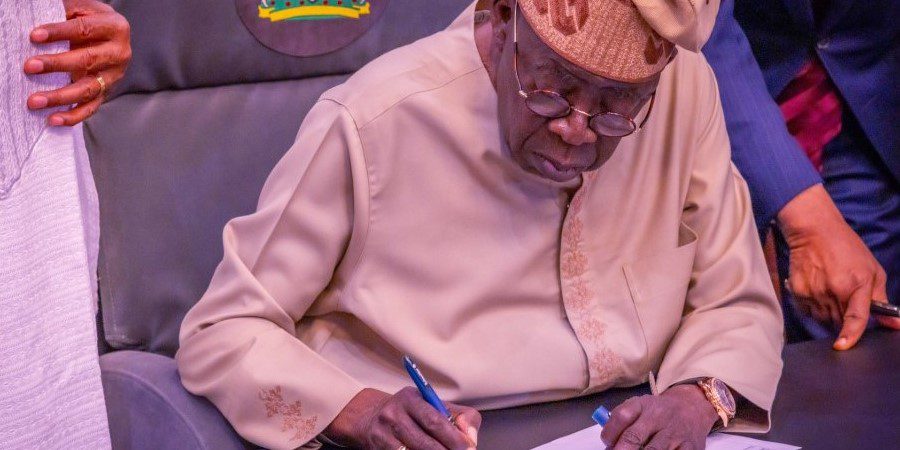
On Friday, 17 July, President Bola Tinubu signed something that quietly complicates that picture.
The Presidential Executive Order on Virtual Assets Coordination, 2026, announced by presidential spokesman Bayo Onanuga, sets up a new Virtual Asset Council. It is chaired by the Central Bank of Nigeria. The SEC sits as vice-chair, one seat among several, alongside the Nigerian Revenue Service, the Nigerian Financial Intelligence Unit and the Office of the National Security Adviser.
That single detail, CBN in the chair rather than SEC, is the story behind the story.
What the CBN-led Virtual Asset Council really means
Read straight, the presidency’s statement is careful to say this changes nothing structurally. No new regulator is being created. No agency loses its statutory powers. What’s being built is a coordination layer sitting on top of an already fragmented system, where digital assets have been sliding between the definitions of currency, commodity and security faster than any single regulator could keep pace with.
The mechanics, according to the Statehouse release:
- A Virtual Asset Council, chaired by the CBN, with the NRS and SEC as vice-chairs and the NFIU and ONSA as members, is tasked with policy direction and works alongside the Attorney-General to build a harmonised legal framework.
- A Virtual Asset Office, the Council’s operational engine, headquartered at the CBN, runs day-to-day information sharing between agencies through a shared supervisory tech platform, while each agency keeps ownership of its own data.
- A split registration model: the SEC registers activity that looks like securities trading, the CBN registers payment, settlement and custody services involving non-security virtual assets, and the Council steps in to arbitrate anything that falls between the two.
- A CBN regulatory sandbox, already in motion, for testing virtual asset products and blockchain-based services before they reach the open market.
- A forthcoming NRS tax policy specifically for the virtual asset sector, aimed at pulling the industry into the tax net with clearer rules than currently exist.
- A Virtual Assets White Paper, described as nearing completion, is meant to set Nigeria’s longer-term direction for the sector.
- A 30-day deadline for the Council to produce a Harmonised Implementation Framework.
The order takes effect immediately, signed under Section 5 of the 1999 Constitution, which gives the president fairly broad executive powers to direct the machinery of government without needing fresh legislation.
Why the CBN detail matters more than it looks
The CBN is the same institution that, in February 2021, ordered Nigerian banks to stop servicing crypto exchange accounts entirely, a ban it only eased in December 2023. It has spent most of the past five years as the most crypto-sceptical major regulator in the country, worried about capital flight, naira volatility and monetary sovereignty far more than it has been about fostering innovation.
SEC, by contrast, has spent that same period trying to build the opposite reputation. The ISA 2025 gave it explicit statutory power to license virtual asset service providers, and its ARIP cohort system was designed, at least in messaging, to bring exchanges into the fold rather than push them out.
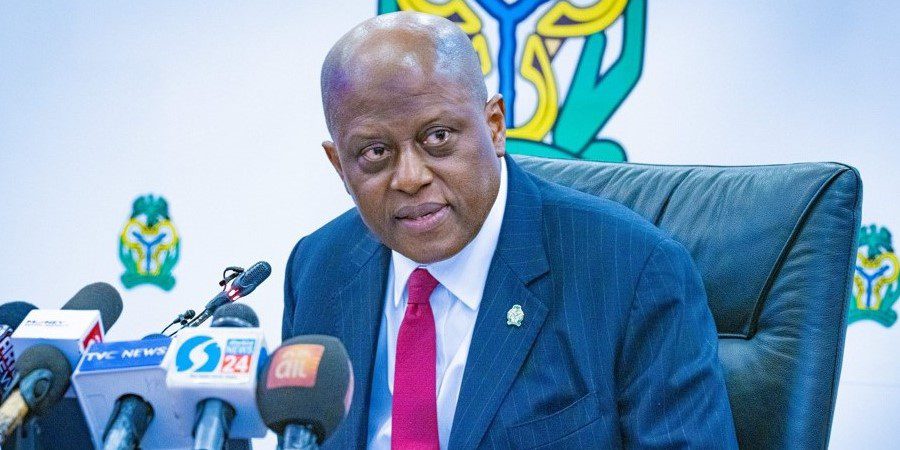
Putting CBN in the chair of the body that now coordinates both agencies doesn’t strip the SEC of its licensing powers on paper. But it does put the historically more restrictive institution in the room where disputes get resolved, sandboxes get designed and the tone of the “harmonised framework” gets set. Whether that produces genuinely balanced coordination or a slow recentralisation of control around the CBN’s more cautious instincts is the question industry watchers will be pricing in over the next 30 days, as the Harmonised Implementation Framework takes shape.
There’s also a timing wrinkle worth flagging. About a month before this Executive Order, the Senate advanced the Virtual Asset Service Providers Regulation Bill, 2026, sponsored by Deputy Senate President Jibrin Barau, to its second reading. That bill covers much of the same ground: licensing, reporting and compliance obligations for exchanges and wallet providers. Senator Tahir Monguno has warned that without clearer rules, activity could simply move underground.
So Nigeria now has an executive order building coordination machinery from the top down and a legislative bill working through the same territory from the bottom up, on parallel but not obviously connected tracks. The Statehouse release didn’t make any reference to the Senate bill, so it’s unclear whether the two are meant to converge, whether the executive order is designed to pre-empt the legislative process, or whether nobody has quite worked out how they’ll fit together yet.
The Statehouse statement leans hard on fraud prevention, pointing to unregistered operators who have “cost families their savings”. That’s consistent with a pattern: Nigeria’s crypto policy conversation over the past two years has repeatedly circled back to retail losses, from the Patricia fallout that still shadows local exchange trust to memecoin blowups to P2P traders getting squeezed by both local regulation and foreign exchange restrictions.
What the order doesn’t spell out, at least not yet, is enforcement mechanics: how fast the shared supervisory platform will actually flag bad actors, what happens to unlicensed platforms currently operating in the gap between SEC and CBN’s separate registration lanes, or how the tax policy NRS is expected to release a product that will interact with a sector that has spent years operating largely outside formal tax administration. Those details are meant to arrive within the Council’s 30-day window. Until then, this reads more as an architecture announcement than an enforcement one.
This is not, on its face, a rupture, but Nigeria trying to stitch together a regulatory patchwork that’s been visibly straining since virtual assets stopped behaving like any single category the law had a name for. But the choice to seat the CBN at the head of that table, after a decade of the SEC building a more crypto-friendly public posture, is a signal worth reading carefully. So is the fact that the National Assembly appears to be legislating on the same terrain in parallel, without any visible coordination with the executive’s own timeline.
