


Almost six years after the Nigerian Communications Commission (NCC) gave regular approval for eSIM rollout, Nigerians still aren’t buying into this technology shift. While the Nigerian telecom industry is ready for the transition on paper, eSIM-only phones still sit on shelves far longer than their physical-SIM counterparts.
In a conversation with Technext, Yusuff Uthman Adekola, a Nigerian Consumer Tech Specialist, explained that the resistance builds on existing consumer psychology and risk aversion. He linked the low adoption rate to Nigerians’ reluctance to adopt new tech, especially in everyday interactions.
“One thing about Nigerians is that we are generally sceptical when new things come,” Uthman said.
“We tend to feel like, ‘This is what I have always known. So let me not try this new one. I don’t know if it will give me issues. Let me just stick to what I already know.”

Similar read: eSIM: All you need to know and how to onboard in Nigeria.
eSIM technology officially penetrated the Nigerian economy in July 2020, following initial testing and regulatory approval by the Nigerian Communications Commission (NCC)
MTN Nigeria unveiled the country’s first eSIM service on July 15, 2020. In November 2020, NCC formally granted MTN Nigeria and 9mobile (now T2mobile) approval to run a one-year trial involving 5,000 eSIMs to test technical performance. Airtel Nigeria joined in 2022, while Globacom introduced eSIM support in March 2025.
Alongside other mobile network operators (MNOs) like Airtel, Mobile Virtual Network Operators (MVNOs) such as Lebara, Vitel Wireless, and EmoSIM already support eSIM activation, allowing a single smartphone to store multiple digital lines simultaneously.
Yet recent data explain the depth of this slow adoption.
MTN Nigeria added 253,842 eSIM subscribers in 2025, representing a 65.4% increase from 2024, which meant that the operator had 492,370 subscribers as of December 2025. At that time, MTN Nigeria’s eSIM subscribers accounted for just 0.53% of the telco’s total subscriber base.
The eSIM misconceptions
As Nigerians’ demand for eSIM-only smartphones is significantly lower, vendors have priced them at a lower discount compared to identical models equipped with physical SIM slots. This reveals relatively lower demand for eSIM mobile phones in Nigeria, and some people are now trying to convert such devices so that they can find buyers more easily.
An example is how U.S. iPhones, which only support eSIMs, are unofficially re-engineered to include a physical SIM slot.
Beyond habits, the low demand for eSIMs builds on several misconceptions.
Along with his interactions with thousands of followers online, Usman identified three reasons holding back eSIM adoption. The first is the perceived onboarding stress, followed by confusion over how digital profiles work, and fears of being locked into a single network.
“A lot of people feel like getting the eSIM profile set up is stressful,” Uthman said. “They feel like they will have to go to the telecom office. Had it been something they could just sit down in the corner of their room and set it up, it would have been much better.”
“They feel like, ‘What do you mean? I will not have a specific SIM within my phone?” Uthman said, adding that when people don’t know about something, they tend to draw back from it.
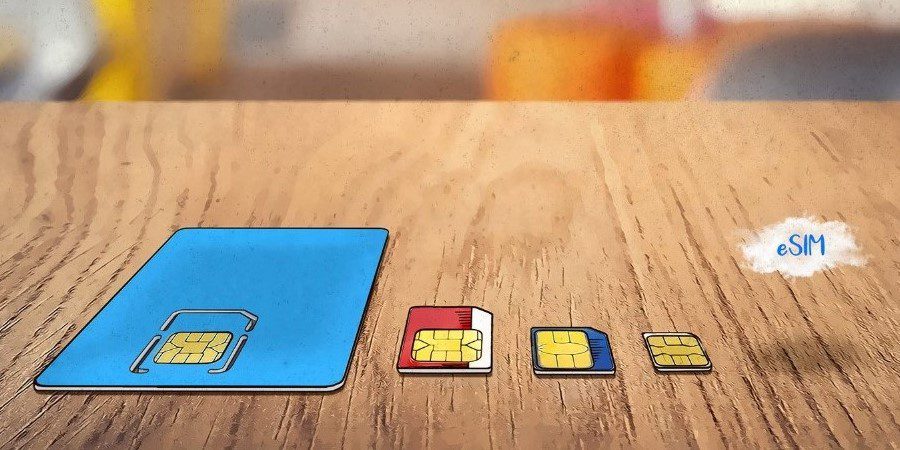
It shows an information gap, as some people also don’t know that they can switch between different networks easily, even when they use an eSIM.
Beyond misconceptions, a recent report backed the information gap, revealing how people don’t know the technology exists.
According to the Mobile World Live eSIM Survey Report 2026, 55% of phone consumers spotlighted in the study are unaware of the technology. Setting up a new or upgraded phone was identified as the most common consumer trigger by 60% of respondents, with roaming a close second at 55 %.
Respondents identified lack of awareness as the top barrier at 55%, followed by lack of device support at 47%. Some 39% were hesitant about adopting it, while 35% found the activation process too complicated. Additionally, 20% believe that it is more expensive than physical SIM cards, which discourages them from switching.
But a GSMA report is confident of increased adoption. The study projected that the adoption rate will surge 75% by 2030, driven by the activation of the technology for travel purposes.
Also read: Nigeria reaches 200 million active telecom users, the first time since 2024’s NIN-SIM enforcement.
