


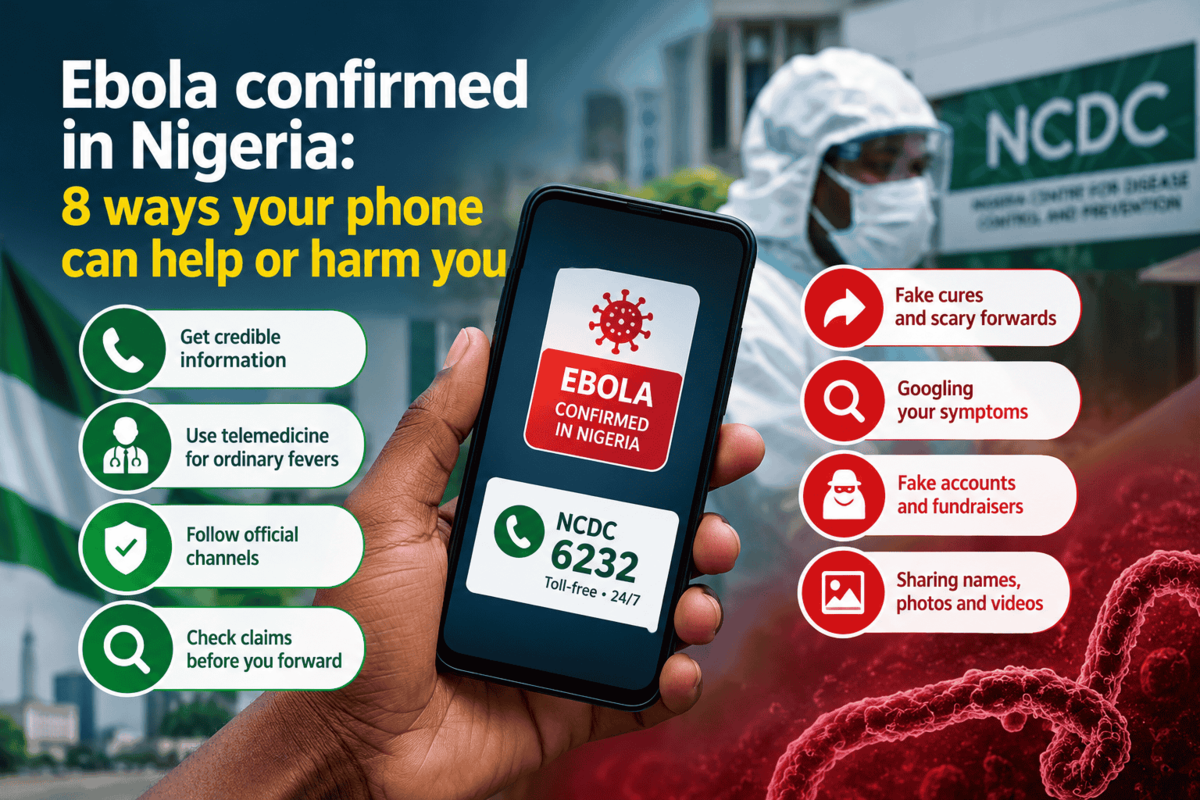
In 2014, a text message told Nigerians to bathe in hot water and salt to avoid Ebola. Two people reportedly died and at least 20 were hospitalised after consuming too much salt, with the dead believed to have high blood pressure.
The same phones helped end the rumour. Government agencies and individuals went online to debunk the claim and offer proper advice.
Nigeria is back in that position. On Oct 20, the Federal Government confirmed one case of Ebola in the Federal Capital Territory (FCT).
The Federal Ministry of Health and Social Welfare said the patient, a woman who recently arrived from Uganda on an international flight, received care at a private hospital for several days before the diagnosis was confirmed. She is in isolation.
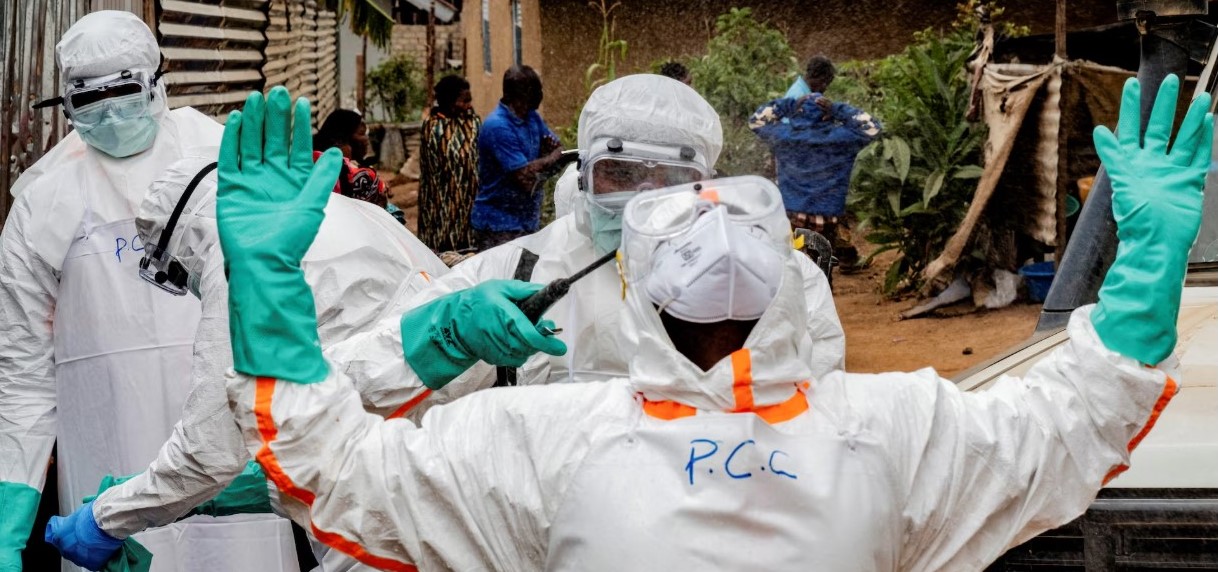
Contact tracing has begun, with 44 close contacts identified, including healthcare workers, patients, caregivers and travel contacts.
The ministry says there is no need for panic and urges Nigerians to share only verified information.
Here is how your phone can help or hurt in the days ahead.
How your phone can help
1. Call 6232 before you go anywhere. The toll-free line of the Nigeria Centre for Disease Control and Prevention (NCDC) runs 24 hours a day for information and to report suspected cases. The ministry advises anyone with symptoms to avoid close contact with others and call public health authorities before visiting a healthcare facility.
Someone who develops a fever after meeting a returning traveller gets instructions by phone instead of walking into a crowded clinic. If contact tracers reach you, answer them. The ministry has asked anyone contacted, including relevant airline passengers, to provide the information requested.
2. Use telemedicine for ordinary fevers. The NCDC has warned that Ebola symptoms closely resemble those of malaria and Lassa fever. A person with fever or headache and no known exposure can speak to a licensed doctor by call or app, get guidance on testing for malaria and avoid hospital crowds.
Telemedicine does not replace 6232. Anyone who may have been exposed should call the line first. Some popular telemedicine options in Nigeria are Rigour Plus, MyMedicalBank and Health Connect 24×7.
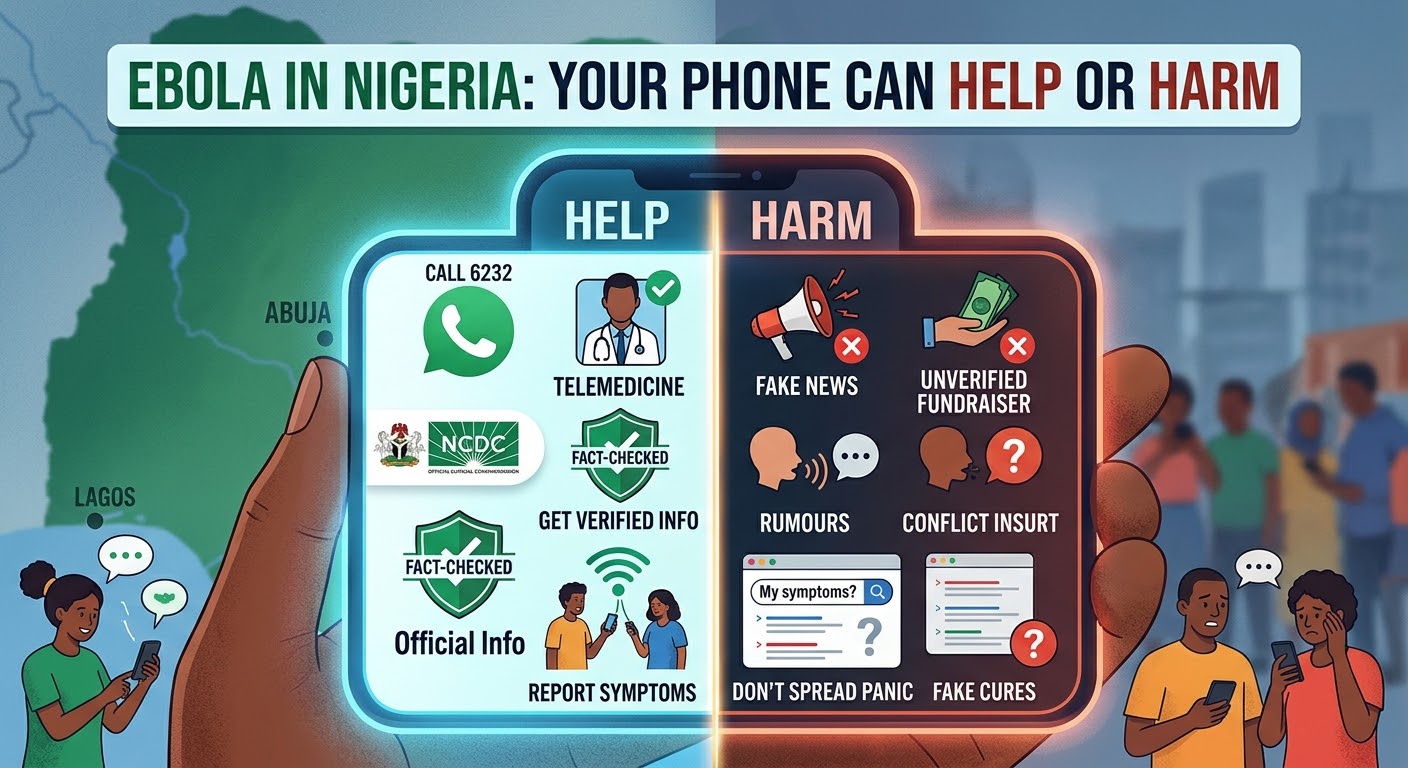
3. Follow official channels and read them closely. Health Minister Muhammad Ali Pate urged Nigerians to rely on the ministry, the NCDC, the World Health Organisation (WHO) and the Africa Centres for Disease Control and Prevention (Africa CDC). Read statements in full, because details matter.
The Nigerian ministry said the patient arrived from Uganda. Uganda’s Ministry of Health said she was a Nigerian woman who travelled to the eastern Democratic Republic of Congo for business and transited through Uganda in early October without symptoms. It added that the place of exposure remains under investigation and that Uganda has no confirmed active cases. Until investigators say otherwise, treat the origin as unsettled.
4. Check viral claims before you forward them. Fact-checking platforms such as Dubawa and Africa Check exist for this. In 2014, Africa Check explained that Ebola is not airborne and that the salt-water claim was false.
The ministry says Ebola spreads through direct contact with the blood or body fluids of a sick or dead person, or through contaminated materials, and that an infected person cannot spread it before symptoms begin. A voice note claiming otherwise should be checked before anyone shares it.
Read also: How health workers are using mobile phone data to combat Ebola spread in DR Congo
How your phone can harm
5. Fake cures and scary forwards. The salt-water rumour shows how a forward can kill. During COVID-19, the NCDC complained that voice notes, broadcasts and images carrying fake news were circulating on WhatsApp to cause fear and panic. It told Nigerians to disregard messages not signed by official sources. Expect the same recycled tricks now.
6. Googling your symptoms and using AI. The ministry lists fever, severe weakness, headache, vomiting and diarrhoea as symptoms to watch for, particularly after possible exposure. Those signs overlap with malaria and Lassa fever, so a search or chat with an LLM can lead to panic or false comfort, and it costs time. A search engine cannot ask where you have been or whom you have met. The NCDC line can.
7. Fake accounts and fake fundraisers. Scammers follow crises. Sahara Reporters has reported that gospel singer Lanre Alewilese warned the public against fake fundraising for Toluwanisings’ bereaved family. It has also reported a petition asking the Economic and Financial Crimes Commission (EFCC) to act on an alleged ₦300 million “fake cancer” fundraising scam by Blessing CEO.

International Cyber Digest recently said it uncovered a Meta ad campaign seeking donations for prosthetic legs for “Father Miguel,” an AI-generated priest, targeting users of Facebook, Instagram and WhatsApp.
During COVID-19, the NCDC also had to warn Nigerians to ignore accounts falsely claiming to be its official page, and pointed to its verified @NCDCgov handle.
Do not donate to any Ebola appeal from an unverified page or a personal account number. Confirm it with the ministry or NCDC first.
8. Sharing names, photos and graphic videos. The ministry has named neither the patient nor the hospital, and it asks Nigerians to avoid rumours and stigma. Posting guesses about who she is, where she lives or who she met can wrongly mark innocent people and make others hide symptoms for fear of the same treatment.
Read also: Binance commits $250K to frontline Ebola response in Uganda and DRC
The bottom line on the Ebola outbreak
Your phone cannot stop Ebola, but it decides how quickly you get accurate help and whether you spread fear. Save 6232, follow the ministry and NCDC, check claims before forwarding them and practise good hand hygiene. Nigeria contained Ebola in 2014 with effective tracing, and the ministry says it has the experience to do so again.
