




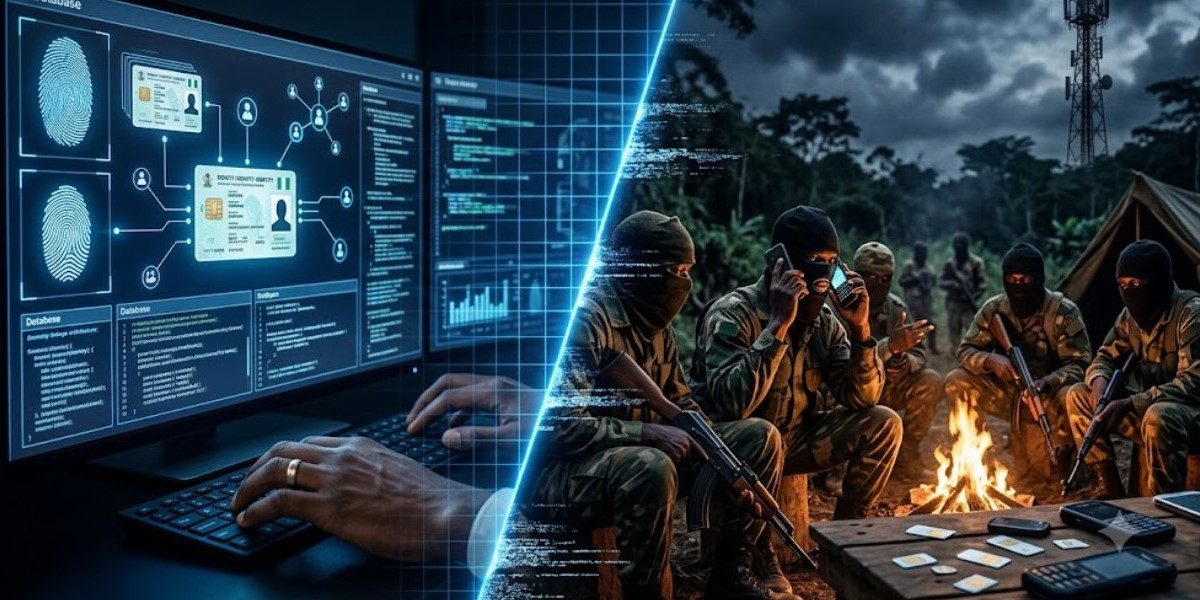
When the federal government mandated the National Identification Number and SIM linkage project (NIN-SIM) in late 2020, it was tipped as a technical solution for national security and a move that would bring untraceable ransom calls to an end.
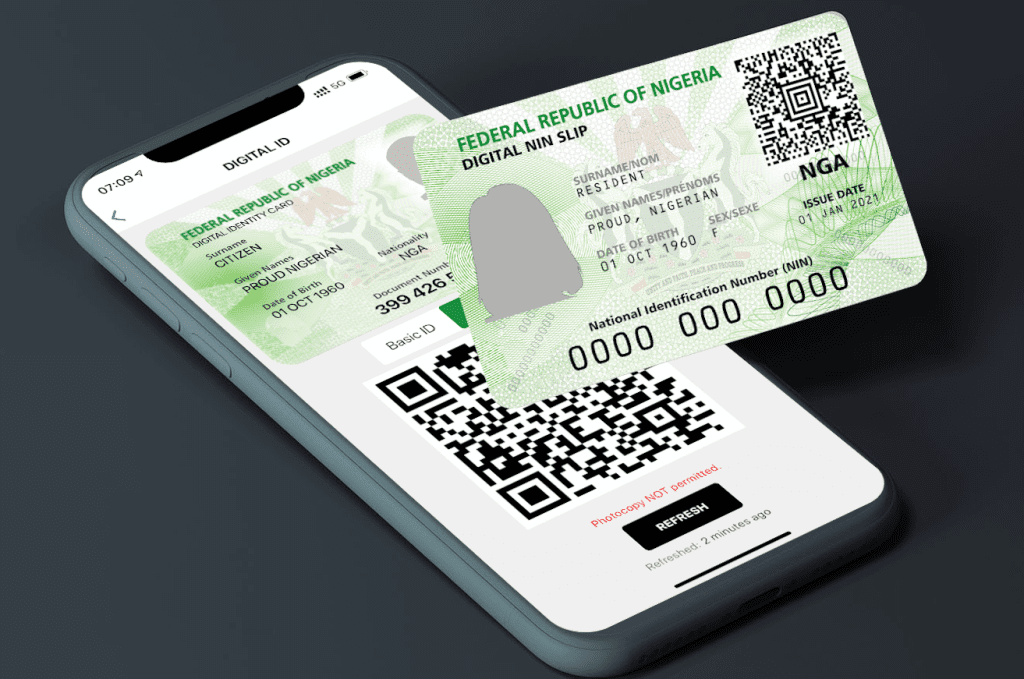
In collaboration with the National Identity Management Commission (NIMC), the NIN-SIM linkage directive was issued by the Nigerian Communications Commission (NCC) to bolster national security and make it easier to track criminals. It requires all mobile network subscribers to link their NIN to their phone number.
However, years after the policy was introduced, the situation remains largely unchanged and appears to worsen by the day. Kidnappers continue to launch operations and demand millions via coordinated mobile networks.
In response to the large failure to clamp down on kidnappers and terrorists, government officials have often attributed the gap to bottlenecks such as the use of victims’ stolen devices by kidnappers or an influx of non-Nigerians for these deadly operations.
During a conversation with Channels TV on Sunday, NIMC DG/CEO, Abisoye Coker-Odusote, noted that terrorists and kidnappers are not always identified and traceable even with the NIN-SIM linkage because the bad actors use their victims’ phones for calls.
“You’ll find that a lot of the time the kidnappers use the phones of the people that they have abducted. So, which means how do you trace them, first of all, because they’re not using their own phones,” she said.
While the statement tries to provide an analysis into the supposed ineffectiveness of the NIN-SIM linkage, it exposes significant gaps between the set goals of the initiative and how the system continues to work outside the modus operandi of these crimes.

In addition, the NIMC Boss explained that some kidnappers used for operations are non-Nigerians, making the identification system ineffective, as their information will not be on the database.
“If some kidnappers are not Nigerians and they are brought 48 hours or 72 hours before the kidnapping happens just for that purpose, I’m not insinuating anything, then we won’t have them on the database naturally,” Coker-Odusote said.
She added that the NIN-SIM linkage is being used by security agencies and helps them in terms of fighting crime.
If the NIMC Boss’ statement proves something, it reveals the fundamental gap in knowledge and how the foundational identity registry is not properly deployed to fix Nigeria’s security architecture, its major task.
When real-time tracking is lost to ignorance
One thing proved right was that kidnappers and terrorists are aware of the NIN-SIM linkage technology, and they know this enough to implement tactics of bypassing it.
Terrorists bypass the system by using the hijacked phones of their victims, making real-time registration tracing ineffective.
But here’s where the statement refuses to be logical.
Even though the scenario described by the NIMC Boss is tactically real, a loophole exists. Suppose a terrorist uses a victim’s phone; the NIN database will obviously point to the victim. And the intelligence team is expected to continue the search from here.
Provided security architectures were truly integrated, a call from a known kidnapped victim’s phone should immediately trigger triangulation (geolocation tracking) via telecom masts. At such a point, the focus shouldn’t only rely on who owns the SIM, but rather on an attempt to locate the signal.
Again, it’s either the Nigerian security agencies are too focused on foundational identity, or the public explanation oversimplifies the technical realities involved. If the former stands, blaming the victim’s SIM shifts the focus away from the lack of a rapid-response attempt.
Diversion from NIN-SIM failure
The statement further framed these security challenges as an excuse for why the clampdown on terrorists has been failing, refusing to admit that Nigeria’s security intelligence is seriously lacking.
Another attempt to cover the NIN-SIM linkage failure is when its incapability was linked to kidnappers being non-Nigerians. The interpretation of the NIMC Boss’s claim means that while kidnappers are not citizens, they aren’t captured in the biometric database and can’t be tracked.
However, this is another attempt to divert attention from the real initiative gap. Provided kidnappers and terrorists are foreigners, they still need to register a SIM for the mobile device they use during their stay. Again, it’s either they are using unregistered or falsely registered SIM cards.
If the NIN database doesn’t work seamlessly in real-time with immigration, border control, and active cellular towers, it isn’t qualified as a security architecture and might just be a digital phonebook.
Bosun Tijani’s case
This isn’t the first such attempt by government officials regarding controversial clarifications.
In December 2025, the Minister of Communications, Innovation and Digital Economy, Bosun Tijani, revealed that terrorists and bandits use advanced technology to bounce calls across multiple cell towers. By exploiting gaps in network coverage, particularly in remote areas, criminals mask their physical locations and evade tracking by security agencies.

Shortly after he made the remarks, Nigerians flooded the internet space, calling out the minister for making such a weak statement.
Experts noted that what the minister described is simply a handover; a process where telecom towers hand signals to the nearest tower stemming from the continual movement of users (terrorists in this case) from one location to another. They mentioned that this isn’t a scenario of technological evasion nor intelligence techniques at work.
Telecoms experts said the right frame of words should have been that location accuracy is poor in some areas because tower density is low, making tracking of terrorists (who mostly settle in forests and rural areas) a difficult task. In such locations, one tower covers a very wide distance.
The scenario further questions the knowledge of Nigerian agencies or officials concerning the initiative they are supervising. It shows how what is supposedly an execution problem is pictured as a technological issue.
Also Read: Nigerian troops seize over 400 Starlink devices from terrorists in the North-East.
Insecurity: A toothless ₦2 trillion infrastructure
Building a solid database for over 230 million Nigerians requires huge funding that has seen billions of naira injected into building Nigeria’s identification platform.
Funding funnels include years of federal budgetary allocations to the NIMC and massive infrastructure rollouts. It also received strong international backing, such as the World Bank’s $433 million Nigeria Digital Identification for Development (ID4D) project.

The NIN-SIM linkage saw the infrastructure fall beyond the helm of government. The initiative required MTN, Airtel, Globacom and 9mobile (now T2mobile) to completely overhaul their backend systems. Telecom operators spent funds building biometric verification systems and updating their servers to handle real-time database matching.
With a roughly ₦2 trillion identification infrastructure, the NIN-SIM linkage system is struggling to seamlessly track terrorists and clamp down on an economically threatening situation.
