



Before OPay became one of Africa’s largest fintechs with nearly 50 million users, it was a company wondering whether it would survive its first year.
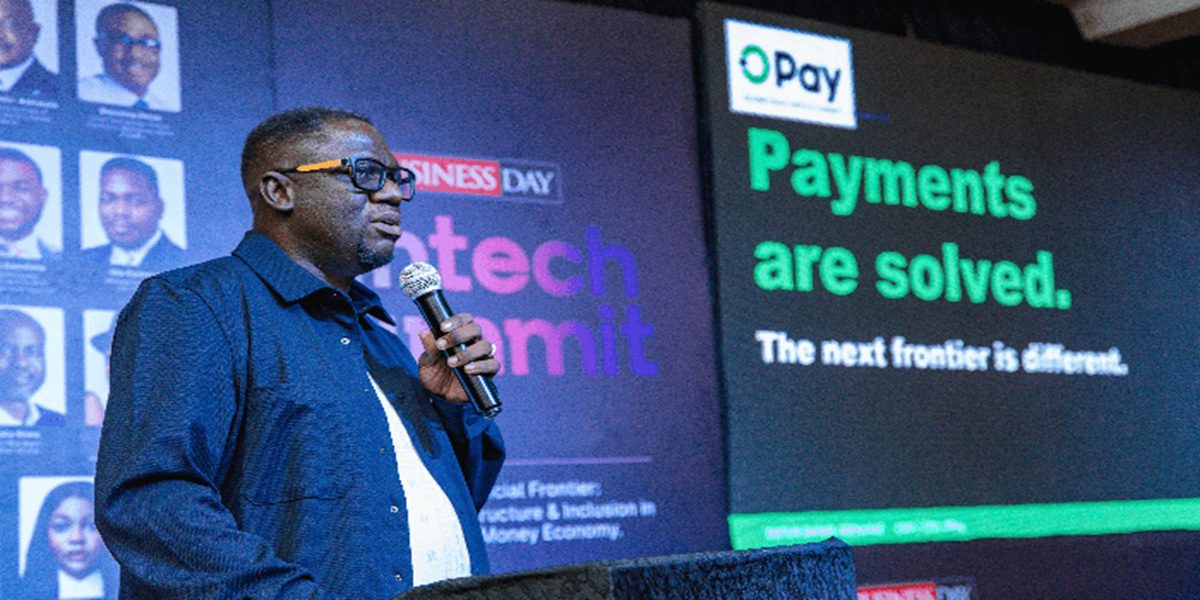
That is the honest account Dotun Adekunle, OPay’s Chief Technology Officer and Chief Operating Officer, shared in a conversation with Semudara Abayomi, offering one of the most candid behind-the-scenes looks at how Nigeria’s digital payments industry was actually built. Not the polished version. The real one, complete with fibre cuts, rooftop radio resets, and months of trying everything from ride-hailing to food delivery just to get people to open a wallet.
Adekunle was there at the very beginning, not just at OPay, but before it. He was the technical lead at Paycom, one of Nigeria’s first mobile money operators, back in 2010, when USSD was used only for airtime top-ups and checking balances, when smartphones had not yet arrived, and when the National Identity Management System had barely started. He remembers climbing to the tops of skyscrapers to manually reset radio routers when a fibre cut brought transactions down.
“Nigeria was not just ready,” he said simply.

That context matters because it explains how far the industry has come, and how much of that distance was covered by people building infrastructure that did not exist, on networks that were not stable, for customers who had never been asked to trust a phone with their money before.
From Paycom to Opay, and the lessons a failed pivot teaches
Paycom grew steadily through the early 2010s alongside four or five other players in Nigeria’s nascent mobile money space. Then in 2016, the Central Bank of Nigeria raised capitalisation requirements, wanting mobile money operators to be as financially stable as banks. Paycom could not meet the new threshold. Adekunle left the company.
He went to Venture Garden Group. But when external investors came in to acquire Paycom and needed someone who understood the architecture, the systems, and the opportunity, Adekunle was called back to pitch. The investors listened, and then told him they would not start without him.
That team became Opera Pay, named after the mobile browser company behind the investment. It later became OPay.
“My name was the first name on the OPay database,” Adekunle said. He has watched that database grow from one entry to nearly 50 million users.
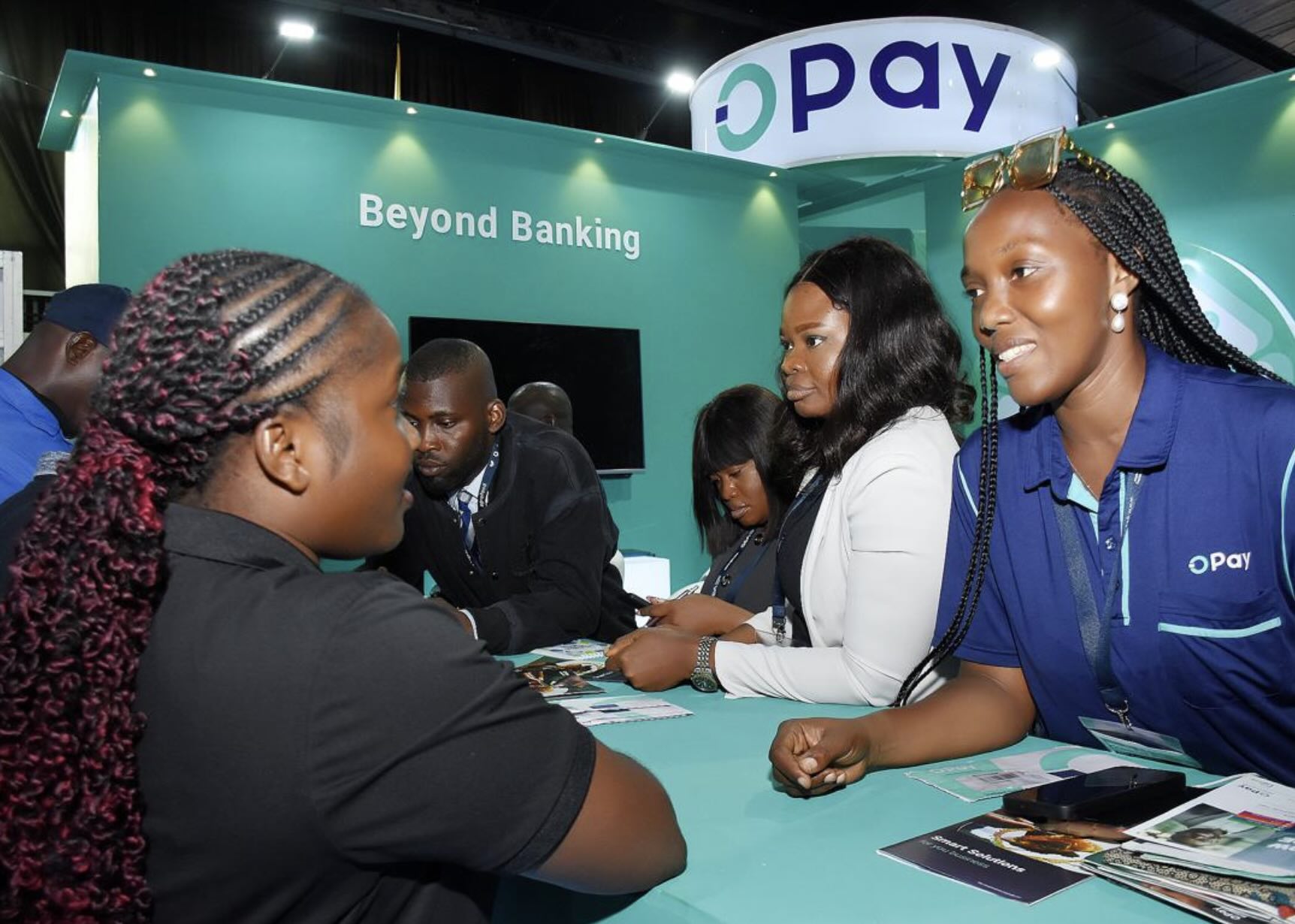
But the growth was not linear, and the early years were not glamorous. In 2018, OPay’s first year under that name, the team was genuinely unsure whether the business would work. Customer acquisition was slow. So the company tried everything, ride-hailing with motorbikes, food delivery, logistics, car rides. OPay launched OBus, OFood, ORide, and OCar in quick succession, each one an attempt to solve a different problem and pull customers into the ecosystem so they would have a reason to use the payment wallet.
None of them became the business. But all of them taught the team something.
Also read: OPay is going to Wall Street: what does that mean for your transaction fees?
“The end game for us was always to bring customers into the ecosystem and give them a reason to use our app,” Adekunle explained. “But we saw that the real solution was to remove the friction of payments itself.”
So OPay dropped everything else and went back to payments. And once it did, things started to move.
It is a lesson that many startups learn the hard way, that diversification before product-market fit is often just distraction wearing the costume of strategy. OPay found what it was actually good at by trying everything it was not, and then returning to the thing that worked.

How Opay uses 100 million daily transactions to see what no one else can
Today, OPay processes over 100 million transactions every day. That volume is not just a business metric, it is a surveillance system for the health of Nigeria’s entire financial infrastructure.
Every ten to twenty minutes, OPay’s systems are generating enough data to tell the team which banks are responding slowly, which payment switches are down, which POS terminals are failing at unusual rates, and which cards are being declined more than they should be. Because OPay is connected to the entire Nigerian payments ecosystem, it sees problems forming before most banks even know they have them.
“We can see the delay,” Adekunle said. “We do over 100 million transactions every day, and so at every given 10 to 20 minutes, the volume of transactions can help us know which bank is available, which card is failing, which switch is down or not down.”
The company uses that intelligence to protect its users in real time. If OPay detects that a particular bank is experiencing issues, it can proactively inform users before they attempt a transfer, reducing failed transactions, saving time, and building the kind of trust that keeps people on the platform.
But the intelligence layer goes further than infrastructure monitoring. Adekunle revealed that OPay maintains an internal team specifically tasked with identifying suspected Ponzi schemes and high-risk accounts within the ecosystem. When patterns emerge that suggest a scheme is in operation, OPay can flag those accounts and warn users against sending money to them, a layer of consumer protection that sits entirely outside the formal regulatory framework and exists purely because of the data OPay sits on top of.
“Sitting on top of that data makes us quite powerful,” Adekunle said, “and makes us able to serve the customer better, and to make very informed decisions.”

That intelligence capability, built not by intention alone but by the accumulation of 100 million daily data points, is arguably OPay’s most underappreciated competitive advantage. Processing payments at scale is something several Nigerian fintechs can claim. Seeing the entire Nigerian payments ecosystem in near real time and acting on that visibility to protect users is something very few can do.
From a man manually resetting routers on a rooftop in Lagos in 2010 to a CTO overseeing 100 million daily transactions and a real-time financial intelligence operation, the distance Dotun Adekunle has travelled mirrors the distance Nigeria’s payments industry has covered in the same period. Both stories are still being written.
Read also: Is OPay the 3rd-largest bank in Nigeria, ahead of First Bank? Facts vs fiction
