




Imagine opening your banking app to move money from your current account to savings, or to send funds to a relative, only to discover that the government takes a percentage of the transfer. You did not earn a profit; you moved your own money. That is the principle at the centre of Illinois’ new Digital Asset/Crypto Tax Act.
Recently signed into the state’s $55.9 billion fiscal year 2027 budget by Governor J.B. Pritzker, the law introduces a 0.2% tax on the transfer and custodial storage of digital assets from 1 January 2027.
For many outside the United States, the measure may appear to be a local tax experiment. But for crypto users across Africa, it looks more like a regulatory warning. Because Illinois does not tax crypto gains, it is taxing the movement.

For years, crypto taxation has followed a relatively predictable model. Most jurisdictions treat digital assets as property, meaning governments collect tax only when value is realised through profit. Illinois breaks from that framework entirely.
Under the Digital Asset Tax Act, taxation is triggered not by profit, but by activity. The state collects its levy whenever users transfer digital assets or place them into taxable custodial arrangements. Whether the market rises or crashes becomes irrelevant. Whether the user made money becomes irrelevant. The transaction itself becomes the taxable event.
That transforms crypto from an investment asset into something functioning more like a payment rail or wire transfer network, and taxes it accordingly.
Also read: IMF warns Nigeria’s $59bn stablecoin surge risks digital dollarisation and weakens naira control
Why does Illinois’ crypto tax change the economics of crypto?
Blockchain networks were designed around the frictionless movement of value. Users shift assets between exchanges, personal wallets, liquidity pools, and payment channels constantly. Many of those transfers generate no economic gain. Under a transaction-tax model, every movement accumulates a cost.
Move assets from an exchange into self-custody? Pay. Transfer funds to another wallet? That attracts tax obligations. Convert between tokens to access better liquidity? Pay again.
For active users, these small deductions compound rapidly. A seemingly modest 0.2% levy becomes deeply meaningful when transactions occur multiple times across a single financial workflow. The result is a system that penalises behaviour historically considered financially prudent.
One of the most widely accepted principles in digital asset security is remarkably simple: do not leave large balances on exchanges. Users are routinely encouraged to move their holdings into private wallets to reduce exposure to hacks, insolvencies, and custodial failures.

Illinois introduces an unusual contradiction. Protecting your assets by moving them into safer storage can itself trigger taxation. That creates an incentive structure discouraging security best practices.
In traditional finance, transferring money between personal accounts rarely attracts investment taxation. Applying transfer taxes to digital self-custody risks creating an entirely different standard for blockchain users.
Why Africa’s crypto economy is particularly vulnerable
This regulatory pivot carries tremendous significance across Africa. The continent has become one of the world’s most active regions for peer-to-peer and retail crypto usage.
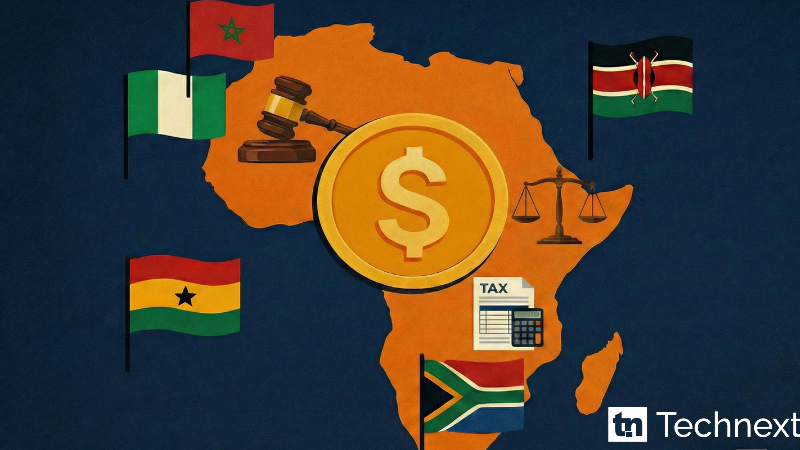
In markets such as Nigeria, South Africa, Kenya, and Ghana, digital assets function less as speculative investments and more as vital financial infrastructure. People use stablecoins to preserve value against inflation. Families receive cross-border support through crypto rails. Freelancers accept international payments, students pay foreign tuition, and small businesses settle international invoices.
The entire attraction is speed and lower friction. A transfer-based tax directly attacks that utility.
Consider a Nigerian freelance developer receiving a $500 payment in USDT. Under a transaction-tax model, moving that stablecoin from an exchange to a secure wallet, and then eventually converting it to Naira, acts as a tollbooth at every stop. Those multiple levies quickly erode their hard-earned income before they can even spend it.
If regulators adopted a similar framework across African markets, users could face taxation at multiple stages of a single transaction cycle. The economy would deteriorate rapidly.
Interestingly, many emerging markets have recently moved in the opposite direction. Recent African approaches to crypto taxation have generally focused on realised gains rather than routine movement. The logic is to tax economic outcomes, not the financial plumbing. That distinction preserves liquidity while maintaining government revenue.
Illinois represents a fundamentally different philosophy. Instead of taxing wealth creation, it taxes the transportation of value itself. That approach may raise short-term revenue, but it risks discouraging participation and pushing activity into less visible channels.

There is a deeper irony beneath this debate. For years, the crypto industry has argued that digital assets should be treated like money. Illinois appears to have accepted that argument. The state is regulating blockchain activity less like property ownership and more like payment infrastructure.
The outcome exposes an uncomfortable reality. Being recognised as real money may also mean inheriting the taxes and transactional friction attached to conventional financial systems. That is not the future many crypto advocates imagined.
As governments all over the globe continue to search for new revenue sources, Illinois may ultimately prove to be an isolated experiment, or it may become a template. If transaction-based taxation delivers meaningful collections without severe political backlash, other jurisdictions will inevitably pay attention.
For Africa’s fast-growing crypto economy, that possibility matters deeply. Such taxation would not just drive activities underground, but it might be the sad end of the lofty promises of blockchain on the continent.
