





Nigeria’s Securities and Exchange Commission (SEC) has urged businesses and startups to explore crowdfunding, commercial papers and debt financing as alternatives to bank loans, saying companies need funding options that match their long-term growth plans.
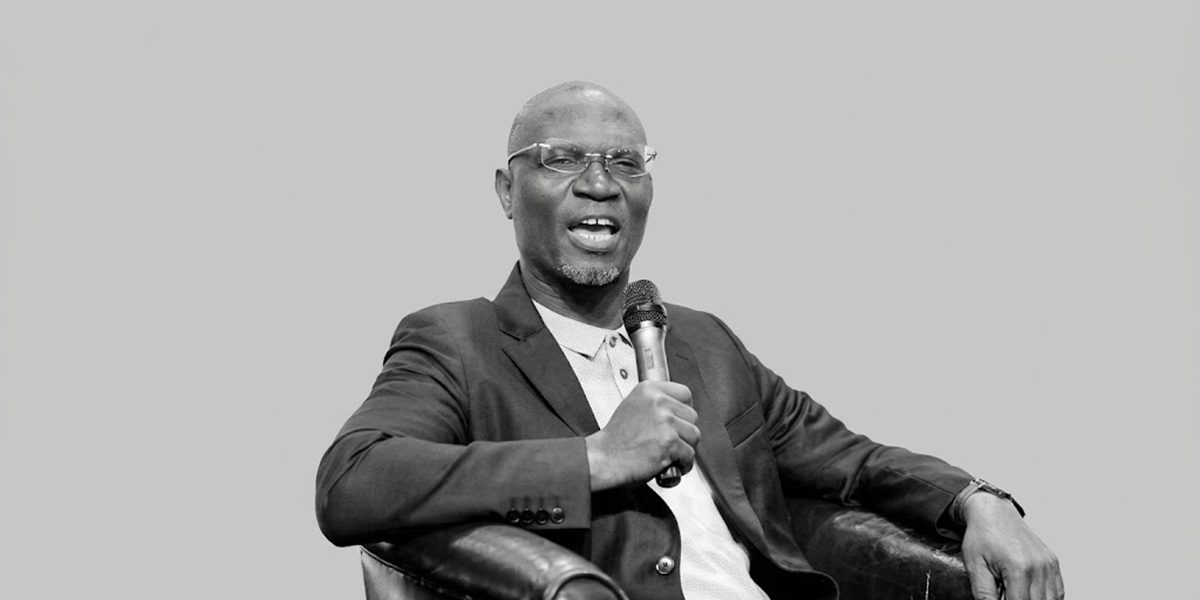
Dr Emomotimi Agama, the SEC’s director-general, outlined alternative ways businesses can raise capital before pursuing an initial public offering (IPO) at Moonshot by TechCabal in Lagos. Agama warned against the common practice of using short-term bank loans to finance long-term business needs, describing the mismatch as a risk that could undermine a company’s growth.
“What most people have done is to go to the banks to raise short-term capital. So, how do you use short-term capital for a long-term business? That’s a mismatch, a mismatch definitely that will drown you,” he said.

He identified crowdfunding as one route for smaller businesses to raise money from people who know and trust their founders before seeking investment from a wider pool of investors.
Crowdfunding allows businesses to collect relatively small amounts of money from multiple contributors. Depending on the structure, contributors may receive equity, interest or another agreed benefit.
Agama said the approach could help businesses build credibility and demonstrate that investors are willing to support their plans before they pursue larger fundraising opportunities.
SEC highlights alternative routes to raising capital
The SEC director-general also pointed to commercial papers as a way for businesses to access short-term funding while building a track record in the capital market.
Commercial papers are short-term debt instruments that companies issue to raise money for operations and other financing needs. Investors lend money to the issuing company, which agrees to repay the amount under specified terms.
Agama said businesses could use the instrument to test investor appetite and establish the credibility needed to pursue longer-term financing. He also identified debt financing as an option for founders who want to raise money without giving up ownership of their companies.
Unlike equity financing, in which investors receive shares in a business, debt financing allows a company to borrow money that it must repay, usually with interest. However, the company takes on repayment obligations, regardless of whether its business performs as expected.
“Sometimes too people do not want to let go of their companies,” Agama said. “What you can do also is you can raise debt, which does not dilute your equity or your ownership of the company.”
While public offerings often attract considerable attention, he said they are not the only route businesses can take to raise capital. Companies must also be prepared to share information with investors and demonstrate accountability if they want to attract funding from the public.

Agama said the SEC’s role includes creating an environment that encourages companies to enter the capital market while protecting investors.
He identified predictability, certainty and transparency as important factors in encouraging more businesses to seek funding through the market.
Similar read: SEC targets African listings as Nigeria eyes ₦750tn capital market
Nigeria has more than 45 million companies but only about 161 companies listed on its stock market, according to figures cited during the discussion. Agama said businesses needed to improve their governance, accountability, transparency and internal structures to become attractive to investors.
SEC also urges digital asset firms to engage regulators
Agama also encouraged companies operating in the digital asset sector to approach regulators early to determine which rules apply to their businesses.
He said the Investment and Securities Act 2025 provides a legal framework for the capital market, including the SEC’s regulatory responsibilities over digital assets that fall within its remit.
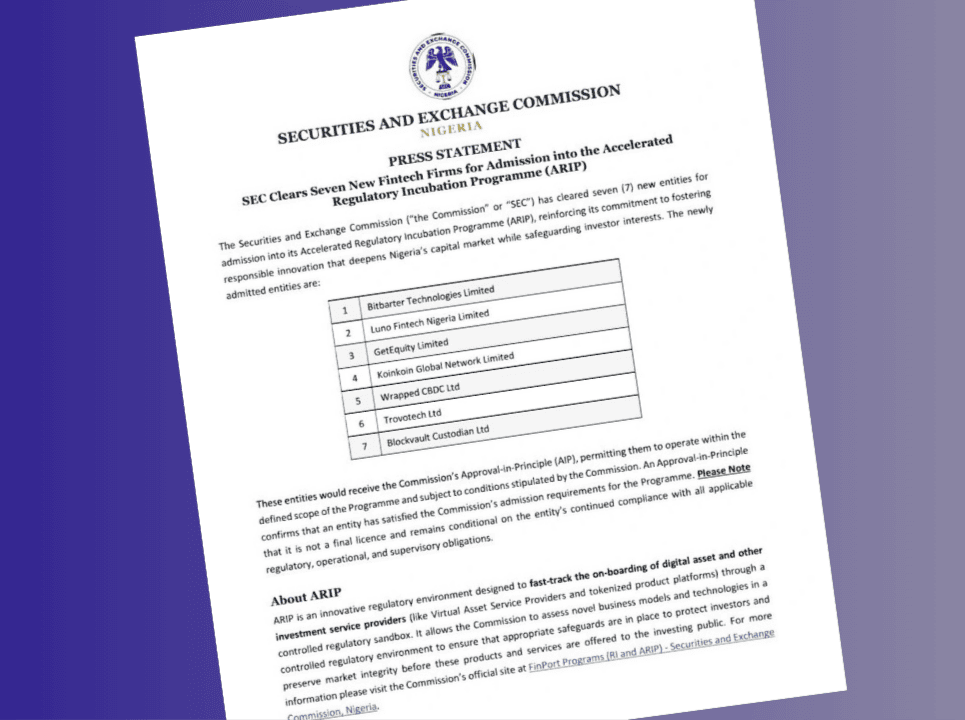
The SEC has also established an Accelerated Regulatory Incubation Programme (ARIP) to provide a pathway for virtual asset service providers and other digital investment businesses to enter a supervised regulatory environment. The programme offers conditional approval-in-principle to eligible firms; it is not the same as a final licence.
Agama said the Central Bank of Nigeria regulates payment systems, while the SEC oversees other activities within the digital asset sector according to the nature of the business.
He urged founders uncertain about their regulatory status to contact the relevant authorities rather than risk operating outside the law.
“If you come to me and say, ‘Look, this is what we are doing. These are the challenges we are facing,’ we will talk about it and get it sorted out,” he said.
His remarks come as regulators seek to coordinate oversight of virtual assets, an area where businesses may offer services that touch on payments, trading and investment products. A presidential executive order issued in July 2026 established a coordination framework for regulators dealing with virtual assets. The State House.
Agama also pointed to the Dangote Petroleum Refinery’s recently concluded public offer as an example of the potential to widen participation in Nigeria’s capital market. He said investors from all 54 African countries had subscribed to the offer, which closed on October 27. The refinery has separately reported investor applications from 120 countries worldwide.
He described the capital market as an important tool for national development and urged more businesses to prepare themselves to access it.
For founders, his message was that raising capital need not begin with a major public offering. Businesses can explore different funding routes as they grow, provided they build the structures, transparency, and financial discipline required to earn investors’ confidence.
See also: Kuunda completes $5 million secondary share sale as some early investors sell their stakes
