


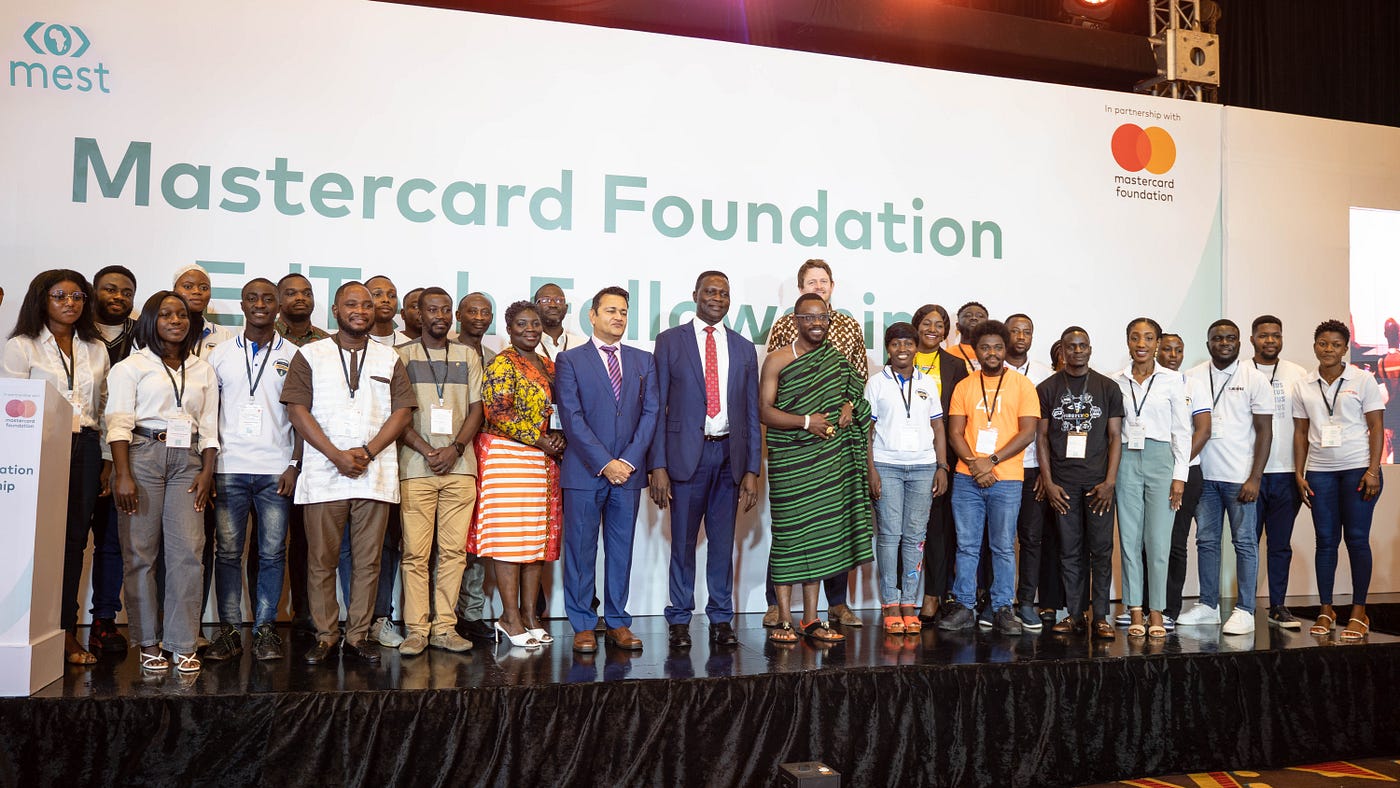
12 education technology startups have been selected to participate in the second cohort of the Mastercard Foundation EdTech Fellowship. This was disclosed in a statement sent to Technext. According to the statement, the fellowship highlights a new chapter in efforts to scale innovation in education across Ghana.
The fellowship is a six-month acceleration program launched in partnership with the Meltwater Entrepreneurial School of Technology (MEST Africa).
The selected companies will receive expert mentorship, equity-free funding, and access to specialised learning in educational technologies, aimed at preparing them to meet the country’s growing digital learning needs. The fellowship is dedicated to helping African EdTech ventures develop solutions that improve education outcomes and foster inclusion, especially for underrepresented communities.
The program follows the success of the 2024 inaugural cohort, which reached over 136,000 learners, demonstrating the potential of locally developed EdTech tools in solving some of the most pressing challenges in Africa’s education sector.
According to Angela Duho, Program Manager at MEST Africa. “In Ghana, EdTech is not just about innovation, it’s about creating equal opportunities for every student, no matter where they live. It empowers teachers with the tools they need to inspire, and it prepares our youth for a future where digital skills are essential.”

Among the selected ventures are solutions that range from AI-assisted learning tools to inclusive classroom infrastructure. One of the startups, Jesi AI, offers generative AI assistance for teachers in Ghana’s junior and senior high schools, simplifying curriculum-aligned lesson planning and providing virtual tutoring support to students.
Another startup, MooslaTrain, aims to transform the perception of math through engaging community math clubs and digital learning platforms.
The fellowship will support these startups through intensive training sessions, technical development support, and strategic business coaching. Startups like TECHAiDE and Scribble Works Publishing House are among those using technology to address learning material gaps and provide offline solutions to underserved schools.
Other startups selected for the 2025 Mastercard Foundation EdTech Fellowship includes InovTech STEM Center, an innovation hub focused on introducing hands-on robotics and coding education to underserved communities. Through initiatives like STEM4Her, Powered Girl, and Powered Boy, the organisation is working to equip young learners and educators with critical STEM skills.
STEMAIDE is also part of the fellowship, with a mission to nurture creativity, problem-solving, and an entrepreneurial mindset in students. Their approach is designed to prepare Africa’s youth for the demands of a rapidly evolving world. In basic education, Nikasemo Technologies is enhancing classroom experiences through integrated software and hardware that streamline school operations and create dynamic learning environments.
For students preparing for national exams, Metaschool AI provides an app tailored specifically to the Ghanaian curriculum. It offers interactive video lessons for BECE and WASSCE students, making academic support more flexible and accessible. Maxim Nyansa Foundation focuses on IT infrastructure and open-source software to empower both teachers and students, helping to close the digital divide across Africa.
Hands-on learning is also championed by the Ghana Olympiad Academy, which runs talent development programs in literacy, numeracy, and STEM. Their model is designed to cultivate leadership and innovation among young learners. Asah Maker-Space, meanwhile, immerses students in practical education across fields like automation, robotics, and 3D printing, encouraging a culture of invention and creativity.
Rounding out the cohort is Craft Education Technologies, which is bridging the gap between therapists, parents, and educators to support children with behavioural and learning challenges, including autism. Their platform ensures personalised care through collaborative engagement, addressing an often overlooked area in traditional education systems.
Together, the twelve selected startups illustrate the fellowship’s comprehensive vision for EdTech innovation.
Rodwell Mangisi, Acting Director of the Mastercard Foundation Centre for Innovative Teaching and Learning, emphasised that the program is intentionally designed to uplift those often left behind in traditional education systems.
“It is when we design with the end user in mind that the business case for the solutions is more scalable, sustainable and impactful,” he said.
MEST Africa and Mastercard Foundation believe that fostering scalable educational technologies is key to solving systemic challenges in African classrooms. The selected startups will be expected to not only scale in Ghana but also explore regional growth in similar education markets.
“This is not just about business acceleration, it’s about transforming access to education and enabling tools that can bridge the learning gap for millions across the continent,” Duho noted.
The 2025 cohort joins the broader goal of the Mastercard Foundation EdTech Fellowship, which was launched in 2019 to support 250 EdTech startups across Africa by 2025 and reach over 1.8 million learners.
Is EdTech the Answer to Africa’s Growing Digital Education Needs?
Across Sub-Saharan Africa, the education sector faces significant challenges, including overcrowded classrooms, outdated curricula, and a shortage of qualified teachers. These issues have left millions of children without access to quality education. In Ghana, for instance, these systemic problems have hindered students’ learning experiences, prompting a search for effective solutions.
One promising avenue is the integration of educational technology (EdTech) into the learning environment. EdTech tools, such as mobile learning platforms and AI-driven assessments, offer flexible and personalised learning experiences that can reach students even in remote areas. These technologies have the potential to bridge the educational gap by providing resources and support where traditional methods fall short.
The urgency for such solutions is underscored by the staggering number of out-of-school children in the region. According to UNESCO, approximately 98 million children in Sub-Saharan Africa were not enrolled in school as of 2021. This highlights the critical need for innovative approaches to education that can address both access and quality.
In Ghana, initiatives like the Mastercard Foundation EdTech Fellowship, in partnership with MEST Africa, are stepping up to meet this challenge. MEST Africa has trained over 2,000 entrepreneurs and invested in more than 90 startups across various industries throughout Africa. By supporting local EdTech startups, these programs aim to develop scalable solutions tailored to the unique needs of African learners.
The impact of successful EdTech implementations extends beyond the classroom. By equipping students with digital literacy and critical thinking skills, these technologies prepare the youth for the evolving job market, fostering economic growth and stability. Moreover, EdTech can empower teachers by providing them with tools to enhance their instructional methods and engage students more effectively.
As the second cohort of the Mastercard Foundation EdTech Fellowship embarks on its journey, there is optimism that these innovative solutions will not only transform education in Ghana but also serve as models for other countries facing similar challenges. The integration of EdTech into Africa’s education systems holds the promise of addressing longstanding issues and unlocking the continent’s full potential.
