


Outrage swept across Nigeria on May 28, 2025, as students writing the West African Senior School Certificate Examination (WAEC) English Language Paper 2 faced unprecedented delays, forcing many to complete their exams late into the night under dire conditions.
News reports from media houses detailed the chaos, with students in states like Lagos, Osun, Ogun, Oyo, Delta, and Taraba writing exams as late as 9 p.m. or beyond, some in complete darkness due to power outages.
Students used torchlights and mobile phone flashlights at Unity Model School in Asaba, Delta State, to see their question papers, as electricity was unavailable. Punch Nigeria reported that the exam, scheduled for 2:00 p.m., did not start until around 6:00 p.m. due to the late delivery of question papers, leaving candidates stranded for hours.
Parents and students voiced their frustration on X, highlighting the perilous conditions. a user posted, “Some parents sent this in now, their children are currently writing English WAEC exams, and it’s past 10 PM. They all have to sit outside just for the security of their children. @NigEducation @waecnigeria what is happening?????”
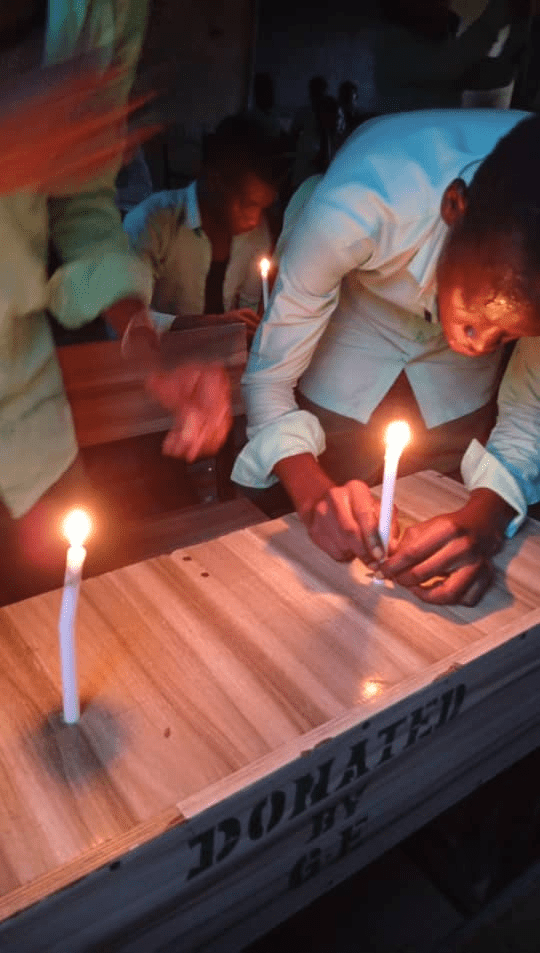
Another user, @rumedaniels, described the situation as “a damning indictment of a system in collapse,” pointing to students writing under torchlight at 10 p.m. in unsecured centres.
Daily Post noted similar sentiments in Osun, where parents expressed fears about their children’s safety amid rising insecurity, with one parent, Oluwakemi Damilare, urging Nigerians to pray for the students.
The parents called the late-night exams discouraging and demoralising, urging WAEC to prevent future occurrences.
The National Association of Polytechnic Students (NAPS) labelled the incident a “national disgrace” and a “moral calamity,” demanding an immediate investigation by WAEC and the Federal Ministry of Education.
Social media posts amplified the public’s anger.
@AmMrPlenty wrote, “WAEC is keeping teenage students for HOURS now, waiting like fools, till now English papers is yet to arrive. In 2025. In Nigeria. This is beyond incompetence, it’s disgraceful. Heads must roll.”
@ClementBoyi reported from Orhuwhorun town, Udu LGA, Delta, that students were still waiting for question papers at 7:14 p.m., calling the situation “very sad”.

@oppressed_iam highlighted the ordeal at Okoloma school in Afam, Oyigbo LGA, Rivers, where students finished writing at 12:09 a.m., questioning WAEC’s timekeeping and fairness, particularly in southern Nigeria.
Reports also surfaced from Katsina State, where students wrote exams amid insecurity, and from Anambra and Imo, where students returned home late at night, as noted by @Anyafulugo:
Most of our kids are just getting home from waec exams in Anambra and Imo. This night! Look at the clock!.
The widespread coverage underscored a systemic failure, with The Guardian emphasising the dual challenge of blackouts and insecurity, which compounded the logistical delays.
WAEC’s statement falls short
The West African Examinations Council (WAEC) issued a statement on May 28, 2025, signed by Moyosola Adesina of the Public Affairs Department, addressing the late-night administration of the English Language Paper 2.
The council attributed the delays to “logistical setbacks, security concerns, and sociocultural challenges,” claiming these were tied to enhanced measures to prevent question paper leaks.
Read also: Reprinted UTME results in circulation not from us, JAMB says
WAEC apologised to candidates, schools, and parents, acknowledging the disruptions and pledging to collaborate with security agencies to avoid future issues.
The statement emphasised the council’s commitment to delivering credible and secure examinations, expressing gratitude for stakeholders’ patience.
However, the statement failed to address critical details, drawing sharp criticism for its vagueness and lack of accountability.
WAEC’s mention of “logistical hurdles” and “sociocultural factors” provided no clarity on the specific failures, such as why question papers arrived hours late or why schools like Unity Model School in Asaba lacked electricity.
Premium Times reported that the delays affected multiple states, yet WAEC’s response offered no concrete plan to address infrastructure gaps, such as power outages that forced students to write in the dark. The council’s focus on preventing leaks, while necessary, ignored the immediate impact on students’ safety and performance, especially in areas with heightened insecurity.
Public reaction to X highlighted the statement’s inadequacy.
The statement’s failure to outline immediate remedies or acknowledge the extent of the disruption, such as students writing past midnight in some centres, has further fuelled distrust.
WAEC’s claim of collaborating with security agencies rang hollow when students in Katsina and other regions faced risks due to late hours, as @Omolomo_o pointed out: “in the midst of insecurity…”
Critics also noted WAEC’s silence on the technological shortcomings exposed by the incident. Despite introducing computer-based testing (CBT) for private candidates and announcing plans for personalised question papers in 2025, WAEC’s reliance on paper-based exams for school candidates left the system vulnerable to logistical failures.
The statement did not address why CBT, which could streamline delivery and enhance security, was not extended to school candidates, nor did it propose solutions for power outages that left students using torchlights. This gap between WAEC’s modernisation rhetoric and its operational failures underscored a disconnect, leaving stakeholders demanding more than apologies.
A missed opportunity for reform
The late-night exam fiasco could have been avoided had WAEC acted decisively on the reported leak of English Language Paper 1 and accelerated its transition to computer-based testing (CBT).
@olajpv noted:
WAEC should have rescheduled the leaked English Language paper 1 yesterday. Considering the security threat in most parts of the country, it was an unnecessary risk that they took.
Postponing the exam would have allowed time to address security concerns and ensure timely delivery of papers, reducing risks in areas with insecurity, as reported in Katsina, Anambra, and Imo. Instead, WAEC’s decision to proceed with heightened security measures backfired, resulting in delays that compromised student welfare.
WAEC’s pilot of CBT for private candidates, launched in 2024, and its announcement of optional CBT for school candidates in 2025, demonstrate a path forward.
The late-night WAEC exam debacle mirrors the logistical failures seen in this year’s JAMB examinations, where technical glitches disrupted computer-based testing (CBT) for hundreds of thousands of candidates.
CBT reduces reliance on physical paper delivery, minimising delays. Punch Nigeria reported that the Federal Government directed WAEC to adopt full CBT by 2026, citing JAMB’s success with over 2.2 million candidates.
CBT offers digital monitoring, personalised question sets to curb malpractice, and faster result processing, as WAEC’s Head, Dr. Amos Dangut, noted during a press briefing.
Infrastructure challenges, particularly power outages, remain a significant barrier.
Read also: DSS, Nigerian Police arrest 20 suspects for hacking JAMB’s 2025 UTME CBT system
WAEC’s e-learning portal and past question resources, launched in 2025, show a commitment to modernisation, but without addressing electricity and internet access disparities, full CBT adoption risks inequity.
A hybrid approach, combining CBT where feasible and ensuring backup generators for paper-based centres, could have mitigated the crisis. Investments in solar power or generators, alongside training for examiners, as WAEC claimed to have done for CBT, are critical steps.
WAEC’s partnership with the Nigerian Police Force, mentioned by Dr. Dangut, must extend beyond malpractice prevention to ensure safe exam environments. The council’s failure to reschedule the leaked paper and its reliance on outdated systems reflect a missed opportunity to prioritise student safety and equity through technology.
Students writing WAEC exams under torchlight at 10 p.m.? Exams starting past 8 p.m. in unsecured centers? Not an isolated glitch, it’s a damning indictment of a system in collapse & Nigeria in crisis. Unacceptable. — @rumedaniels
