




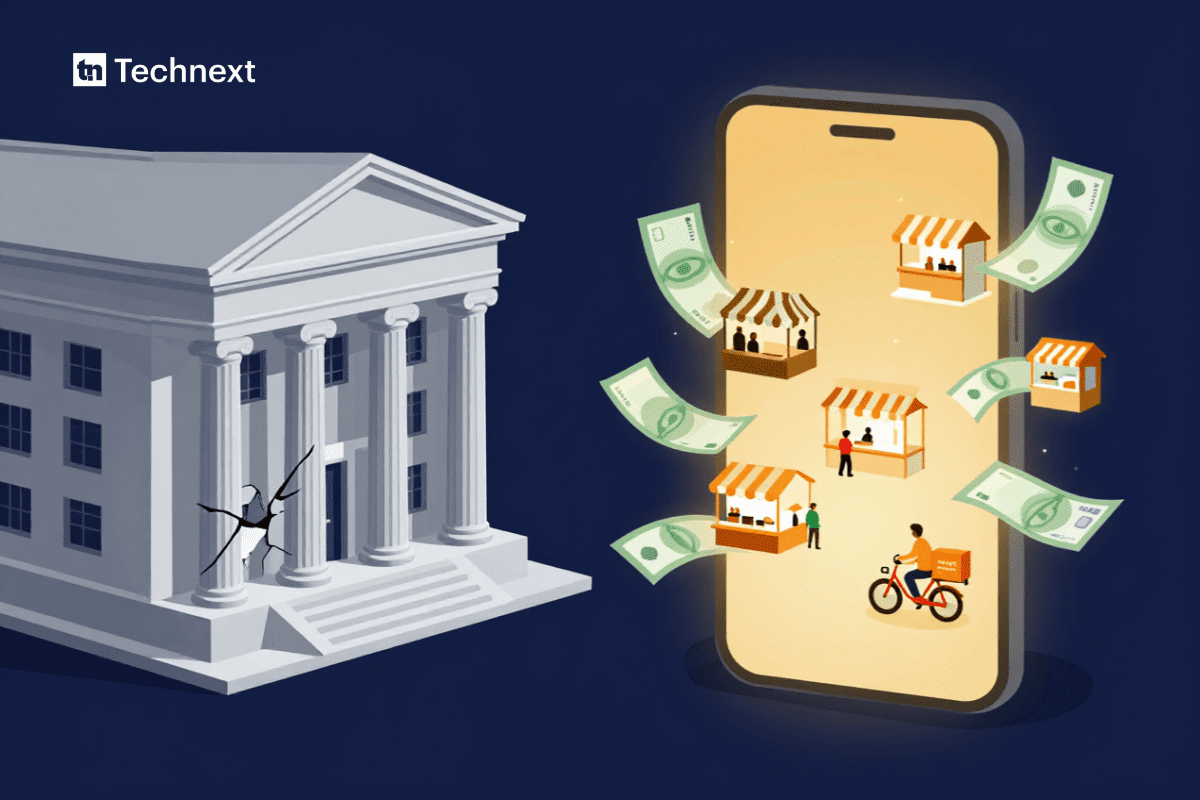
The Central Bank of Nigeria (CBN) wants to remove four major “brakes” holding back the country’s fintech industry, as new financial products stretch beyond traditional banking and regulators struggle to keep pace with innovation.
Speaking on behalf of the CBN Governor Olayemi Cardoso at the opening of Nigeria Fintech Week 2026 at the Wole Soyinka Centre for Culture and Creative Arts, formerly the National Theatre, Mr Abiodun Okunola named fragmentation, trust, exclusion and fear of innovation as the key challenges facing Nigeria’s digital financial system.
The event runs from September 22 to 23 under the theme “Legacy in Motion: Powering the Digital Renaissance.”
His comments come as Nigerian fintech moves beyond basic payments into artificial intelligence, open finance, embedded finance, digital assets and cross-border payments, all major tracks at this year’s event.
“Standing still is not stability; standing still is falling behind,” Okunola told the audience. “The challenge isn’t whether or not change will come, but whether we will have the courage, foresight, and coordination to steer it.”
The first brake: fragmented regulation
Okunola keeps returning to one uncomfortable truth: money moves faster than rulebooks. Financial innovation rarely arrives in a shape regulators already have a drawer for.
A fintech might start with payments, then move into insurance, pensions and lending. Suddenly it isn’t dealing with one regulator but several, each with its own forms, timelines and idea of “compliance.” Products that should take months can stall far longer, not because anyone objects, but because no single desk is built to wave them through.
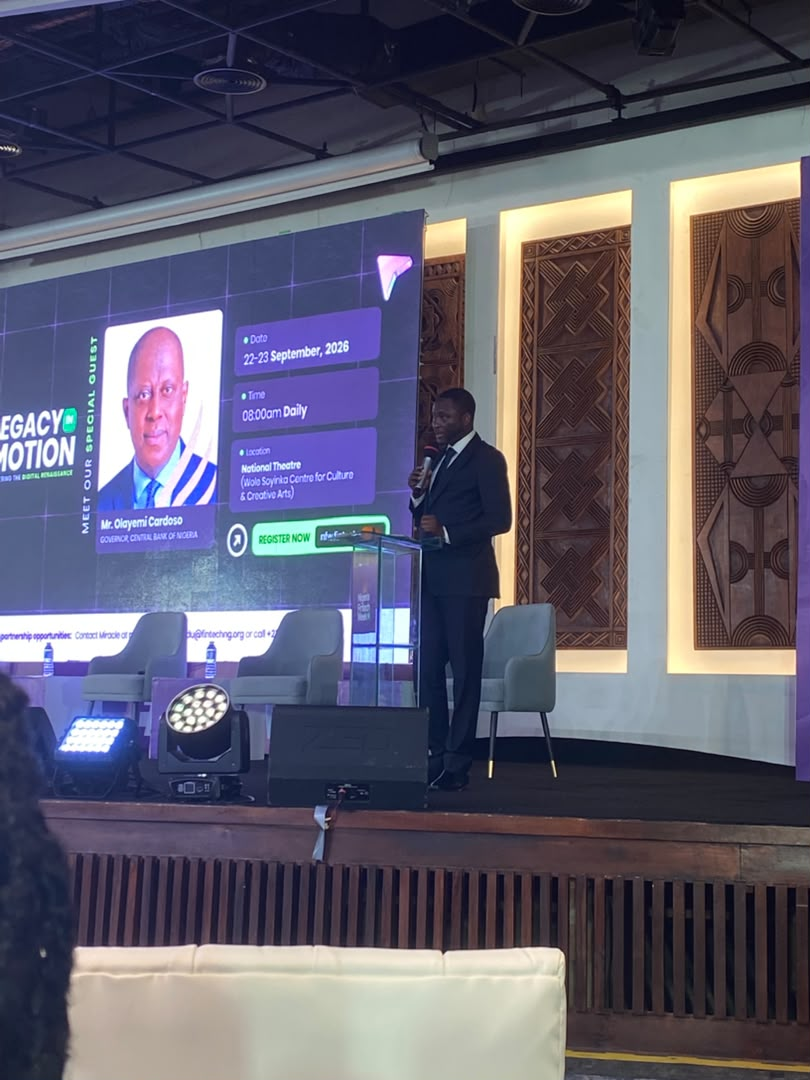
“This is where CBN has also taken a departure,” Okunola said, pointing to the CBN’s newly created Innovation Management division, which he heads. Its job is to get regulators talking to one another so companies building across those boundaries aren’t left to referee the conversation themselves.
A single fintech offering insurance alongside its core business, for instance, needs a licence from the CBN, and another from NAICOM or PenCom.
“How do we speak to each other quickly,” he asked, “so that because you have to get all these licences, you will not delay the value you are trying to deliver?”
Similar read: Remita moves beyond payments with launch of super fintech app at Nigeria Fintech Week
The CBN’s own 2026 fintech report suggests the industry has been asking the same question. Fragmentation, drawn-out approvals, ambiguous rules and mounting compliance costs all feature as concerns from market participants.
The report floats a Single Regulatory Window to handle multi-agency compliance in one place.
The second brake: Nigerians still have to trust the technology
A financial app can look sleek and move money in seconds. None of that helps if people don’t trust it with their cash or personal details.
Okunola calls trust the ground floor of every digital transaction. “Every payment may begin as a transaction, but it succeeds only when it ends in confidence,” he said.
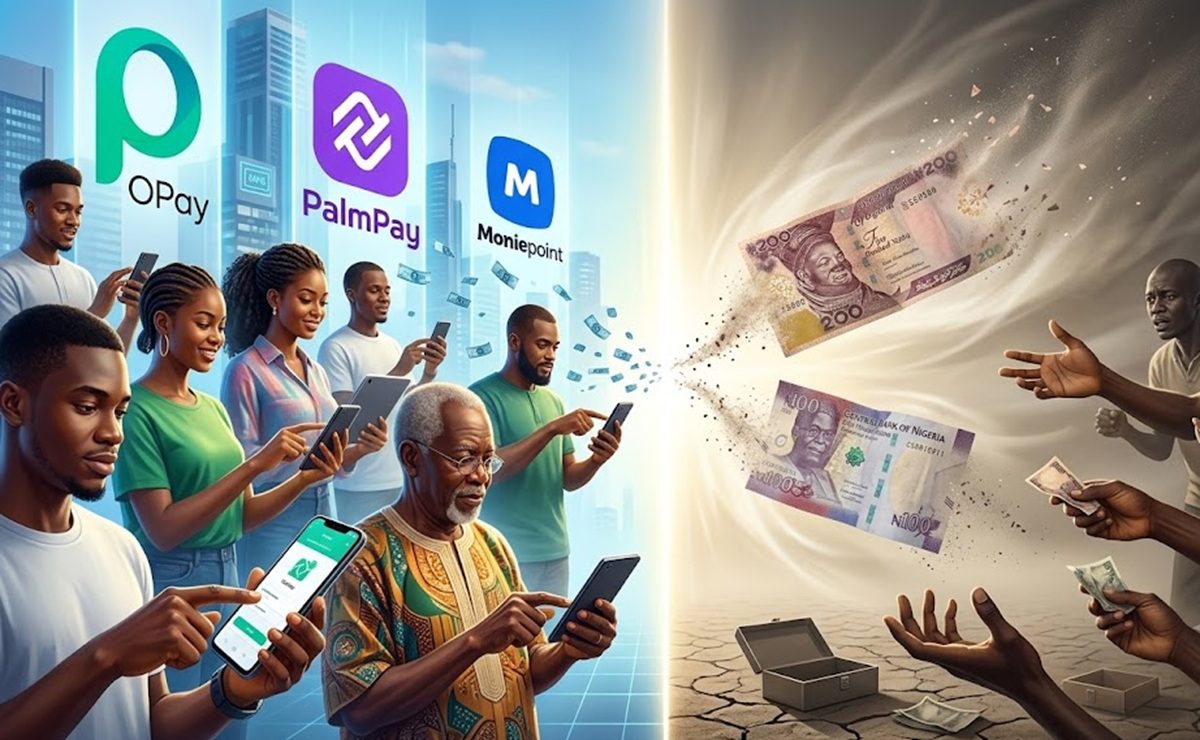
People need to believe their money will arrive, their data stays private, fraud gets stopped or fixed, and complaints are heard quickly. That job gets harder as AI reshapes both financial services and financial crime. Okunola warns that criminals are already using AI to build smarter scams targeting customers and institutions alike.
The lesson for fintechs: speed alone won’t sell. Systems holding people’s money must also be secure and dependable.
The third brake: exclusion
Nigeria’s fintech industry has spent years opening up finance through mobile apps, agent banking and digital payments. But for Okunola, access isn’t the same as inclusion. His test case is people living with disabilities- roughly 40 million Nigerians, he estimates- whom the country’s financial infrastructure was never designed to serve.
He offers a blunt example: a blind customer walks into a bank with millions in their account, and the first thing they meet is someone trying to beg them. “Even if that person has 20 million Naira in their account, they do not treat them well,” he said.
Then there are customers whose fingerprints can’t be captured. “Persons who have been affected with leprosy don’t have fingerprints anymore,” Okunola said, suggesting a switch to irises or other forms of identity. His wider point: these gaps aren’t just social problems. They’re markets. “A lot of money to be made there,” he said.
The fourth brake: fear of innovation
The last brake may be the hardest for regulators to admit: fear itself, the worry that technology is moving faster than the rules built to contain it. Regulators walk a fine line. Move too slowly and useful products never reach the people who need them. Move too quickly, and consumers get exposed to risks nobody has fully worked out yet.
Okunola’s answer is that regulation and innovation were never meant to be rivals. “Innovation and regulation should not be treated as opposing forces,” he said.
What’s needed, he argues, is for regulators to keep pace and keep learning from the industry they oversee. That matters more than ever, because the products now entering the market no longer slot neatly into the old categories.

Fintech is moving into everything
Okunola’s examples showed how far fintech has drifted from banks. Take embedded finance, where non-financial companies sell financial products directly to customers.
“If you go to Air Peace and try to book a ticket, you see where they tell you, ‘Do you want to pay small small?’” he said. Wakanow does the same, letting customers pay for trips in instalments.
“Now, think about it: they’re offering credit. For us, they are non-bank; they are not licensed to offer credit. How do we regulate?“
That question captures what regulators now face: financial products keep turning up inside businesses nobody would call a financial institution. The same trend runs through open banking, digital assets, programmable money and cross-border payments, all on the agenda at Nigeria Fintech Week 2026.
Climate finance could open another market. Okunola points to Nigeria’s carbon-market plans, where farmers who preserve forests could earn carbon credits bought by companies elsewhere.
“That means that there is going to be a need for fintech solutions that can make those payments possible,” he said.
The CBN’s next challenge is keeping up
Nigeria already has more than 430 fintech companies, according to Nigeria Fintech Week organisers. The next challenge is getting them to work together. Okunola calls interoperability a strategic priority. Platforms, institutions and regulators, he argues, can’t keep operating in isolation.
“When systems connect and communicate securely, transactions become more reliable, the cost of participation declines, competition deepens, and innovation scales more rapidly,” he said.
That is what “lifting the brakes” means. The CBN isn’t asking for regulation to vanish, just for pointless friction to go.

“Our task is not to remove discipline or abandon safeguards; it is to replace unnecessary friction with intelligent guardrails so that innovation can move at the speed of opportunity while remaining anchored in public interest,” Okunola said.
The payments, companies and infrastructure are already in place. What happens next depends on whether regulators can make the system easier to navigate without making it less safe.
Also read: What CBN’s new 23% interest rate means for loans, savings and Nigerian businesses
