





For every Series A round an African startup has closed, the continent’s founders have closed more than six seed rounds.
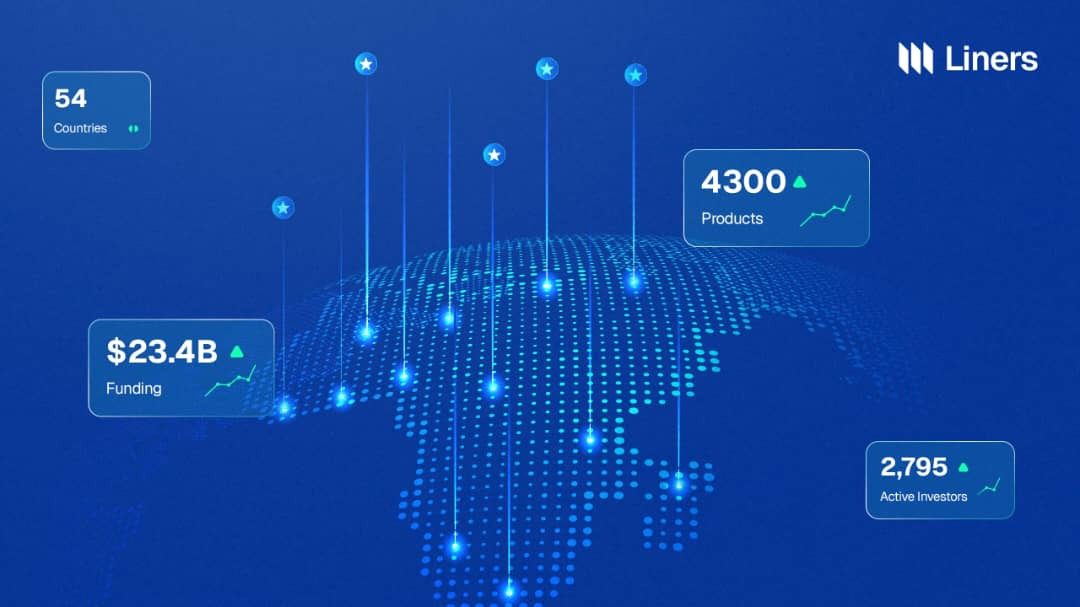
The figures come from Liners, the home of African software, which logs products built for Africa alongside the funding rounds and investors behind them. It covers more than 3,380 products across 54 countries and $23.4 billion in disclosed equity funding.
The ratio matters more now than it did a year ago. Total funding into African startups has gone up in 2026, but the number of companies raising has reduced, and the gap between a first cheque and a second one is where this is super obvious.
More than 1,600 seed rounds and fewer than 300 at Series A
Liners’ funding round breakdown counts 1,662 seed rounds and 266 Series A rounds. That is about 6.2 seed deals for each Series A.
The seed end of the market has plenty of active backers. Y Combinator is the most active investor in African startups by deal count, with 144 investments, followed by angel investors at 79, Launch Africa Ventures at 77 and Techstars at 70. Ventures Platform (59) and Future Africa (51) are the two Nigerian firms in the top ten.
Most of those names write early cheques. A Series A asks for more: revenue that holds up under diligence, a team that can grow, and a lead investor prepared to commit several million dollars. Fewer investors on the continent write that cheque, and the round counts reflect it.
Series A cheques are getting bigger while fewer companies raise
The 2025 recovery made Series A look “healthier.” The Partech Africa Tech VC Report put total funding at $4.1 billion, with equity up 8 per cent to $2.4 billion across 462 deals. Series A and B saw the strongest recovery of any stage, with average round sizes up 21 per cent and 12 per cent respectively.
A larger average cheque and a larger number of companies reaching Series A are two different measures. Investors can put more money into fewer, safer companies, and the average goes up.
The 2026 figures point in that direction. Technext reported in May that 124 startups announced funding of $100,000 or more in the first four months of the year, down 31.1 per cent from 180 in the same period of 2025. Debt made up 51.4 per cent of the $708 million raised.
2026 seed slowdown thins the Series A pipeline for 2027 and 2028
Much of that drop is at the start of the funnel.
Africa: The Big Deal’s H1 2026 review counted $1.36 billion announced in the first half, down 6 per cent on H1 2025, raised by 190 startups, the lowest tally since at least 2021. Ventures raising between $100,000 and $1 million fell from 179 in the second half of 2025 to 100, a drop of 44 per cent.
Those companies are the pool Series A investors draw from later. At a six-to-one ratio built on larger seed cohorts, a seed class 44 per cent smaller means fewer Series A rounds over the next two to three years, unless more companies take the leap.
What the data can and cannot tell you
The ratio is a direction, not a precise “graduation” rate. Liners’ data covers disclosed equity only, so debt, acquisitions and IPOs are excluded, and rounds that were never announced are still missing.
Another 609 rounds are recorded as venture funding with no stage, and 1,152 as other round types. Some of those would be Series A rounds if classified, which would bring the ratio down.
Timing matters too. Companies that raised seed rounds in 2024 and 2025 have not all had time to reach a Series A, so the count at the top of the funnel runs ahead of the one below it.
There is also a fair case that Series A is not the only way forward. Debt accounted for 41 per cent of all capital deployed in 2025, according to Partech, up from 31 per cent in 2024.
A lender with a strong loan book or an asset-heavy energy business can grow on debt without a Series A. For a software company still building its product, that route is narrower, because lenders want repayments from cash flow the company may not yet have.
The step from seed to Series A needs more capital that can lead
The early start of African venture is well served, and much of that is the work of accelerators and seed funds.
The step after it depends on a smaller group of investors able to lead a round of several million dollars, and on local capital that can price a company in the currency it earns in.
For the next few years, the more telling number is how many of this year’s seed companies go on to raise a second round.
Read also: African startups have raised nearly $2bn in 2026, but fewer ventures are getting the money
