


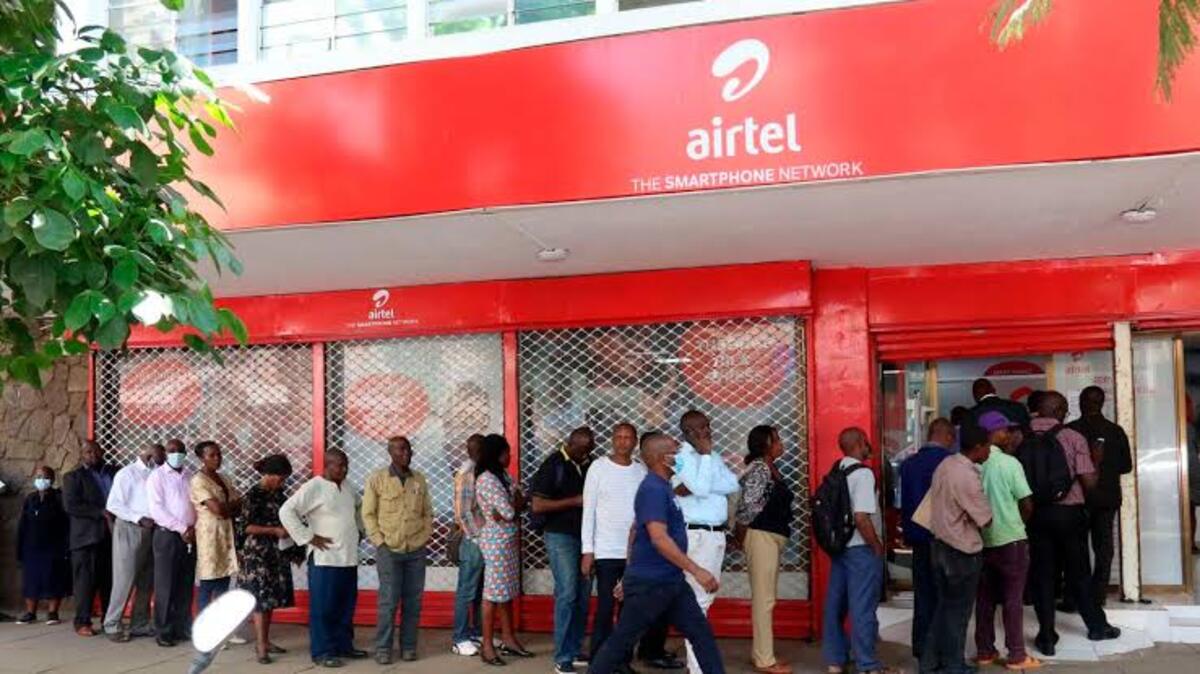
Airtel Africa is winding up Airtel Kenya Telesonic Limited, its wholesale fibre and internet subsidiary in Kenya, two years after launching it. The shutdown makes Kenya the third African market in under five years where Airtel has retreated from an underperforming asset rather than fight to turn it around.
The company’s own financial statements, filed for the year ended 31 December 2025, confirm the exit. Airtel Kenya Telesonic recorded a net loss of KES16.1 million (roughly $124,000) for 2025, more than five times the KES2.9 million (about $22,400) loss it posted in 2024. With accumulated losses of KES19.08 million against a total asset base of just KES284,275, directors concluded the company could not continue as a going concern, according to Bharti Airtel documents.

The company filed a notice at the end of 2025 to surrender its Network Facilities Provider Tier 2 licence to the Communications Authority of Kenya. The CA approved the shutdown, and the Registrar of Companies is now processing the deregistration, with Airtel Kenya Telesonic set to be struck off the register by December 2026.
It reported zero revenue in both 2024 and 2025, and its only asset of note, a network facilities licence valued at KES15 million, was fully amortised by the end of 2025.
Airtel’s familiar exit pattern
This is not the first time Airtel has cut its losses in Africa rather than deepen investment.
In 2021, the company wrote off its equity in Ghana’s AirtelTigo, a joint venture formed in 2017 with Millicom’s Tigo brand, and transferred its full stake to the Ghanaian government for a nominal sum, according to regulatory filings at the time. The telco also agreed in March 2021 to sell its tower portfolios in Madagascar and Malawi, comprising 1,229 towers, to Helios Towers for a combined $108 million.

The Madagascar sale closed in November 2021, while the Malawi transaction, covering 723 sites for $55 million, closed in March 2022, with Helios and Airtel also signing a 12-year service agreement on the acquired sites.
In each case, the pattern has been similar: exit a market or business line where the company is not among the strongest players, and reinvest in the markets driving the group’s growth. Telesonic itself was launched in February 2024 as Airtel Africa’s pan-continental wholesale data play, built on more than 75,000km of terrestrial fibre and a stake in the 2Africa submarine cable system alongside Meta, Vodacom and MTN.
Read also: Airtel Africa CEO calls for industry-wide infrastructure sharing to cut costs
In Kenya specifically, the unit could not compete effectively against Safaricom, Liquid Intelligent Technologies, Seacom and MTN’s Bayobab, and never turned a profit.
Nigeria tells a different story from Kenya
While Telesonic’s Kenyan arm was being wound down, its Nigerian counterpart was moving in the opposite direction.
Airtel Nigeria Telesonic Limited picked up National Long Distance, Internet Service Provider and Sales & Installation Major licences from the Nigerian Communications Commission in 2024, and now markets a live range of wholesale products on Airtel Nigeria’s business portal, including dedicated internet access, international private leased circuits and voice and SMS termination for enterprises.
Read also: Airtel Kenya seeks licences to build own infrastructure, challenge Safaricom, Telkom
Nigeria remains Airtel Africa’s largest market by revenue, contributing 24% of group earnings in the first half of 2025 at a record EBITDA margin of 56%, according to the company’s own results. Airtel Africa’s group-wide profit after tax more than doubled to $813 million for the financial year ended March 2026, with Nigeria’s revenue climbing 52.92% to $1.59 billion over the same period.
Airtel Africa has not disclosed its plans for Telesonic in its remaining 13 markets, though the brand continues to be listed as active in Nigeria, Uganda, Rwanda, Tanzania, Zambia and the Democratic Republic of Congo, suggesting the Kenya exit is not, for now, a continent-wide retreat from the wholesale fibre business.
Deloitte & Touche, which audited the Kenyan subsidiary’s accounts, gave an unqualified opinion that the statements presented a true and fair view, while flagging that they were prepared on a liquidation basis given the wind-down.
