



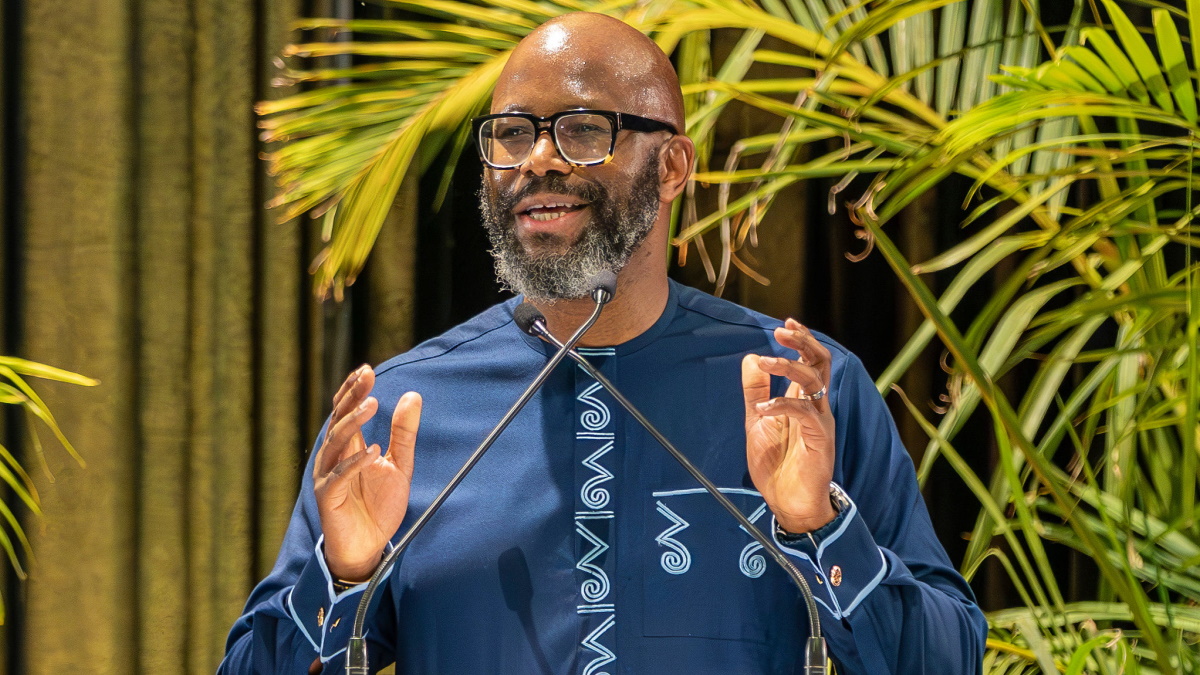
Chief Executive Officer of the MTN Group, Ralph Mupita, has said that device affordability challenges will not deter the company’s investment drive, while identifying fibre-to-home as the next major service frontier for the telco in the next five to ten years.
The CEO made this known in a chat with journalists and fellows of the MTN Media Innovation Programme in Lagos.
His remark follows a decline in global smartphone shipments. A recent IDC report indicates that smartphone sales fell by 22% year-on-year in Q3 2026. The higher cost of storage over the past year, driven by rising demand from the AI industry, has hurt profitability across the mobile sector and forced chip-making companies to raise prices, cut back specifications and discard budget-focused/entry level models.
Prices of existing smartphone models have risen by almost 15% globally in 2026, while newly launched models are roughly 25% more expensive than last year. “The real big difficulty today is that the cost of devices has gone up by at least 80%”, he said.
Recall that MTN’s Chairman, Mcebisi Jonas, in October last year, hinted that MTN plans to invest in 5G-enabled phone acquisitions to boost penetration, particularly in Nigeria and Ghana. “To address this challenge, we will have to invest in landing network-appropriate devices at an affordable price range and compatible with country-specific regulations”.
On his part, Ralph acknowledged the increasing difficulty of delivering on this promise owing to the growing prices: “So, we thought we could distribute devices to our customers at a $50 price point three years ago. Today, the same devices cost between $80 and $100. And that has potentially hampered the extent of our coverage.”
Yet, he insists that the company is committed to its investment plan to serve its 307.2 million users in line with its Ambition 2030 strategic plan. This includes investment in connectivity, fintech and digital Infrastructure.
In August, Chief Financial Officer Modupe Kadri highlighted how 76% of MTN Nigeria’s revenue flows back into the Nigerian economy in the form of investment and dividends to shareholders. In 2025, it spent ₦620.5 billion on capital projects, with total capex growing to ₦1.6 trillion in the last 18 months.
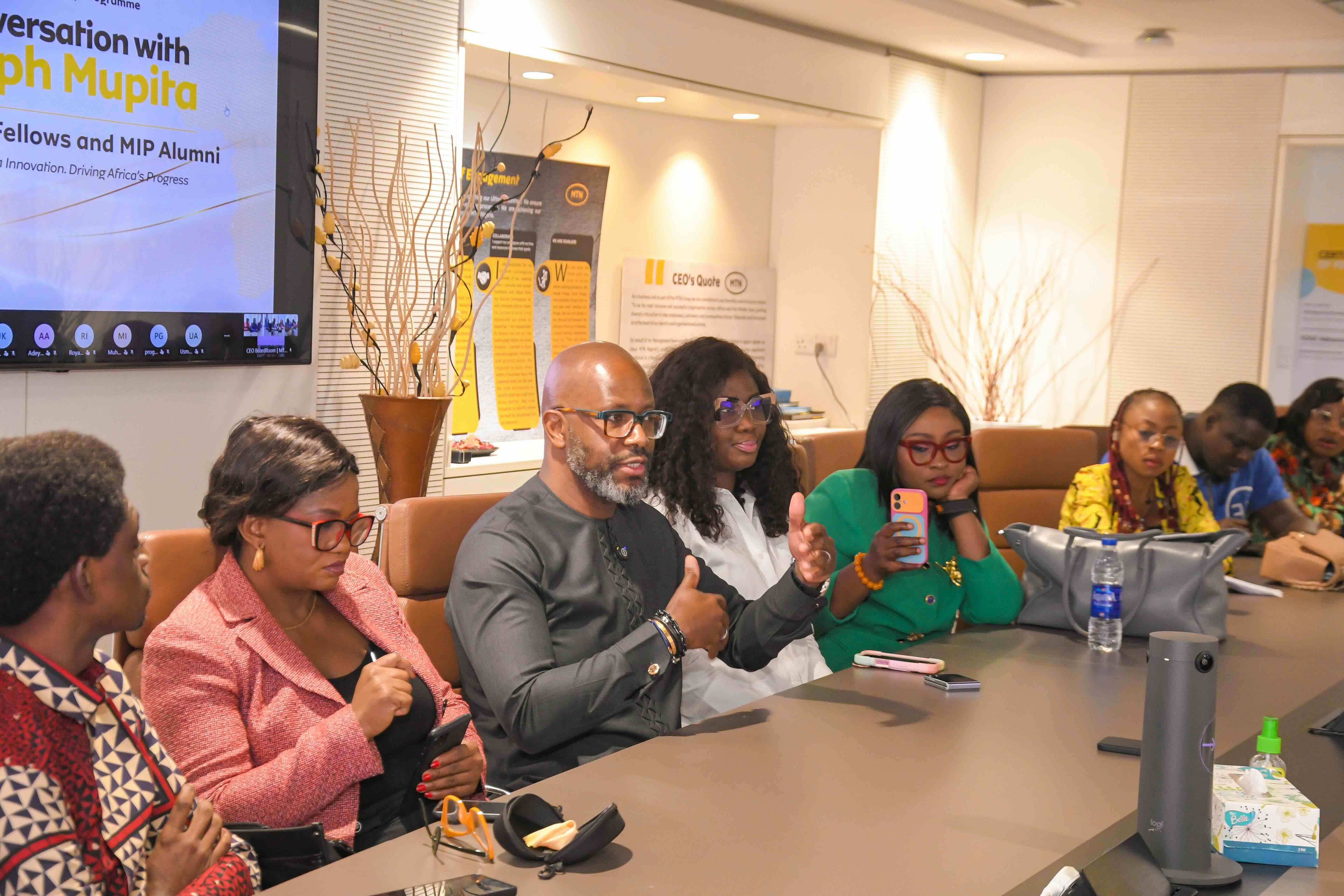
Ralph Mupita explains the imperative for more investments:
“Every year, the average Nigerian spends 30% more on data consumption. So, we need to create the capacity to take on more and enable our customers to do more. There is a tremendous amount of investment needed over the next five to 10 years to build the digital infrastructure, to fiberise networks, to create the capacity to take on more of the so-called workloads”
“So there is a cost of production, and we’re always wanting to make sure that we are driven also by customers’ affordability. And between the two, we’ll try and make it work. So we in Africa are, you know, the average MTN customer spends three, two to $3 per month on communication services.”
A September 2026 GSMA report indicates that about 3 in 10 Nigerians actively use the internet (a usage gap of 53%, while the coverage gap is 11% as of 2025). Interventions that cut the gaps in half could bring 75 million Nigerians online.
Mr Mupita listed device financing, purchase subsidies, and engagement with manufacturers as ways to address the affordability problem. “There are ongoing initiatives with the World Bank and other institutions to bring smart smartphones at lower costs and remove tariffs and import duties.”
In the end, he insists that companies such as MTN must balance network investment costs, including spectrum, imported equipment, and capacity, with customer affordability and sustainable returns for shareholders.
On MTN’s role in AI language models and digital sovereignty
Ralph Mupita also highlighted the importance of access to internet-enabled devices for AI accessibility and adoption. He also lamented the extent of African-language representation in open-weight models and hinted at MTN’s participation in industry efforts to support voice-centric workloads.
“The 2,000 African languages, and you know, African languages on the internet are a very small single-digit percentage. So, to some extent, we are almost excluded”, he said. “But, we mustn’t accept that as our lived reality. We need to bring agency to ingest our African languages into these AI models (Hausa, Yoruba, Shona, Swahili), so that we don’t get left behind”, he concluded.
He described a likely hybrid model to power this where sensitive workloads will be hosted in-country and less sensitive workloads will use the public cloud.
“We will be working with the GSMA to ensure African languages are included, particularly at the level of annotation. It’s not a job that only one company can do. So we are looking at a partnership model with other operators across the continent, whether it’s Apple, Orange or Broadcom, etc.”
Finally, Ralph called for an AU-level harmonisation of data privacy laws, data transport, and cross-border e-commerce frameworks for the continent.
