


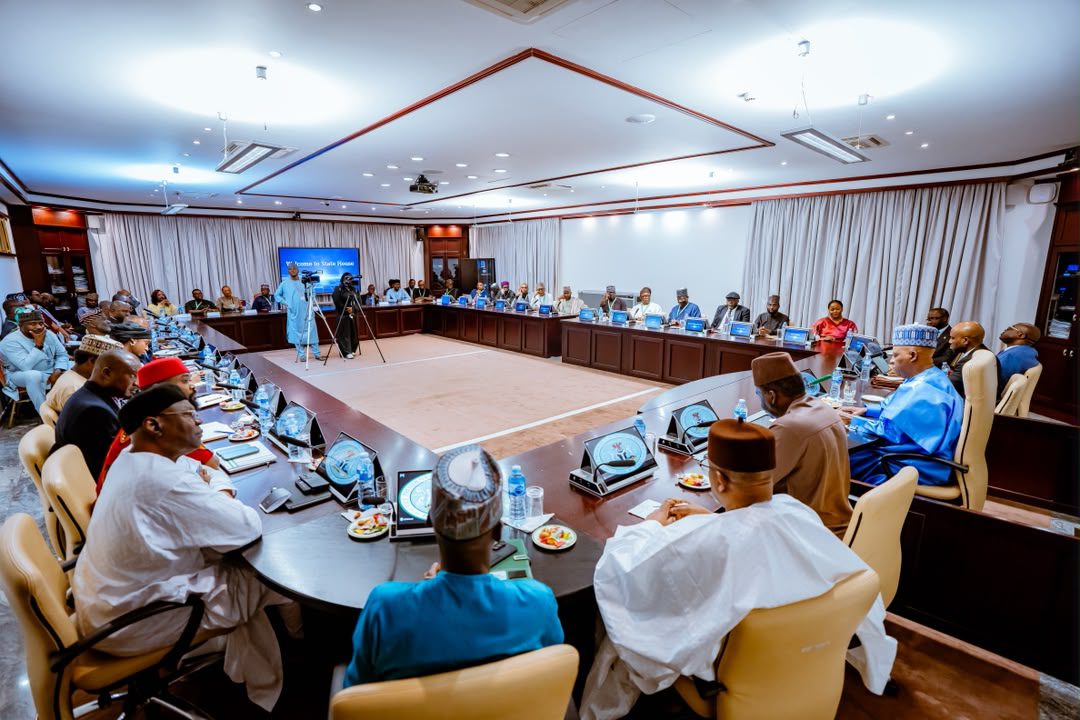
The National Addressing Council (NAC) has approved a preliminary framework to build a digitised national addressing system that will assign every citizen and registered business in Nigeria a verified digital address, Stanley Nkwocha, spokesman and senior special assistant to the president on media and communications (Office of the Vice President), said in a post on X on Tuesday.
The decision was taken at a council meeting chaired by Vice President Kashim Shettima in Abuja on Monday, with public and private sector stakeholders in attendance, according to Nkwocha’s statement.

Under the new arrangement, the Federal Ministry of Science, Technology and Innovation will serve as secretariat of the council, coordinating technical implementation, systems integration and standards, the statement said.
“Under the Renewed Hope Agenda, our duty is to build institutions that match the energy and mobility of our people,” Shettima said, adding that the addressing system must “locate every community, support enterprise without barriers and strengthen government without compromising privacy.”
The vice president said the new system is designed to link every citizen’s verified identity to a verified address, a connection he said would support financial inclusion, planning, security and emergency response.
Also read: VP Shettima tasks Moniepoint, other fintechs on stronger audit to tackle fraud and criminal misuse
How responsibilities are split across the Nigerian agencies
The council assigned distinct roles to different agencies under the new framework. The National Identity Management Commission (NIMC) will handle individual address verification and authentication, while the Corporate Affairs Commission (CAC) will verify business addresses. The Nigerian Postal Service (NIPOST) retains responsibility for postcode administration and postal infrastructure, the statement said.
States and local governments, working through the Nigeria Governors’ Forum (NGF) and the Association of Local Governments of Nigeria (ALGON), are expected to drive implementation at the community level. The National Information Technology Development Agency (NITDA), the Nigeria Data Protection Commission (NDPC), the Office of the National Security Adviser (ONSA), the Central Bank of Nigeria (CBN) and the Nigerian Communications Commission (NCC) were also named as agencies expected to contribute to the framework.
Special Assistant to the President on ICT Policy, Salihu Ibrahim-Dasuki, said the National Addressing Policy of 2017 had become obsolete, noting that it focused narrowly on mail delivery and postcodes and contained what he described as institutional misalignments, including citizen address verification duties assigned to the National Bureau of Statistics.

NIMC Director-General Abisoye Coker said the initiative had earlier been slowed by a lack of coordination among agencies, but credited the vice president’s office with harmonising the parties involved.
ALGON president Bello Lawal said the addressing initiative would improve national security, deepen financial inclusion and help ensure that every Nigerian is accounted for within their local community.
Also present at the meeting were NDPC chief executive Vincent Olatunji, NITDA director-general Kashifu Inuwa Abdullahi, Nigeria Governors Forum director-general Abdullateef Shittu, and representatives of the Fintech Association of Nigeria, among others.
