


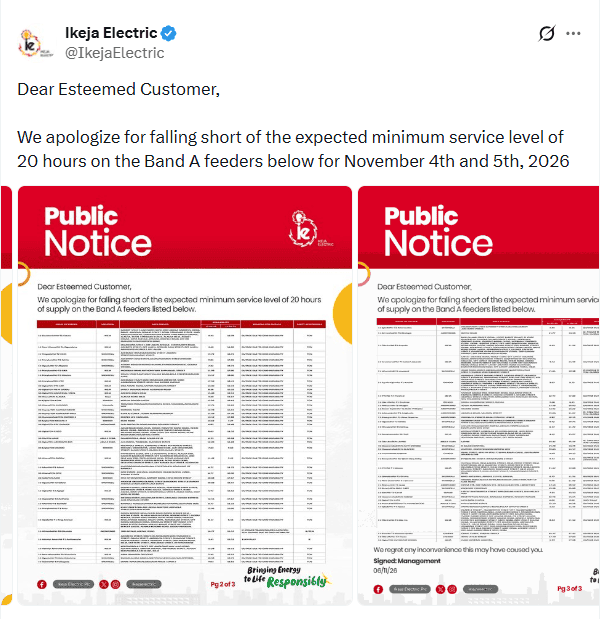
Ikeja Electric has issued an apology to customers on some of its Band A feeders after it failed to provide the promised minimum of 20 hours of daily electricity supply. This apology highlights ongoing power supply challenges in certain areas of Lagos.
In a notice dated November 5, the company acknowledged that it fell short of the expected service on November 3 and 4 and did not provide specific reasons for the outage. This follows an earlier announcement from October 19, in which Ikeja Electric explained that reduced electricity supply was due to a shortfall in power allocation from the national grid.
At that time, the company mentioned that it was working with stakeholders to improve the situation and ensure fair distribution of the available electricity. However, the recent apology indicates that the allocation issues persist, affecting the service commitments to its Band A customers.
Beyond Ikeja Electric: Gas shortages and reduced generation behind the epileptic supply
The electricity supply issues are not just affecting Ikeja Electric. On November 6, the Federal Government pointed to several reasons for the ongoing disruptions in regions like Lagos, Abuja, Ogun, Kwara, and Oyo. These include inadequate gas for thermal power plants, maintenance problems, and lower output from hydropower stations.
The Nigerian Independent System Operator confirmed that gas shortages and lower water levels in hydroelectric reservoirs are limiting electricity generation. As a result, distribution companies are forced to share what little power they receive among their customers.

For example, on November 5, Ikeja Electric received 249 megawatts from the national grid, while Eko Electricity Distribution Company got 256 megawatts. It is important to note that these numbers reflect what is allocated to the companies, not what actually reaches each household.
Also read: Solar energy now powers 20% of Nigeria’s electricity usage, to hit 50% in 3 years
This reduced supply has understandably frustrated many residents. Recently, some mainland residents protested against the ongoing outages, while those on Lagos Island held demonstrations earlier in the week. Many people are spending more on petrol for generators, and businesses that rely on consistent power are facing higher costs and disruptions.
For customers on Band A, regular shortfalls are raising serious questions about the value of paying higher tariffs for a promise of at least 20 hours of electricity each day. While the national supply issues explain the reduced power to distribution companies, customers expect their DisCos to communicate clearly when they can’t meet the promised service levels.

As of now, Ikeja Electric has not provided any updates on when power supply will be restored to the expected levels for affected areas.
Read also: Ikeja Electric threatens to disconnect customers without Tax IDs by February 20
