





The Nigerian Communications Commission (NCC) has urged African telecommunications regulatory bodies to ensure that regulations are made based on verified data and evidence directed at solving ongoing challenges.
While speaking at the Heads of Regulators Roundtable during the African Telecommunications Union (ATU) Conference of Plenipotentiaries (CPL-26) in Abuja, Dr Aminu Maida, the NCC Executive Vice Chairman/CEO, noted that regulation remains central to driving economic growth. He maintained that such regulation must be guided independently and through the use of market intelligence.
The NCC boss explained that communications regulation has become increasingly central to economic growth, the digital economy and national development across Africa.
Across Africa’s 54 countries lie significant challenges such as the digital divide, coverage gaps, smartphone adoption rates, digital literacy gaps, satellite services and a host of others. While there are specific issues, most of these countries share common challenges.

Maida acknowledged the phenomenon, adding that infrastructure development, cybersecurity, affordability, satellite services, resilience of networks, and the rapid emergence of artificial intelligence technologies remain common challenges pertinent to almost all African countries.
To solve these common issues, the NCC boss admonished regulators to share their experiences and lessons that can help institutions address complex policy and regulatory issues. He recognised that a deliberate knowledge-sharing approach is beneficial to regulatory authorities across the continent.
“Very often, the challenge one regulator is trying to solve has already been encountered, in one form or another, by a colleague elsewhere on the continent,” he said.
In the process of recognising the significance of the event, Maida described the theme, “Building Africa’s Network Intelligence Ecosystem for Evidence-Based Regulation,” as timely and relevant to the future of communication regulations across the continent
“It gives us an opportunity to consider how better use of data, evidence and market intelligence can strengthen regulatory decisions, and how African regulators can learn more systematically from one another,” he added.
Rimini Makama, NCC’s Executive Commissioner, Stakeholder Management, while chairing the roundtable, stressed that recent developments such as AI, broadband expansion, satellite-to-phone services, cloud computing and digital public infrastructure require regulators to move beyond traditional methods.
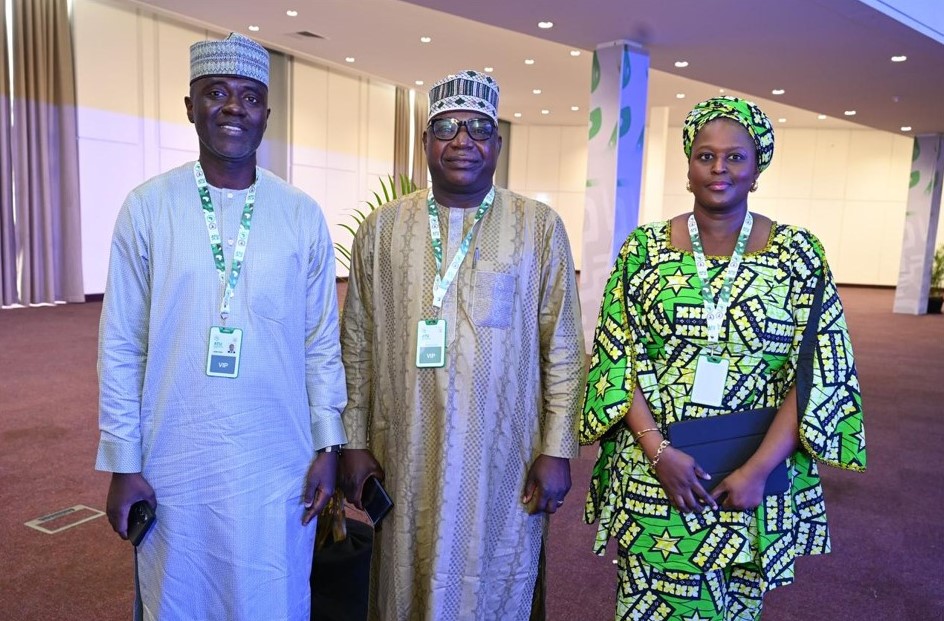
The Heads of Regulators Roundtable is part of ongoing efforts by African communications regulators to promote collaboration and evidence-based regulation in addressing Africa’s deepest issues in the voice and internet ecosystem.
Also Read: NCC begins process to provide free internet access to educational platforms.
Inside NCC’s call for African regulators’ collaboration
The call is central to current challenges faced by the African telecoms industry. Despite the recent spike in mobile phone adoption, a certain percentage of Africans are still without a device. This is particularly true for low-income individuals and women.
According to recent data by the International Telecommunication Union (ITU) and the GSMA, between 60% and 64% of Africa’s population remains offline or does not actively use mobile internet, driven largely by device costs, service affordability, and digital literacy barriers.

To address this common challenge, African communications regulators are required to adopt evidence-based solutions. Rather than each regulator working in isolation, the NCC wants regulators across Africa to share these insights so they can make more informed decisions.
For instance, if Nigeria discovers that a certain spectrum licensing model improves 5G rollout, Kenya, Ghana, and South Africa can learn from that experience instead of experimenting independently.
Notably, regulators are expected to adapt to recent innovations instead of relying on redundant rules.
