


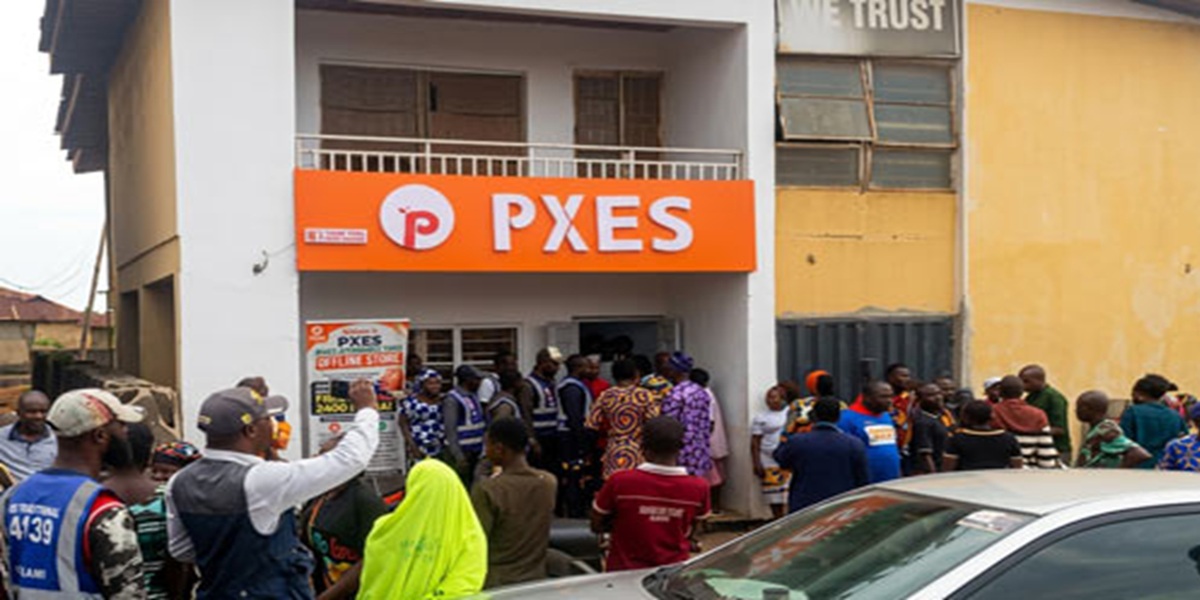
Frustrated investors in PXES, an online investment platform, stormed the company’s office in Kabba, Kogi State, after losing access to their funds. Reports indicate that they removed office furniture and equipment in protest. The incident followed a similar confrontation at PXES’ Yola office in Adamawa State, where investors reportedly stormed the premises after withdrawals failed.
PXES is described as a global e-commerce and digital marketing company based in Melbourne, Australia, which entered Nigeria in July 2025. The platform allowed members to earn commissions by completing simple promotional tasks, such as reviewing products online. According to PXES, it returned 60% of service fees to incentivise participation.
However, many experts now label the platform’s structure as a Ponzi scheme. It relied on funds from new members to pay returns to existing ones instead of generating legitimate profits. The situation deteriorated in early September 2026 when the platform became inaccessible and withdrawals halted, leading to widespread panic among investors.
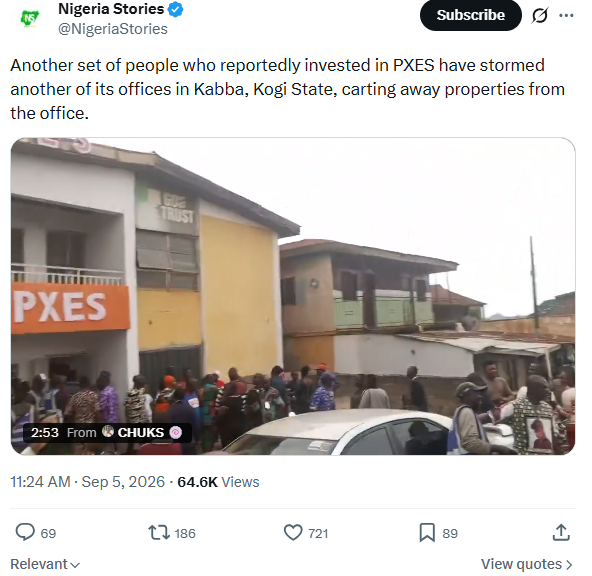
Viral videos shared on social media show investors confronting PXES staff and demanding their money back. One distressed investor reported losing ₦209,000. With no clear answers from the company, some frustrated individuals chose to take office items as a form of informal recovery.
A failed Ponzi pattern Nigeria keeps repeating
PXES is just the latest in a long line of Ponzi schemes that have emptied the pockets of many Nigerian families, often within just a few months of starting up.
In 2025, a scheme called CBEX, or Crypto Bridge, fell apart and caused losses estimated at ₦1.3 trillion, making it one of the biggest Ponzi collapses in Nigerian history. Before that, MBA Capital and Trading, often referred to as MBA Forex and led by Maxwell Odum, raised about ₦171 billion before shutting down in 2020.
Similar read: 8 Ponzi schemes that wiped out trillions from Nigerian investors
Wales Kingdom Capital lost investors around ₦40 billion, and Imagine Global Solutions accounted for roughly ₦22 billion in losses. One of the most notorious schemes, MMM Nigeria, which caught the country’s attention in 2016, resulted in ₦18 billion in losses and remains vividly remembered. Racksterli, endorsed by various Nigerian celebrities, led to losses of about ₦1 billion, and Zedekiah Money Train affected over a million people.
Just a few months ago, XM Future Music Group attracted investors by promising 100% returns in just 30 days for simply listening to music, with participation costs ranging from ₦21,600 to a staggering ₦93 million.

The pattern in these schemes, including PXES, is all too familiar. They promise high and unrealistic returns for little effort. Early investors receive payouts from the money contributed by new participants, creating a false sense of success. This “social proof” and referral bonuses drive quick growth, pulling in more people faster than any legitimate business could handle.
Eventually, once the influx of new money slows down, which it always does, the scheme fails to pay out, communication breaks off, and the operators either vanish or blame technical issues, leaving investors empty-handed.
What PXES’ fall means for ordinary Nigerians
The real impact of these financial collapses often goes unnoticed in the overall loss figures. Every naira lost to PXES affects someone’s rent, a child’s school fees, or savings meant for emergencies. The individual who lost ₦209,000 is not alone; he represents countless Nigerians in Kogi, Adamawa, and likely other states, all of whom trusted a platform that could never deliver the promised returns.
The repeated failures of these platforms highlight a significant issue: the lack of effective regulatory measures in place before these schemes can cause vast financial damage. By the time the authorities or the public become aware, the money is typically already gone, and the operators are hard to track down.

For many Nigerians, the takeaway from the PXES experience should echo the lessons learned from past failures like CBEX, MBA Forex, and MMM Nigeria: be wary of any platform promising incredibly high returns with little risk or effort, especially if it relies on recruiting others or simple online tasks. No matter how professional their website or office looks, scepticism is warranted.
Also read: Ponzi Scheme: SEC flags Glorious Wealth Fund as an illegal investment platform
