




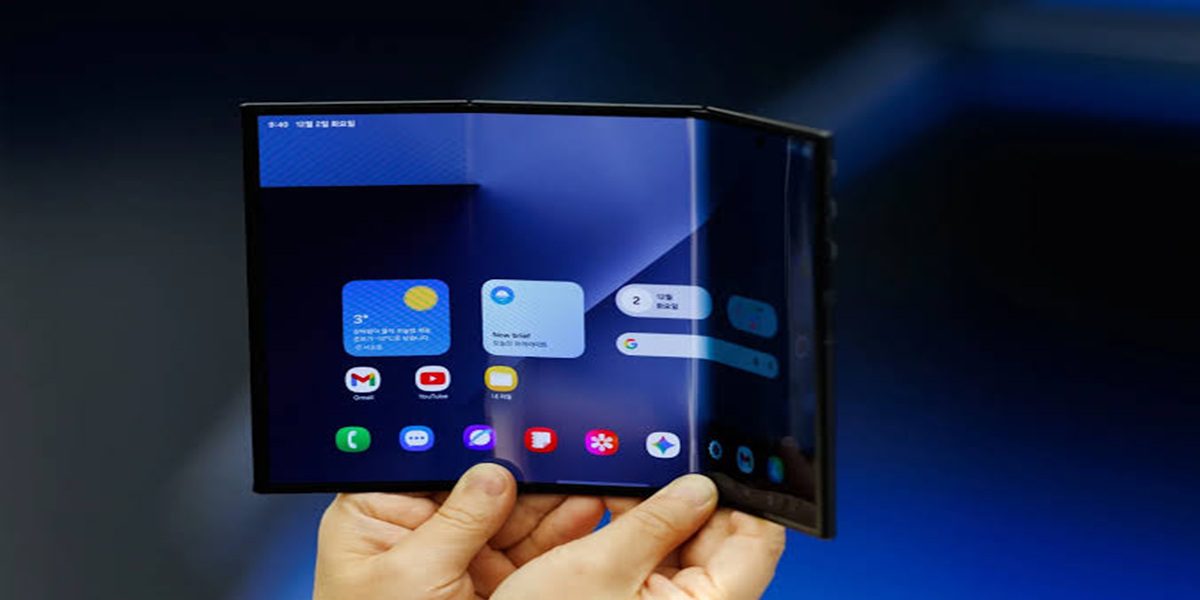
Samsung Electronics has unveiled three new foldable smartphones, including a passport-sized Galaxy Z Fold8 with a wider display, while raising prices across its foldable lineup as soaring memory chip costs continue to pressure manufacturers.
At its Galaxy Unpacked event in London on Wednesday, the South Korean tech giant introduced the Galaxy Z Fold8, Galaxy Z Fold8 Ultra and Galaxy Z Flip8, all powered by Google’s Gemini AI.
The standard Galaxy Z Fold8 starts at $1,899 (about ₦2.94 million), while the premium Galaxy Z Fold8 Ultra is priced at $2,099 (about ₦3.25 million). Samsung also increased the price of its clamshell Galaxy Z Flip8 to $1,199 (about ₦1.86 million), with both the Fold8 Ultra and Flip8 costing $100 more than their predecessors.
The wider display on the Fold8 is designed to improve video viewing and multitasking, as Samsung doubles down on foldables ahead of what analysts expect will be Apple’s first foldable iPhone later this year.
Similar read: Samsung crosses $1 trillion valuation as AI chip demands surge
Higher chip costs, Apple competition shape Samsung’s strategy
Samsung’s latest foldable launch comes as the company navigates rising component costs, particularly for memory chips, while trying to defend the foldable smartphone category it pioneered.
According to market research firm IDC, Samsung is expected to increase its global smartphone market share this year even as the overall smartphone market contracts by a record 14%, partly due to a memory chip shortage. Foldable smartphone shipments, however, are forecast to grow by 20%, making the premium segment one of the few bright spots in the industry.
“Strategically, this is one of Samsung’s most important foldable launches,” IDC Vice President Francisco Jeronimo said. “Samsung has to defend the category it created, and that’s why it cannot play it safe.”
The price increases also reflect rising production costs. Research firm Omdia estimates that memory and storage account for more than 30% of material costs in premium smartphones and over 60% in budget devices, giving manufacturers limited room to absorb higher chip prices.
The Galaxy Z Fold8 and Fold8 Ultra are powered by Qualcomm’s latest flagship processor, while the Galaxy Z Flip8 will ship with either Qualcomm’s newest chip or Samsung’s Exynos processor depending on the market.
The company’s mobile business is also under pressure. Some analysts expect the division to report its first quarterly operating loss for the April-June period as higher memory prices squeeze margins, even as those same chip prices boost profits in its semiconductor business.
The launch comes just months after the company’s market value crossed $1 trillion, driven largely by strong investor confidence in its AI chip business and growing demand for high-bandwidth memory used in artificial intelligence systems.
As Apple prepares to enter the foldable smartphone market, Samsung is betting that larger displays, AI features and continued hardware innovation will help it maintain its lead in a segment it created.
Read also: Samsung unveils Galaxy Z TriFold, its first multi-folding smartphone
