






Most conversations about crypto adoption still center on price. Fewer center on plumbing. The settlement layers, stable units of account, and verification systems that determine whether an application built on blockchain rails works better than the centralized version it’s replacing. That infrastructure question is where the more durable progress in the space has been happening.
Why Stablecoins Became the Default Settlement Layer
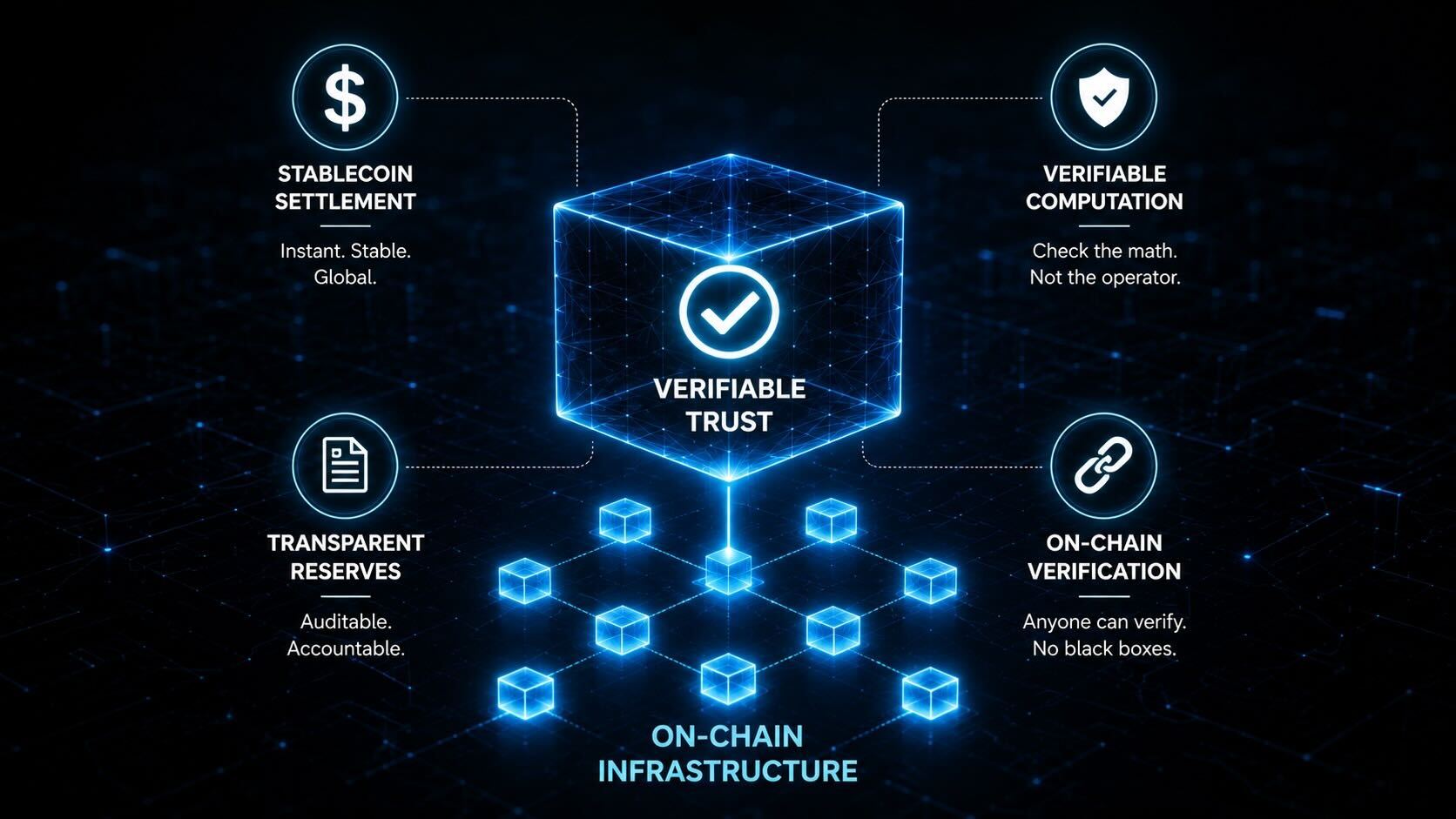
Volatility was always the practical objection to using crypto for everyday transactions, nobody wants a payment’s value to shift materially between the moment it’s sent and the moment it’s confirmed. Stablecoins solved that specific problem without giving up the underlying settlement advantages of a blockchain: near-instant finality, transparent transaction history, and no dependency on a bank’s operating hours. USDC has become a default choice for platforms that need dollar-denominated stability with on-chain speed, largely because its reserve reporting is more transparent than most competitors.
What Changes When Settlement Is Instant
Instant settlement isn’t just a convenience feature. It removes an entire category of counterparty risk. Traditional payment rails hold funds in intermediate states for days, during which a business is effectively extending unsecured credit to whichever bank or processor sits between sender and receiver. Stablecoin settlement collapses that window to seconds.
Platforms built with USDC as a native settlement option, including best USDC casino platforms like Jacks Club are a useful illustration of what this looks like in practice. Users move value in and out without the multi-day holding periods that legacy processors still impose.
Verification Is the Other Half of the Equation
Fast settlement matters less if the underlying process isn’t trustworthy in the first place, which is why verifiable computation has become the other pillar of serious blockchain infrastructure. Commit-reveal schemes, on-chain audit trails, and smart-contract logic that anyone can inspect all serve the same purpose: replacing “trust the operator” with “check the math.” This is the same principle showing up across DeFi protocols, NFT provenance systems, and increasingly among best crypto casino platforms adopting provably fair mechanics, where outcomes can be independently verified against a published hash rather than taken on faith.
Why This Combination Matters More Than Either Piece Alone
Stable settlement and verifiable logic solve different problems, but they compound when combined. A platform can move value quickly and still be untrustworthy if its internal processes aren’t auditable. It can be perfectly verifiable and still be impractical if settlement takes days and value fluctuates in the meantime. The applications gaining real traction right now are the ones solving both at once, treating stablecoin settlement and on-chain verification as a single infrastructure requirement rather than two separate features.
Read also: Chinese digital assets company Cregis targets Nigeria, Kenya and South Africa in new expansion drive
How to Tell Real Infrastructure from Marketing
The gap between a platform that has built on-chain infrastructure and one that has simply added crypto as a payment option is usually visible in a few specific places. Does the platform publish the smart contract addresses it settles through, or just claim to use blockchain in marketing copy? Can a user independently verify a transaction on a block explorer, or does the platform’s own dashboard remain the only source of truth? Is stablecoin settlement the default rail, or an optional add-on layered awkwardly onto a traditional payment stack?
None of these questions require deep technical expertise to ask, and the answers tend to be a reliable filter, platforms with nothing to hide are usually the ones most willing to point users toward independent verification.
The Regulatory Backdrop Is Pushing in the Same Direction
It’s not a coincidence that transparency-first infrastructure is gaining ground at the same time regulators in the US, EU, and several Asian markets are tightening reserve and disclosure requirements for stablecoin issuers. Platforms that already operate with auditable settlement and verifiable logic are better positioned for that shift than ones retrofitting compliance onto opaque systems after the fact. Infrastructure built around verification isn’t just a technical preference at this point. It’s increasingly the path of least resistance as oversight catches up with the industry’s scale.
Where This Leaves Web3 Adoption
The next phase of adoption probably won’t be driven by a single breakout application. It’s more likely to come from this kind of infrastructure becoming boring and expected. The same way HTTPS went from a notable security feature to an invisible baseline. As stablecoin rails and verifiable computation keep maturing, the platforms that treat them as core architecture, rather than a marketing layer bolted onto a centralized backend, are the ones likely to hold up as scrutiny of the space increases.
Similar read: Creative hacks to get a website domain that stands out
