



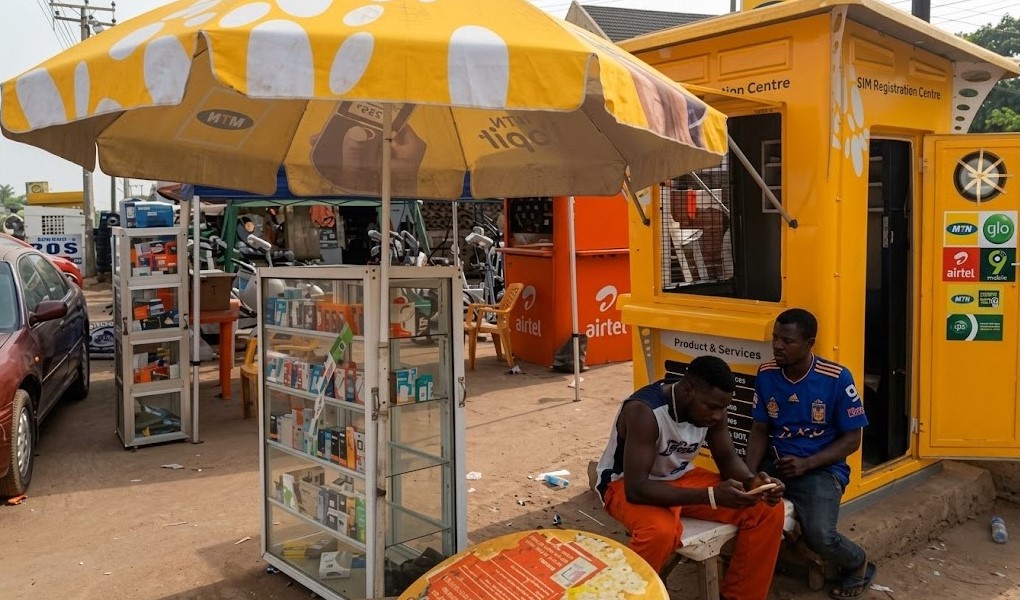
SIM swaps have been a leading funnel fraudsters use in identity theft, where people lose control or ownership of their phone numbers. Now, buying and registering SIM cards from informal agents and roadside kiosks could land you in jail.
In the case of SIM swaps, the end goal of a fraudster is to wire money from someone’s account, but for this type of identity theft, the mission is to register people’s names on a SIM card and sell them to criminal syndicates.
The main target is the National Identification Number (NIN). By obtaining this information that links people’s identities to a particular SIM card, ordinary citizens are turned into criminal suspects through roadside SIM registration scams.
To a large extent, identity theft accounts for 63% of all digital financial crime in Africa, costing an estimated $4 billion annually.
Also read: SIM Swap and its loopholes: How fraudsters steal your phone number and drain your savings.
Modus operandi explained
In a video advisory, SP Bright Edafe, Public Relations Officer of the Delta State Police Command, warned about an identity-theft scheme uncovered during ongoing criminal investigations.
In his explanation, he noted that roadside SIM registration agents at informal outlets collect sensitive personal details, including NIN, full names, and personal background information, under the cover of registering a line. But the goal is identity theft.
Instead of completing the customer’s request, the agent registers an entirely different SIM card using the person’s already-supplied information. The agent then dismisses the victim under the guise of a poor network connection.
Afterwards, the secretly registered SIM card is then sold via the black market to bad actors involved in cybercrimes, kidnappings, extortion schemes, and hacking, and they use it to make ransom demands.

While law enforcement agencies trace criminal calls and financial transactions back to the registered owner of the phone line (who is originally unaware of such linkage), identity theft victims often find themselves identified as primary suspects in major investigations.
“If they use your number to defraud somebody or demand ransom money in a kidnapping case, it will be very difficult to claim ignorance,” the Police officer said, noting that the ignorance of the law offers no legal protection.
How the SIM registration scam works
- A customer approaches an informal outlet or kiosk to buy or register a SIM card.
- The agent collects bio-data and personal details such as NIN, name, mother’s maiden name and so on.
- The agent registers a different SIM card using the customer’s identity.
- The agent claims network failure and turns the customer away without a functional SIM.
- The secretly registered SIM is sold to criminal syndicates such as kidnappers, fraudsters, and extortionists.
Legal pitfalls
Explaining the legal consequences for the victim, the Delta State Police Spokesperson highlights that when a kidnapping call, ransom request, or financial fraud occurs, digital forensics trace the SIM card directly to the identity registered against it.
Once the victim is apprehended, proving innocence after the fact is extremely difficult. It’s also dangerous once a line is flagged in an ongoing criminal investigation.
“Whatever offence they commit with that SIM card, bearing your NIN, your name, and your details, it becomes your responsibility to clear yourself, and it will be difficult to prove that you didn’t commit the crime,” he warned.

What you should do now
To safeguard against identity theft and potential prosecution, the Delta State Police Command advises Nigerians to take immediate action.
One. Avoid informal roadside kiosks by using the official and main customer service centres of major telecom providers MTN, Airtel, Globacom, and T2mobile (9mobile) when you want to buy, register a new SIM or upgrade an existing SIM.
Two. Audit your NIN by visiting official telecom operators’ branches to request a full list of mobile numbers registered under your NIN. A number you don’t know might have been registered under your NIN.
Three. Once you spot a strange number, immediately request the formal disconnection and delisting of such unrecognised numbers.
Also read: The digital heist: Inside Africa’s $4B SIM swap and identity theft fraud crisis.
Aside from the above preventive measures, recognising how you protect your SIM and vital information from unsuspecting fraudsters is essential, and knowing who you trust with your electronic identity is necessary.
