



African telcos (telecom operators) have always intensified rural network penetration to expand their subscriber base and connect more people. But the decision and depth of that goal, eventually, lie in commercial profitability.
While the cost allocated to accommodate an extra subscriber is higher than the returns from that extra addition, doing this in a rural area spells increasing losses.
Here’s a simple explanation.
In rural areas, the cost of expanding network infrastructure, such as towers and maintenance, is often higher because of lower population density, as fewer subscribers to split costs, harder terrain due to increased installation and maintenance costs and lower revenue per user.
When costs outweigh returns, losses increase.
For every African telco, the last priority, for the sake of positive earnings, would be spending more on urban areas, which have a higher subscriber density and revenue potential.
Dawid Mielnik, General Manager of Telecoms at Software Mind, also agrees to this simple scenario: where cost vs benefit is a big decider of investment in the long run, especially for private organisations.
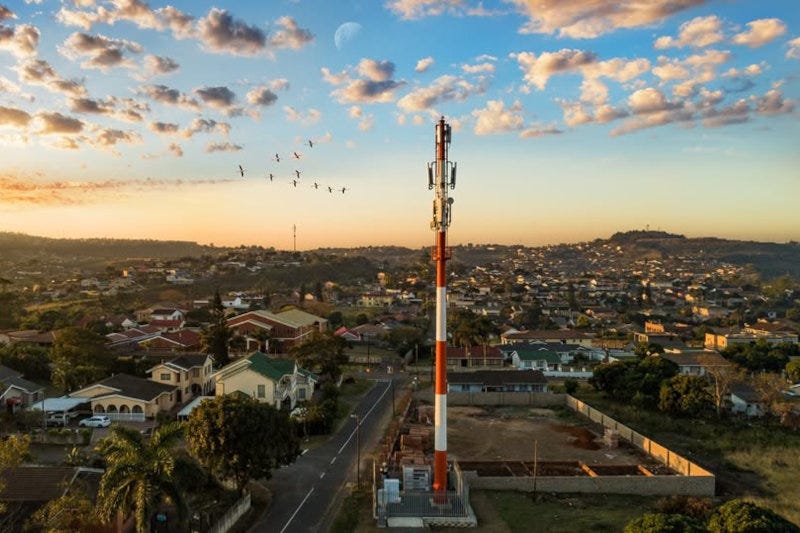
He acknowledged that telecom is a heavy-cost-incurring business where players spend cautiously and only invest in a clear-cut, calculated strategy. As the cost of building a telecom tower is the same in both rural and urban areas, the returns of the latter clearly outweigh the former.
“A tower costs the same to build whether a thousand people use it or ten thousand,” Dawid said, explaining that at the final stage of decision, “operators cover the areas that make commercial sense.”

A 2024 GSMA Report also backed the claim and extended the discussion. It noted that a base station in a remote rural area costs, on average, 35 to 40% more for an operator to run than in a city. The increased cost relates to higher energy costs that come from having to use more diesel, where power supply and grid access are often low.
Therefore, operators allocate scarce resources (equipment, labour, maintenance, spectrum) most efficiently, considering return on investment, customer satisfaction, quality of service and regulatory coverage requirements.
According to the GSMA report, what is left for operators is to “primarily focus their deployments on urban clusters and expand into moderate- and low-density areas in a phased manner.”
Leading African telcos such as Airtel Africa, Axian, Ethio Telecom, MTN, Orange, Safaricom and Vodacom are found to be embodying this strategy, according to the report.
Who then channels network coverage expansion for rural areas?
Also Read: African telcos struggle with balancing financial sustainability with growth.
Government intervention
Provision of network and internet connectivity is more than giving people access to make calls or surf the internet; it’s a strong force that keeps the soul of a country or region connected.
At moments of network outages or internet shutdowns, people are subjected to both material and immaterial losses resulting from disruption in business activities. In 2025, Africa lost $1.12 billion to government-imposed internet shutdowns, revealing the monetary cost of digital blackouts.
Telecom infrastructure is a national asset, which is why the Nigerian government designates telecom equipment as Critical National Information Infrastructure (CNII). Also in February, President Bola Tinubu said access to the internet is a right and not a privilege.
For such an essential service, government intervention is necessary, especially investment in rural areas, which are mostly unprofitable for African telcos.
Dawid noted that it doesn’t make commercial sense for telcos without some form of public support for investment in rural areas.
“Genuinely unserved areas need government support with clear, explicit terms — not vague obligations with no defined compensation,” he added.
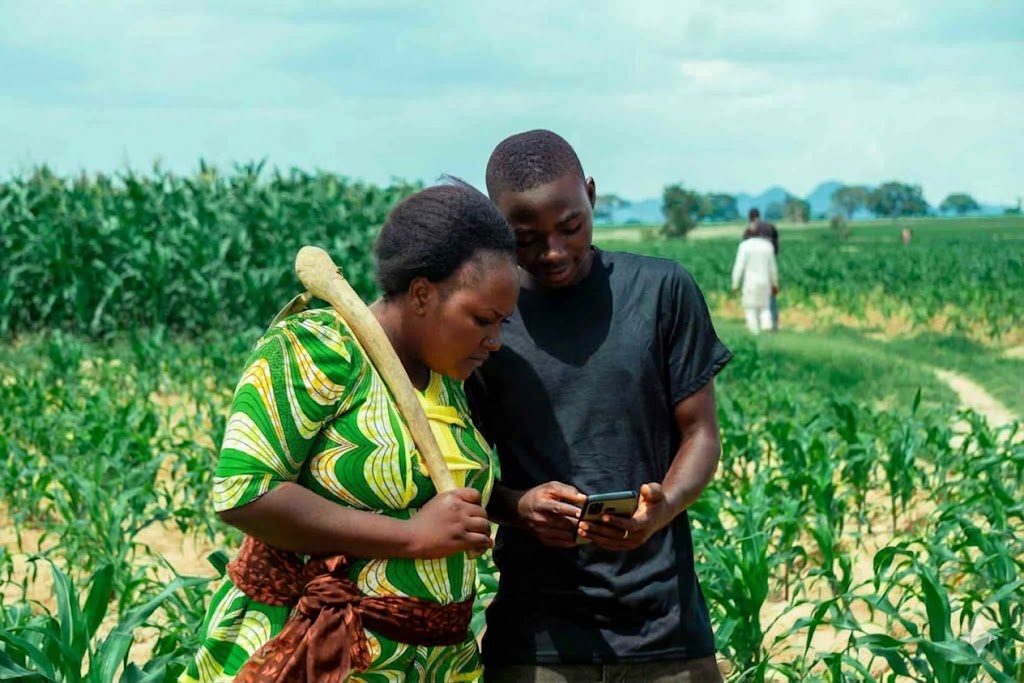
Rural internet penetration significantly lags behind urban areas. It continues to create a digital divide that limits access to education, healthcare, digital services and economic growth.
While urban centres enjoy 4G/5G high-speed, consistent coverage, rural areas frequently depend on older 2G/3G networks, with some African regions having less than 20–30% connectivity. This is due to high infrastructure costs, low population density, and poor power supply.
Access to financial services through fintechs and mobile money services, such as Airtel’s Smartcash, Safaricom’s M-PESA, MTN’s MoMo, Ethio Telecom’s Telebirr, is strengthening rural smartphone penetration and increasing demand for the internet. However, infrastructure gaps still slow down the region’s pace of digital adoption.
Dawid charged African governments to use dedicated funds to bridge core infrastructure gaps instead of pocketing or mismanaging funds.
“Most countries have universal service funds that were designed for exactly this problem, but the money often sits unspent due to poor administration,” he said.
The satellite and sustainable energy solution
Lately, direct satellite-to-cell services have been tipped to close the connectivity gap and digitally connect more Africans, especially in rural areas.

Direct satellite-to-phone service allows access to an uninterrupted internet, where telecom sites that malfunction are difficult to reach. It also strengthens network resilience by serving as an alternative during fibre cuts, power outages, or emergencies that disrupt mobile networks.
And Elon Musk’s Starlink has signed deals with telcos, such as MTN and Airtel, to deploy its satellite services directly to phones. Recently, MTN Zambia became the first African telco to successfully test the direct-to-cell services.
While acknowledging the model, Dawid expressed that satellite services and the direct-to-cell model are alleviating telcos’ high cost of operation.
“Satellite backhaul is changing this somewhat, connecting a rural tower via satellite rather than fibre makes previously unviable sites workable,” Dawid said, adding that satellite is only complementing and not directly replacing mobile operators.
Also Read: Nigeria is embracing satellite-to-phone service for 50% 5G coverage by 2030.
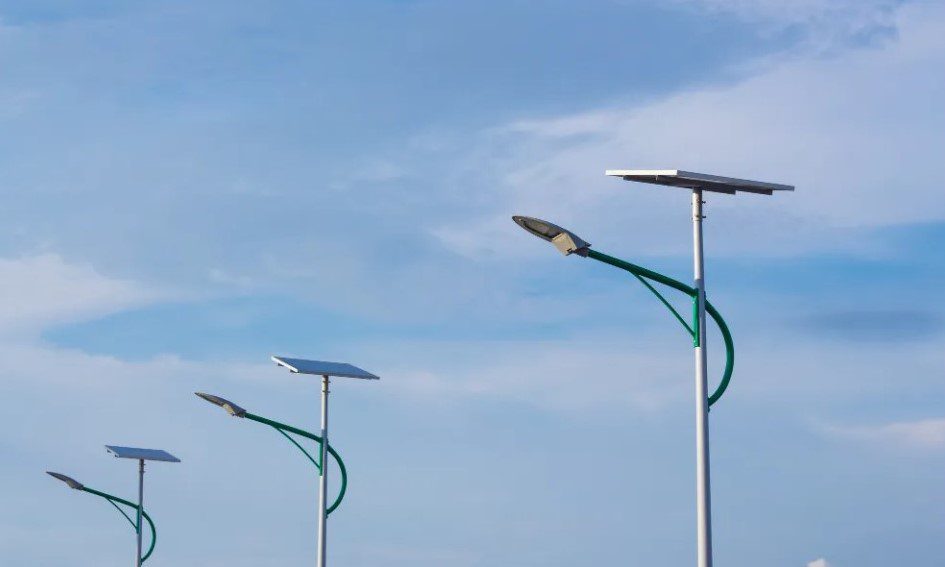
Another model is exploring a solar-powered telecom tower in a rural area. Aside from African climate conditions supporting this, it presents a cost-effective strategy.
Uganda is already championing this idea in its remote areas. The partnership with the European Investment Bank and AXIAN Telecom’s Solar4All project saw a $40 million investment to launch 500 sustainable sites.
The East-African country, in partnership with iSAT Africa, deployed solar-powered smart poles in rural Ugandan town centres. These towers provide WiFi connectivity, dedicated charging ports for mobile devices and street lighting.
African governments and telcos should leverage partnerships to build an infrastructure that keeps rural communities connected and digitally included. Public-private collaborations are the immediate answer to rural areas’ internet access.
