





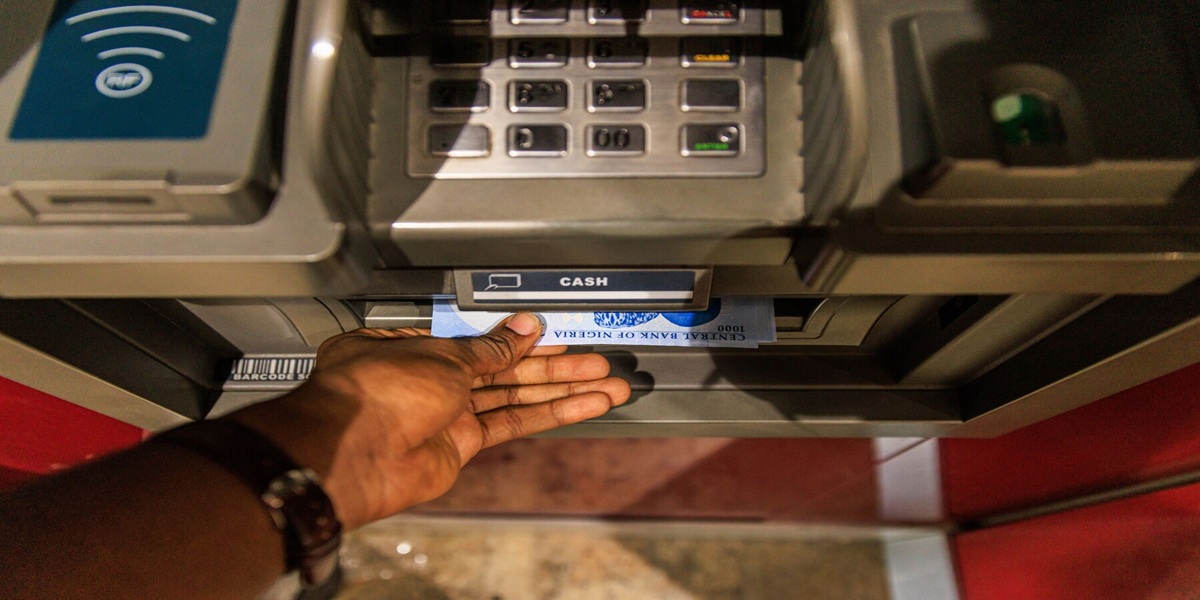
Here is something most Nigerians may not have heard of: Nobody has ever successfully hacked a Nigerian ATM card. Not once.
That is the claim of AIG Uche Henry Ifeanyi, the Chairman of INTERPOL’s African Working Group on Cybercrime. The cybercrime chief made the claim at the Adhere Compliance Frontline Forum held at the Radisson Blu Anchorage Hotel in Victoria Island, Lagos.
The forum was organised by Smart Comply, a compliance and risk management firm, and brought together bankers, fintech operators, law enforcement, and policy professionals to discuss the cost of financial crime in Nigeria.
“Do you know that our ATM card is the safest card in the world? There has not been any successful hack,” AIG Uche said.
He explained that when people lose money through ATM-related fraud, it is rarely because someone broke into the ATM card’s system. It is because a criminal tricked the ATM cardholder into giving out their PIN, their OTP, or other personal information.
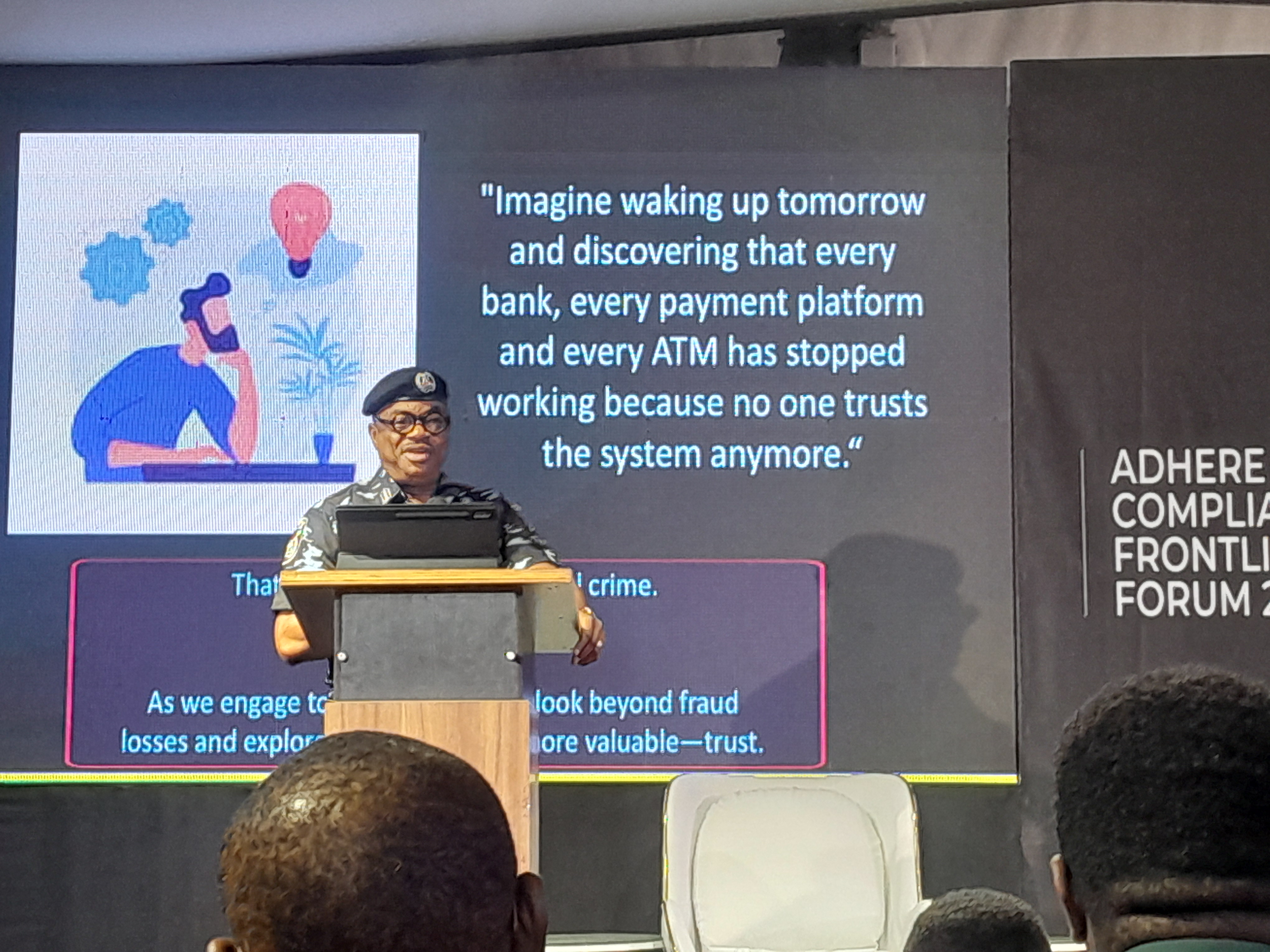
“What they do is the use of social engineering to manipulate victims to get their confidential information, and that is the only way you can infiltrate an ATM card in Nigeria,” he said.
In other words, the ATM card is not the problem. The con is.
AIG Uche is not just any police officer. He was appointed Chairman of the African Heads of Cybercrime Units by INTERPOL, a body that brings together cybercrime chiefs from 54 African countries. He was promoted to the rank of Assistant Inspector General of Police in March 2026, having previously served as Director of the Nigeria Police Force National Cyber Crime Centre (NPF-NCCC).
He has more than eight years of experience fighting cybercrime, and has led operations that cracked fraud rings in coordination with the UK’s National Crime Agency.
The real threat: robbers no longer carry guns
One of the most striking parts of his address was the shift he described in how crime is being committed.
He asked the audience a simple question: Can anyone name a Nigerian bank that was robbed at gunpoint since 2024? Nobody could. He then went further: 2025? 2024? The room stayed quiet.
That silence tells a story. Armed robbery at banks is not the threat it used to be. The robber who once walked into a banking hall with weapons has been replaced by someone sitting in a room with a laptop, a phone, and a router. “Armed robbers no longer carry instruments of violence. Armed robbers go with systems; they carry laptops, and they carry phones. That is the new trend,” he said.
The stats support this shift. While physical bank raids have declined, digital financial crime has surged. AIG Uche said ransomware attacks, where criminals encrypt a company’s data and demand payment to unlock it, are rising sharply in Nigeria right now.
Similar read: Nigeria ranks 12th in FBI’s foreign cybercrime complaints with 1,219 reports in 2025
Financial institutions are being targeted as you read this. Crypto money laundering and AI-powered fraud are also growing.
“The cybercriminals we have in Nigeria, financial fraud actors we have in Nigeria, are getting more vicious,” he said.
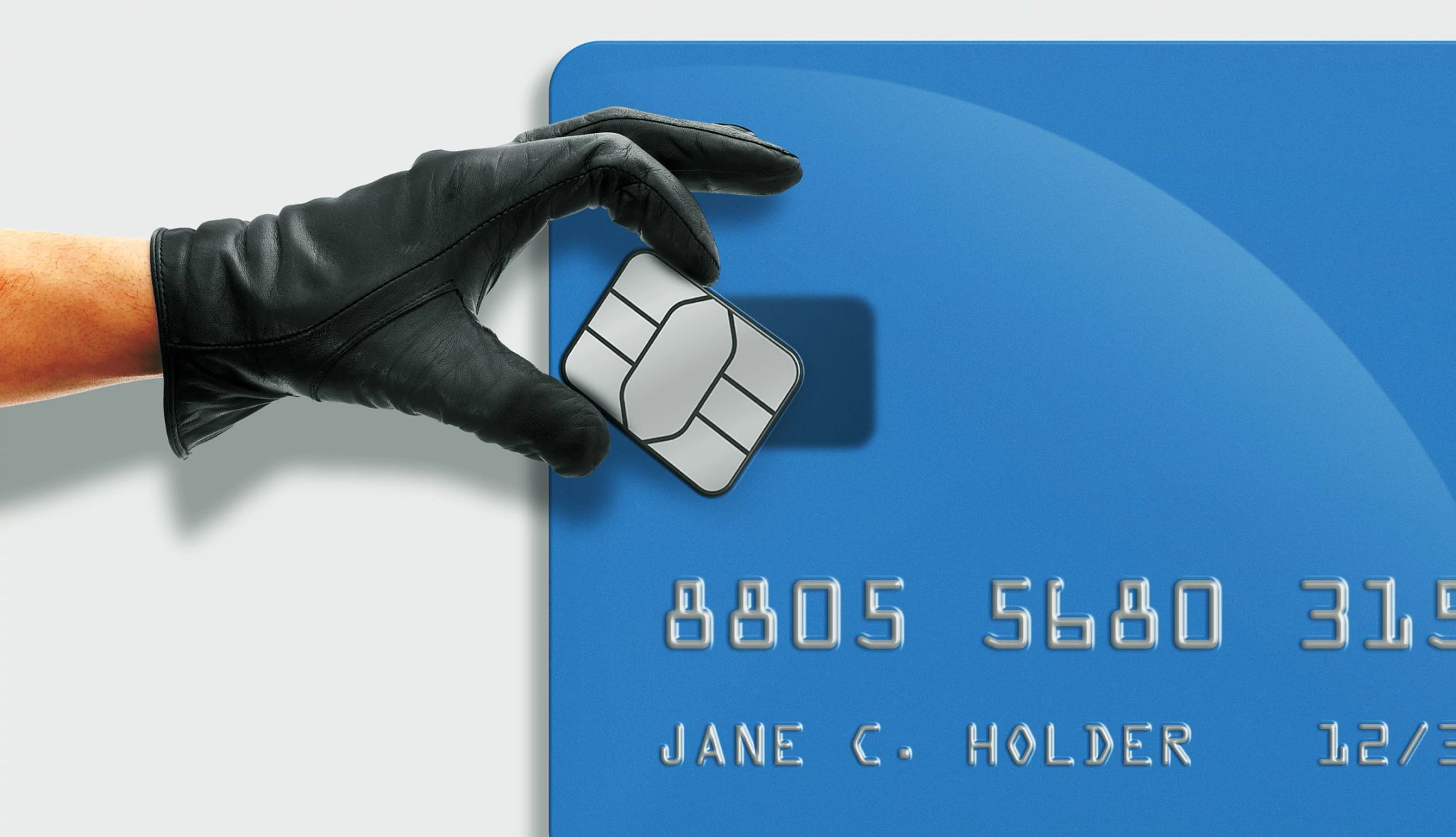
He shared one example from an operation he led before his promotion. The UK’s National Crime Agency gave his team intelligence on a fraud syndicate operating out of Aba. They said it would take at least a month to crack. He told them he could do it in 48 hours. Within 24 hours, his undercover team had sent back video footage. Within 48 hours, six fraud actors had been arrested. When they raided the location, what they found looked like a small tech office, routers, phones, laptops, multiple screens, ATM cards and a full setup for running scams. No guns. Just systems.
AIG Uche on why AI is the only real answer to solving ATM fraud and cybercrime
AIG Uche was direct about where law enforcement falls short. Criminals move with the speed of technology. Law enforcement moves with the speed of bureaucracy. To freeze a suspicious account in Nigeria, you still need to go to court, get a banker’s order, send it to the bank, wait for the bank to verify it back through the court, and only then can action be taken.
That process takes two to three weeks at a minimum. By that time, the money is long gone.
He said the only way to close this gap is for financial institutions and law enforcement to adopt AI-powered solutions that can detect suspicious patterns in real time, before transactions are completed rather than after.
“You can only use tech to fight crimes that are being generated with the use of tech,” he said.
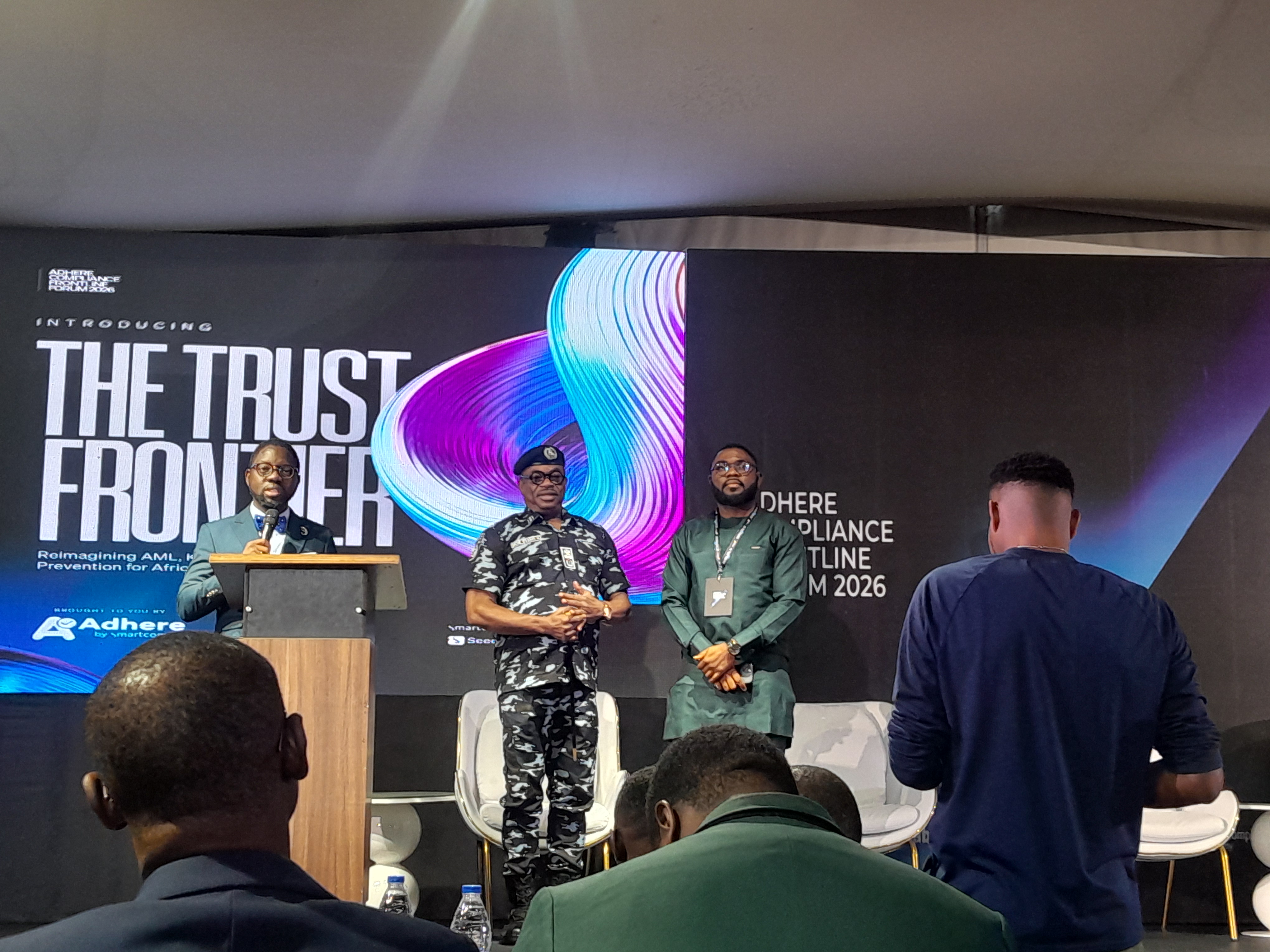
He also called distrust a “hidden tax”, one that every Nigerian pays whether they know it or not. When people stop trusting banks, institutions, or payment platforms, investment shrinks, financial inclusion drops, and the economy slows. That cost never appears on any financial crime report, but it is real, and it compounds daily.
The Adhere Compliance Frontline Forum, organised by Smart Comply, tackled important issues as Nigeria faces high levels of digital fraud and a financial system that is struggling to keep up. AIG Uche clearly stated: the building is still standing, but the fire is already inside the walls.
Also read: Cybercrime: FG deports another 51 foreign nationals, now 102 in total
