


There is a particular kind of grief that comes from knowing that a loved one didn’t make it, not from a lack of medicine or doctors, but because nobody could find the right hospital with the necessary treatments on time.
It happened again this February, when singer Ifunanya Nwangene was bitten by a snake while asleep in her Abuja home. A nearby clinic had no antivenom, and even when she was finally brought to Federal Medical Centre, Jabi, one of the two antivenoms she needed was unavailable. She died within hours, sparking national outrage over a healthcare system that so often fails its patients not at the point of diagnosis but at the point of navigation.
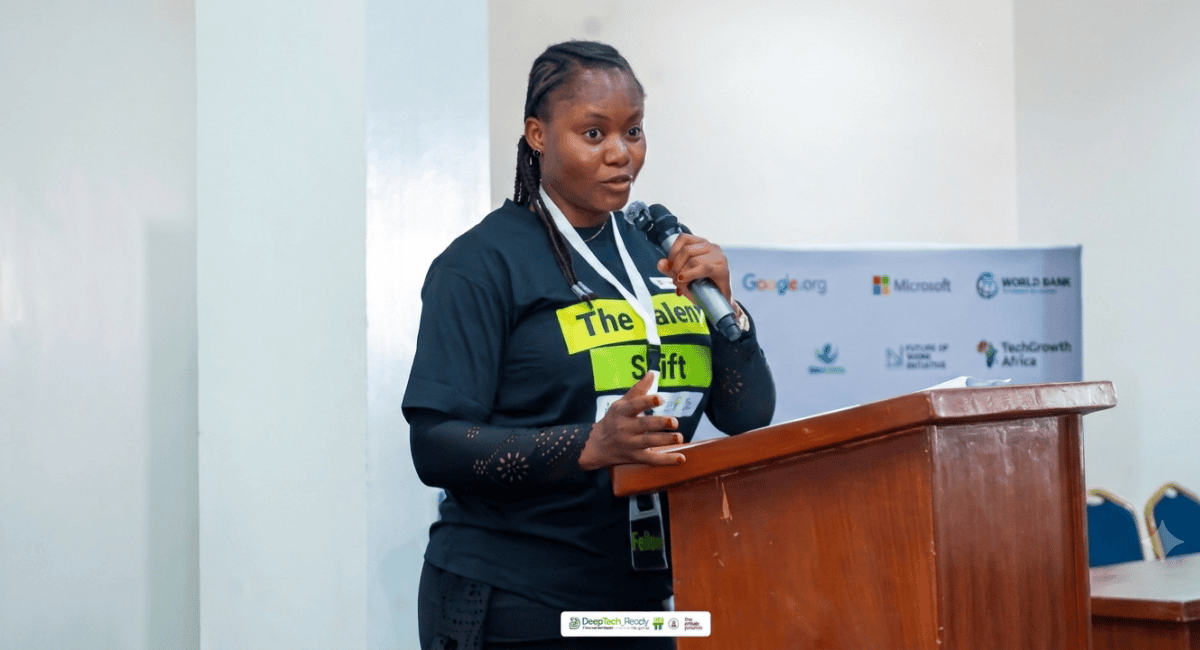
For Jideuno Chioma, that story became the moment a data science hobby turned into a mission.
“What if we have a system where I am in my house and maybe there’s an emergency, I will simply open my phone, press my location, and instead of going to facility A and being referred to facility B, I’ll just go to facility B straight from my home,” she said in a chat with Technext.
That question sparked the Malụmma Hospital Capability Routing System, an AI-powered hospital capability routing system now in MVP stage. The system is designed to send emergency patients not to the nearest hospital, but to the nearest one actually equipped to treat their specific condition.
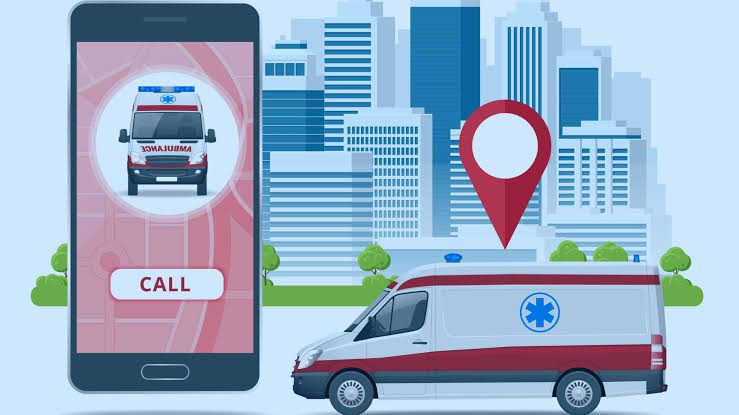
It is a modest-sounding idea with an ambitious mission. Closing the gap between “there’s a hospital nearby” and “there’s a hospital nearby that can help you”. A gap that has cost lives across Nigeria for years, largely because nobody has built the infrastructure to close it at scale.
Chioma’s journey into tech
Chioma’s route into tech didn’t run through a computer science degree or a well-funded bootcamp. Growing up in what she describes as a modest Nigerian household, she didn’t have the phone her mates carried. While friends upgraded to iPhones around 2015, she was still using a feature phone deep into her university years. Her first real brush with computing was watching people type fast in a cyber café and wanting, simply, to be like them.
That changed in 2023, during her NYSC posting in Cross River State, when a Google search surfaced the Federal Government’s 3 Million Technical Talent (3MTT) programme. She didn’t know what data analysis, UX design or cybersecurity actually meant. She enrolled anyway, choosing data analysis on a friend’s recommendation after research left her more confused.
What followed was not a smooth ascent. Her training centre, PSP Analytics in Calabar, required weekly physical classes; she often struggled to meet up due to transport fares. She had no laptop and coded her first lines of Python on her phone. Her supervisor, Joseph Edet, offered to lend her his own personal laptop just to keep her from quitting. She entered an International Women’s Day competition, hoping to win a laptop or tablet. She didn’t. Internship after internship rejected her for the same reason: no laptop, no entry.
For a while, she put the dream down. Not away, but down, the way you set aside something you intend to pick back up when you’re more stable.
In 2025, she applied for the Deep Tech Ready programme, this time choosing data science and machine learning. Two weeks in, her husband gave her a laptop as a gift. It sounds like a small detail. It wasn’t. It was the hardware equivalent of someone finally saying, ‘ Go on then.’
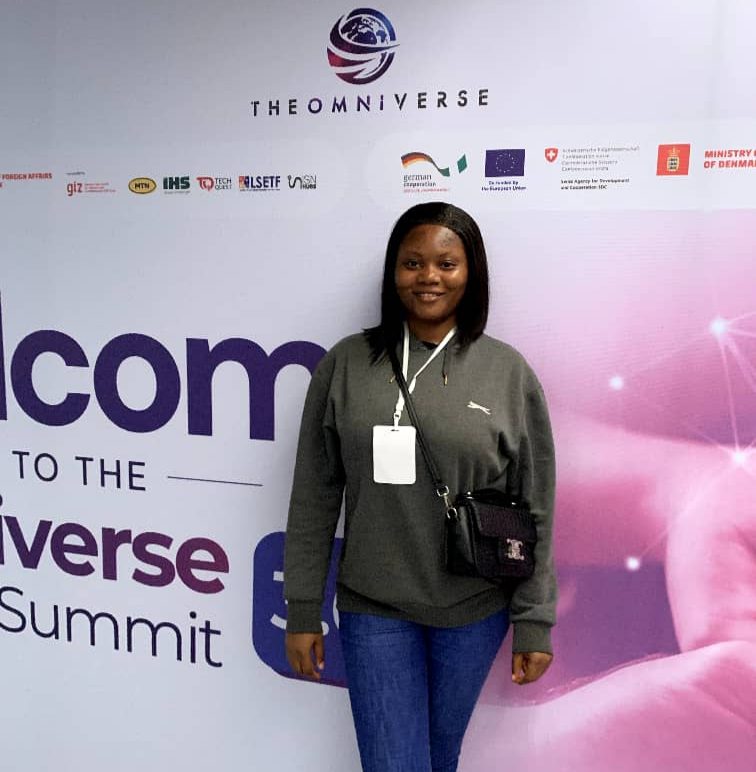
The spark happened at her physical learning cluster, 8 Gear Hub; she watched a graduating cohort member present a healthcare project he’d built using the skills from the programme. Something shifted. If he could do it, she reasoned, she could do more. Under mentorship from Wesonline, she deployed her first complete data science project on Streamlit, her first taste of building something end-to-end, not just learning about it in theory.
What Malụmma hospital routing system actually does
The Malụmma Hospital Capability Routing System, still at MVP stage, is built around one idea: location alone isn’t enough in an emergency. A patient opens the Streamlit-hosted app (no login required because seconds matter), enables Google Maps location tracking, and inputs their condition: a snakebite, a cardiac arrest, a severe fever or another form of medical emergency requiring ICU care. The system is meant to filter nearby facilities by actual capability, not proximity alone, and route the patient accordingly.
When asked about the challenges so far, she mentioned quality data and funding. Hospital capability data goes stale the moment a specialist leaves or a piece of equipment breaks down, and Chioma is candid about the risk of a system that looks authoritative but quietly misleads. Her answer leans on a verification loop rather than a one-time data pull: staff confirmation, patient feedback after the fact, and a ranking mechanism that rewards facilities for accuracy and removes those that mislead the platform. It’s an unglamorous, iterative fix to a problem that has no elegant shortcut; data quality in African healthcare infrastructure is a labour-intensive fight, not a one-off engineering task.
The rollout plan reflects that caution. Rather than an ambitious national launch, Malụmma will pilot in Lagos and Abuja, expanding only once the data holds up under real-world use. Chioma has already approached Data Science Network Nigeria for support in sourcing useful data, with plans to meet the federal Ministry of Health to further strengthen the relationship with hospitals that are still reluctant to share sensitive operational data.
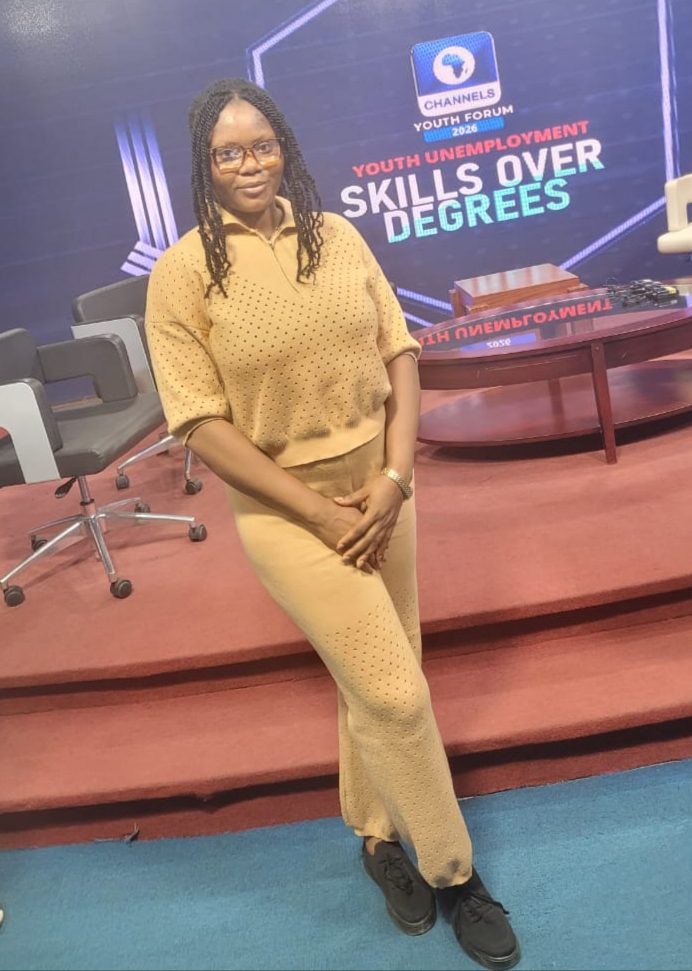
On finance, she says her instinct is again to resist urgency. Rather than fundraising off a pitch deck, she intends to seek capital only once she has a working prototype built on validated data, a sequencing choice that trades speed for credibility.
Technically, she describes the building process itself as her steepest climb, leaning on AI-assisted coding tools to debug what she doesn’t yet know how to fix by instinct.
Ask her what success looks like in five years, and she doesn’t talk about user numbers or valuation. She talks about hearing that someone survived because the app got them to the right hospital in time. That is the whole thesis, stated plainly: not disruption for its own sake, but a system that closes the gap between where help exists and where it’s actually needed.
“I know that it’s different when they say there is nothing we can do; maybe the hospital cannot handle the person’s condition,” Chioma says. “That is a very big difference from when the hospital can actually intervene, but the delay in getting there costs the person the care they needed at the moment it mattered most.”
