


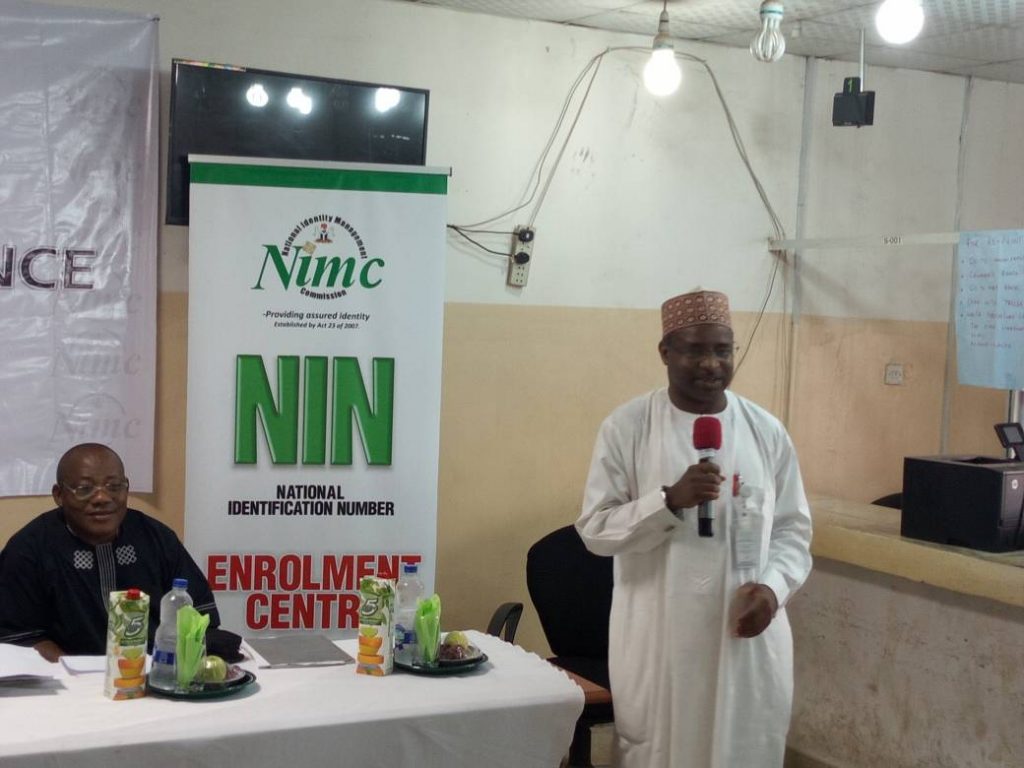
The National Identity Management Commission (NIMC) has revealed that Nigeria’s National Identification Number (NIN) enrolment has hit 117.3 million as of February 28, 2025. This represents a massive increase from 110 million in September 2024, an increase of over seven million registrations over five months.
The latest figures show that 56.5% of the registered are male (66.2 million), and 43.5% (51.07 million) are female. State by state, Lagos takes the lead with 12.6 million registrations. This is followed by Kano with 10.2 million and Kaduna with 6.9 million. These are no surprise, as Lagos and Kano are among the most populated states in Nigeria.
Other highly ranked states are Ogun (4.9 million), Oyo (4.5 million), and Katsina (4 million) while Bayelsa (758,111) and Ebonyi (990,775) rank the lowest.

Onboarding more people onto the NIN database is at the heart of Nigeria’s broader digital identity policy. As the state pressures citizens to link their NIN to access social services, financial services, phone usage, and so on, having a robust and accessible digital ID infrastructure comes to be seen as essential to digital governance.
Aside from enhanced security and transparency, streamlining the delivery speed of services nationwide is another expectation of the measure.
World Bank’s 2024 digital identity deadline
Nigeria’s digital identity initiative falls under the World Bank’s Digital Identity for National Development (ID4D) program. The program was formulated to increase the number of legitimate NIN holders among the citizens. The World Bank initially placed a deadline on Nigeria to enrol at least 148 million individuals by June 2024. However Nigeria was unable to meet this deadline, and hence an urgent request for an extension was submitted.
The World Bank and its co-financiers, the French Development Agency (AFD), and the European Investment Bank (EIB) have also pledged to extend project closure to 31 December 2026. An explanation paper issued by the World Bank says the extension provides Nigeria additional time to finalise major activities, such as the increase in Automated Biometric Identification System (ABIS) capacity from 100 million to 250 million NIN records, and deploying a new modular National Identity Management System (NIMS).

The slow pace of registration before the extension has had a broader impact. Government programs relying on the NIN, for instance, for bank account opening, SIM card registration, and cash transfer payments have been hit by inefficiency. With greater incorporation of the national digital ID system into government services, delays in registration can impair the services, thus slowing economic and social development.
Registration and the road ahead
The push for mass NIN registration by the Nigerian government has several challenges. For instance, some of the underperforming states have sparse registration infrastructure and low public awareness. Nevertheless, the roll-out of the project gives authorities time to overcome these issues, increase outreach, and introduce improved technological infrastructure facilitating high-speed and secure registration.
By accelerating the deadline to December 2026, Nigeria today has a prime window in which it can scale up its operations, invest in more sophisticated data collection methods, and ensure that all citizens are enrolled in the nation’s digital ID system. That, in turn, should free up simpler government-to-person (G2P) disbursements, more effective fraud prevention, and better public service delivery.
With the digital identity system poised to underpin a wide range of services, from telecommunication and banking to healthcare and social welfare, the stakes are high. The success of this project will have significant implications for Nigeria’s ability to tap into the global digital economy, enhance transparency in government matters, and catalyze national development in general.
The commission is currently targeting increased capacity for the system and enhancing public service delivery while providing resolution of all outstanding issues. This advancement will continue to be tracked as Nigeria progresses towards its revised targets within the extended time frame.
