



Foreign silicon currently processes nearly every algorithmic decision shaping Africa. Policymakers are drafting ambitious national AI frameworks, yet the physical engines required to train and run these systems sit in server farms across Europe and North America. You cannot legislate digital sovereignty if you do not control the hardware.
That vulnerability took centre stage in Abuja at the Government Leadership and AI Summit, which opened GITEX NIGERIA 2026. Held under the patronage of President Bola Ahmed Tinubu, the event brought together technology leaders and digital economy stakeholders to advance West Africa’s sovereign AI ambitions.
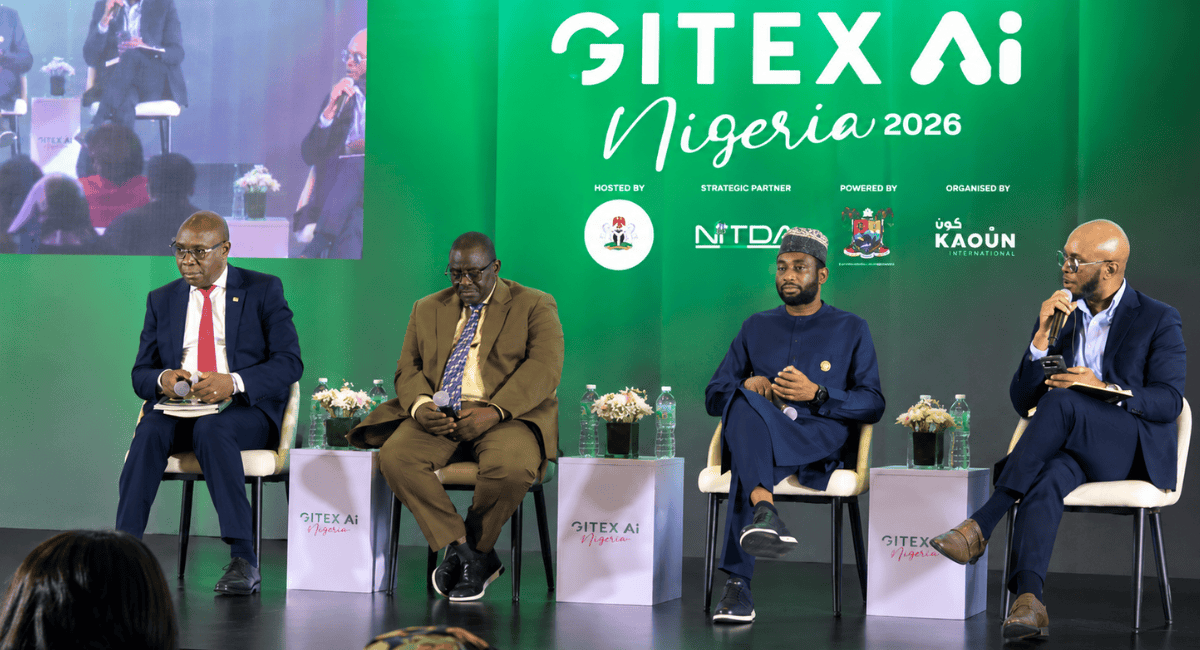
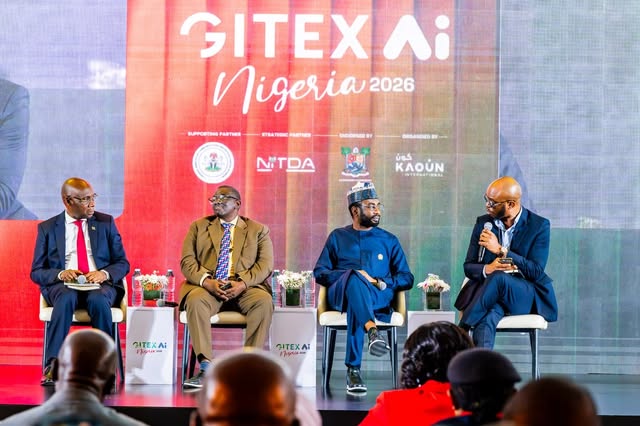
During a panel titled “Africa’s AI Compute Capacity: Sovereign or Shared?”, continental leaders debated whether African nations should build isolated infrastructure or pool resources into a regional compute grid.
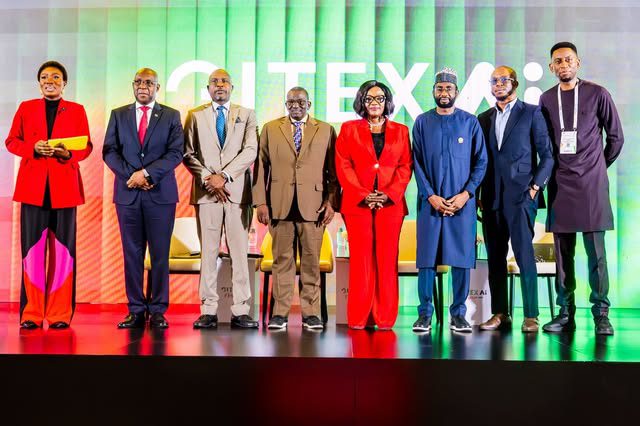
The discussion featured Kashifu Inuwa Abdullahi, Director General and CEO of the National Information Technology Development Agency (NITDA); Dr Lourino Chemane, President of the Board of Directors at Mozambique’s National Institute of Information and Communication Technologies; and Dr Mactar Seck, Chief of the Innovation and Technology Section at the United Nations Economic Commission for Africa (UNECA). The session was moderated by Nosike Nwigene, Strategic Communications and External Affairs Advisor at Nonfictly.

Abdullahi defined AI sovereignty as control over the technology stack.
“For me, when we talk about sovereignty, it comes down to control,” he said. “We must look at the technology stack end-to-end: digital sovereignty, not just isolated data or AI sovereignty.”
He outlined four layers: algorithmic control and model weights; local data governance and privacy; data centres and GPUs; and the underlying energy, water and connectivity required to operate them.
Africa remains weak across these capabilities. Abdullahi said countries lack sufficient ownership of the technology, reliable power and capital to deploy compute at scale.
But he argued that sovereignty does not require African countries to own every physical layer immediately. They can begin with data and algorithmic control, including how AI systems make decisions.
The alternative, he warned, leaves governments with “virtually no control over the underlying training data, no control over the decision-making weights, and no jurisdiction over the laws governing those platforms”.
National floors, regional ceilings
Chemane brought the capital challenge into sharper focus. While drafting Mozambique’s national AI strategy, he said the government recognised the difficulty of investing in large-scale data centres and high-performance AI compute.
His solution is neither complete national ownership nor total dependence on shared infrastructure.
Every country, he argued, needs a domestic floor for sensitive workloads. “Data is not merely a technical asset; it is a matter of national sovereignty, economic self-determination, and human rights.”
Countries that cannot afford hyperscale clusters should then plug into regional and continental infrastructure.
Chemane also called for inspectable AI systems. Mozambique is prioritising explainable, open-weight architectures that allow local researchers to examine and adjust models. Systems trained only on foreign data, he warned, can “hallucinate or misrepresent African realities”, making openness essential for adapting AI to African languages, institutions and public services.
Seck placed the infrastructure gap in continental terms. Africa has roughly 18% of the world’s population but only about 0.6% of global data-centre capacity. Closing the wider infrastructure gap could require about $100 billion annually, with $4 billion to $7 billion specifically for digital infrastructure.
“If we do not actively build our own foundations, we will remain perpetual consumers in the global digital economy,” he said.
He proposed regional AI factories, infrastructure funds and specialised hubs rather than a data centre in every country. Côte d’Ivoire, Nigeria and Senegal could serve as ECOWAS anchor backbones.
The model already exists in Africa’s energy sector. Cross-border systems such as the West African Power Pool and Southern African Power Pool demonstrate how countries can share infrastructure.
“We must apply the same cross-border model to high-speed data and compute backbones,” Seck said.
Data classification could unlock investment
For Abdullahi, the first practical step is statutory data classification.
Without clear rules, organisations risk feeding proprietary information into public AI models, while hyperscalers lack confidence that enough local demand exists to justify expensive facilities.
His proposed framework is straightforward: defence and national-security data remain in-country and on-premises; health records and citizen tax data stay in domestic cloud infrastructure; commercial data can use the hybrid cloud; and public or open research data can use the global public cloud.
Nigeria, he said, has moved beyond its privacy law with the Nigeria Data Protection Act, the National Data Strategy, data classification guidelines and the Sovereign Cloud Regulatory Framework.
“Privacy law alone is not enough,” he said, pointing to the European Union’s combination of the GDPR, Digital Markets Act, Digital Services Act and AI Act as a model for integrated digital sovereignty.
Also read: ‘We need our own AI’: NITDA DG calls for data and cloud independence at GITEX
Chemane identified power and cooling as Mozambique’s immediate infrastructure advantages, given its hydro, solar and thermal resources. He also highlighted legal certainty, cybersecurity, university compute labs, regulatory sandboxes and indigenous-language datasets.
Seck argued that investment should follow regional readiness. Southern Africa needs more foundational infrastructure and clean energy. West Africa, anchored by Nigeria, should prioritise regional data-flow rules and advanced skills. North Africa can focus on research partnerships and market access.
Across all three regions, he said, Africa needs “a unified African voice in global tech governance”.
The panel’s conclusion was therefore hybrid. Countries need a sovereign floor for sensitive data, cybersecurity and algorithmic oversight, while sharing the compute, power, connectivity and talent infrastructure that smaller economies cannot finance alone.
The 1-on-1 with UNECA’s Dr Mactar: Interrogating the Pan-African compute vision
After the panel, I sat down with Seck for an exclusive interview to test the vision’s operational reality.
Asked whether Africa was genuinely building sovereign capacity or simply renegotiating terms with foreign technology giants, he was unequivocal.
“If you want digital sovereignty in computing, you need to build your own infrastructure,” he told me.
But he acknowledged that building massive data centres in every African country is unrealistic. His answer is sub-regional collaboration: an interconnected African data centre backbone supported by the African Continental Free Trade Area, potentially becoming operational within the next five years.
Power remains the biggest constraint. High-density AI data centres require massive amounts of reliable electricity and cooling water. I challenged Seck on the contradiction between ambitious AI roadmaps and unreliable power grids across much of the continent.
He said energy and digital infrastructure cannot be developed separately. Governments must expand energy capacity alongside data centres because the two are inseparable from Africa’s broader economic development.
We also discussed the tension between data localisation and the borderless datasets needed to build effective AI models.
Seck argued that protectionist policies alone are insufficient without physical infrastructure and technical skills. Sensitive national security and financial data may need to remain within borders, but countries must classify their data clearly to determine what can be shared regionally.
The message from the panel and my subsequent conversation with Seck was clear: Africa’s AI ambitions cannot remain confined to policy documents.
The continent needs pooled capital, stronger energy infrastructure and shared compute capacity. A regional AI grid could give African countries something they currently lack: greater control over the infrastructure powering their digital intelligence.
