





In February 2025, Nigeria’s data watchdog looked ready to draw a line in the sand across African tech regulation. The Nigeria Data Protection Commission (NDPC) hit Meta with a $32.8 million remedial fine and a sweeping set of enforcement orders for harvesting the personal data of roughly 60 million Nigerians without proper consent, mishandling minors’ information, and shipping citizen data across borders without authorisation.
Days later, representatives from Meta, Google, and Microsoft sat across from the same commission in Abuja to discuss “collaboration”. By October 2025, the fine was dead, killed off in a secret settlement that neither side bothered to announce to the public.
One year after that closed-door pact, and weeks after a September 2026 investigation by The Continent and the Pulitzer Centre’s AI Accountability Network documented at least 17 contractually opaque engagements between US technology giants and Nigerian state institutions since 2024, the pattern has hardened into a governing doctrine.
Abuja performs regulatory toughness on stage, retreats into private chambers to sign away its leverage, and emerges months later to announce “capacity-building” partnerships with the very corporations it was meant to police. That document established the pattern; this piece asks a different question: what has happened since this unholy handshake, and what should Nigerians be watching for next?
The full scale of the NDPC’s retreat stayed buried in the registry of the Federal High Court in Abuja for months. Signed on 30 October 2025 by Babatunde Bamigboye, the NDPC’s Head of Legal, Enforcement and Regulations, and Anna Benckert, Meta’s Vice President and Associate General Counsel for International Legal, the agreement was rubber-stamped as a consent judgment on 3 November 2025.
Privacy law firm Olumide Babalola LP first pulled the certified true copy from the court registry for a piercing legal review in January 2026, before Premium Times broke the details to the wider public in late April.

What emerged from those court filings was not a compromise. It was a wholesale surrender.
After 17 months of taxpayer-funded investigation that produced a 58-page Final Order, the commission walked away from the $32.8 million penalty. On paper, the only money Meta agreed to hand over was the legal bill the NDPC racked up defending the judicial review suit Meta itself had filed in February 2025, back when the company was threatening to shut down Facebook and Instagram in Nigeria.
A clause-by-clause reading of the consent judgement shows how methodically the regulator’s teeth were pulled.
Where the original orders required Meta to “immediately seek express, specific and unambiguous consent” before tracking Nigerians for behavioural advertising, the settlement asked the company to “use its best endeavours” to improve its practices. Where the original directive ordered Meta to halt unauthorised cross-border data transfers and seek regulatory approval before moving Nigerian user data abroad, the settlement substituted a vague nod to “safeguards for cross-border transfers”.
As data protection lawyer Iliya-Ezekiel Ndatse pointed out, the watered-down promises left in the document, such as lawful processing, impact assessments, and transfer safeguards, simply restate baseline obligations already written into the Nigeria Data Protection Act (NDPA) 2023.
Even that hollow promise may be legally unenforceable. In its January 2026 analysis of the certified court record, Olumide Babalola LP exposed a fatal drafting contradiction at the heart of the pact: while Clause 8 lists new compliance obligations for Meta, Clause 9.2 sets aside the Final Orders and discharges the company from “all claims, demands, actions, causes of action, contracts, obligations, suits, debts, costs, liabilities”.
Worse still is that the deal is buried under criminal law.
Section 49 of the NDPA makes non-compliance with NDPC orders a criminal offence punishable by a fine or up to a year in prison. By settling the matter privately and inserting an explicit disclaimer that the pact did not constitute “an admission of liability or wrongdoing”, the commission sidestepped criminal accountability and denied 60 million affected Nigerians an official finding of a violation.
Across Europe, Meta has been hit with more than €2.7 billion in GDPR fines, including a €481 million civil damages order in Spain in 2025. In Nigeria, the state settled. Meta paid zero in penalties, and the citizens whose data fuelled the breach were left without a legal springboard to claim a single naira in compensation.
When the regulated funds the regulator
The consent judgement was not the end of the transaction; it was the prelude to a rebrand.
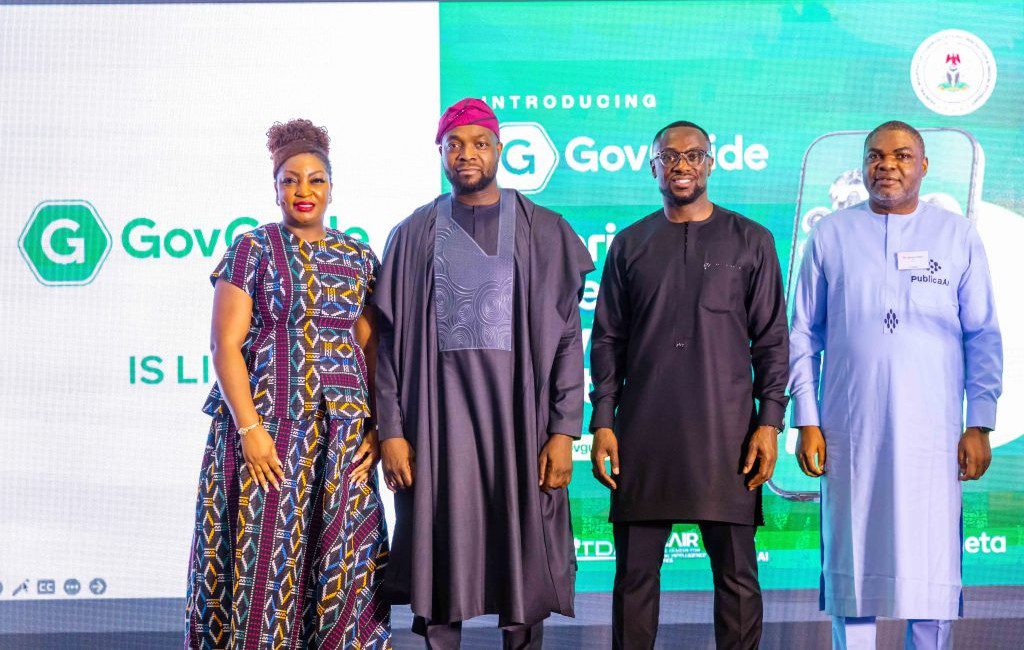
On 21 May 2026, the Federal Ministry of Communications, Innovation and Digital Economy (FMCIDE) and the National Centre for Artificial Intelligence and Robotics (NCAIR) stood alongside Meta to launch GovGuide Nigeria, a multilingual AI chatbot running on WhatsApp and the web in English, Hausa, Igbo, and Yoruba, built on Meta’s open-source Llama models.
Eighteen days later, on 8 June 2026, the NDPC and Meta unveiled the Meta-Supported Initiative for Data Protection (M-SIDP), a two-year programme covering public privacy awareness, the training of data protection officers, and ecosystem security.
Defending the pivot, NDPC spokesperson Itunu Dosekun described the commission’s philosophy as “remediation over punishment”, telling the press that the regulator exists “to promote businesses, not to spoil businesses”.
That framing masks a textbook case of regulatory capture. When the primary target of a country’s largest data enforcement action begins underwriting the regulator’s public-facing programmes, the power dynamic flips. European data authorities regularly attach compliance commitments to enforcement actions, but those commitments sit on top of nine-figure fines, not in place of them.
By trading a statutory penalty for a corporate-sponsored awareness drive, the NDPC tied its own public outreach budget to the goodwill of the platform it is supposed to investigate.
Tracy Keshi, project manager for Tech Justice and Digital Governance at the Centre for Journalism Innovation and Development (CJID), diagnosed the precedent clearly: waving away the fine strips away immediate regulatory pressure, teaches multinational tech firms that Nigerian penalties are open for backroom barter, and leaves compliance dependent on Meta’s voluntary goodwill.
The sovereignty deadline that the state refuses to model
Nothing exposes the double standard in Abuja’s digital policy quite like comparing its treatment of erring global tech giants with the ultimatum it handed Nigerian startups one week after the M-SIDP launch.
On 15 June 2026, the Central Bank of Nigeria (CBN) issued a circular, ordering all banks, payment service providers, mobile money operators, and fintechs to store and manage all domestic payment transaction data inside Nigeria’s borders by 1 January 2027.
Two months later, in August 2026, the National Information Technology Development Agency (NITDA) rolled out its National Sovereign Cloud Initiative and inaugurated a task force to certify local cloud and AI infrastructure providers.
For indigenous fintech founders, the CBN’s January 2027 deadline is a brutal, expensive engineering scramble. The directive covers not only primary transaction ledgers but also audit logs, disaster-recovery backups, observability pipelines, and encryption keys.
It also exposes the physical limits of local cloud infrastructure: while Amazon Web Services operates a Local Zone in Lagos, that edge node is parented by AWS’s Cape Town region in South Africa and does not natively host core managed databases like Amazon RDS or standard S3 storage without costly on-premises AWS Outposts racks.
A Nigerian startup that leaves a nightly backup bucket in Cape Town or an encryption key in a foreign key-management service after New Year’s Day faces regulatory sanctions.
Nigeria’s digital future cannot be governed by two sets of rules: a punitive statute book for local builders and a velvet rope for Silicon Valley. Every time a ministry signs an undisclosed pact or a regulator trades a statutory fine for a corporate-sponsored workshop, the state rents out a piece of its sovereignty for the price of a loaf.
The nation’s digital sovereignty cannot be rescued by waiting on compliant regulators or benevolent tech giants. If Abuja insists on shaking hands with Big Tech in the dark, the job of the Nigerian press and civil society is to force open the doors and expose every secret deal.
