





For the better part of a decade, the unspoken prerequisite for building a successful Nigerian technology startup was a willingness to pretend you were not Nigerian on paper. The playbook was brutally pragmatic and universally accepted: you incorporate in Delaware, park your intellectual property in a foreign holding company, and court global venture capital from a safe legal distance. Your engineering talent and operations could remain in Lagos, but the economic value of your innovation was systematically exported. Now, the Nigerian government wants to rewrite that playbook.
On Thursday, 17 September 2026, President Bola Tinubu slammed an 180-day hourglass on the table, directing the Minister of Industry, Trade and Investment, Dr Jumoke Oduwole, to deliver a fully operational roadmap for Nigeria’s Digital Free Zones.
According to the President, “Nigeria has the talent, enterprise, and ambition to build companies that can compete anywhere in the world. Our responsibility as a government is to ensure that Nigerians do not have to leave Nigeria or rely on other jurisdictions to realise that potential.”
The directive, pushed through the Presidential Steering Committee, is positioned as a radical structural shift. The administration’s stated endgame is to halt the exodus of local tech startups and their intellectual property to foreign jurisdictions, while simultaneously anchoring global capital firmly on Nigerian soil.

But grand policy pronouncements in Nigeria require scrutiny. When an administration plagued by profound macroeconomic crises suddenly fast-tracks a utopian tech haven, the ecosystem must ask whether it is looking at a genuine economic lifeline or a carefully calculated political manoeuvre.
Itana – Digital Free Zone: From physical hubs to digital oases
To understand the ambition of the 180-day ultimatum, one must look at the machinery already in motion. The vehicle for this policy is the Initiative for the Promotion of Digital Free Zones in Nigeria (DiFZIN), a consortium pushing to transition Nigeria’s free trade zone strategy from physical manufacturing and commodities to purely digital and service-oriented exports.
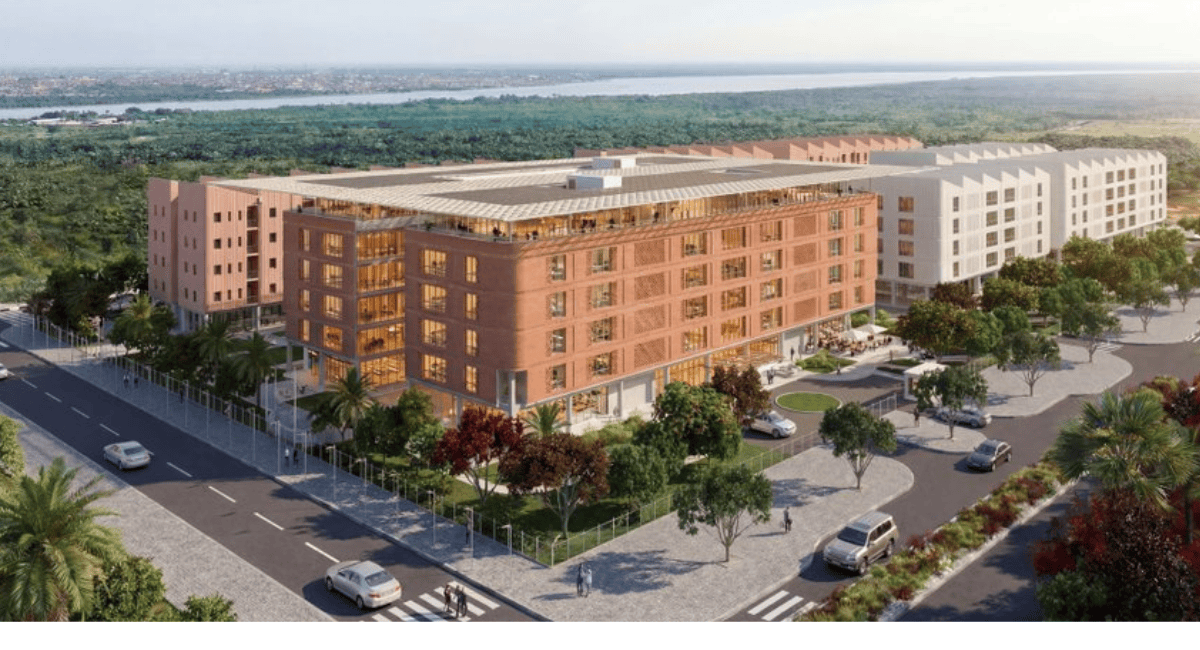
The physical and conceptual vanguard of this movement is Itana, a $500 million innovation city rising within Alaro City in Lagos, backed by the formidable financial muscle of the Africa Finance Corporation (AFC). Pioneered by local tech veterans, including Luqman Edu, who serves as CEO of Itana and Executive Director of DiFZIN; Future Africa founder Iyinoluwa Aboyeji; and Chief Operating Officer Coco Liu, the project recently secured a landmark operating licence from the Nigeria Export Processing Zones Authority (NEPZA).
What Itana and DiFZIN are building is not merely a co-working space on steroids. They are attempting to engineer a ring-fenced regulatory oasis. The pitch to founders is compelling: an environment that offers the tax incentives, capital repatriation guarantees, and immigration facilitation of a traditional free trade zone, but completely digitised for a remote-first world.
What this actually means for the ecosystem
If this framework functions as advertised, it fundamentally rewrites the structural DNA of the Nigerian startup. Historically, the offshore flip to Delaware or the UK was rarely a founder’s first choice; it was a non-negotiable mandate from foreign investors who viewed Nigeria’s regulatory, legal, and currency environment as radioactive.

A fully operational Digital Free Zone offers a middle ground. For founders, it presents the possibility of retaining significantly more equity by bypassing the complex legal gymnastics, double-taxation risks, and exorbitant legal fees required to maintain foreign holding structures.
For the broader talent pool, the initiative serves as the highest level of state validation for the remote-work economy.
The President made this intention explicit, stating his desire that “a young Nigerian in Kano, Enugu, Warri, Minna, Maiduguri or Ibadan be able to work for a global company without leaving home.” The policy promises to formalise a structure where local engineers, product managers, and designers can seamlessly service foreign companies, drawing on the wider framework of the African Continental Free Trade Area (AfCFTA) to turn Nigeria into the primary talent exporter for the continent’s digital economy.
Yet, the gap between a presidential directive and a functional Nigerian policy is historically where good ideas go to die. The 180-day timeline is aggressively, perhaps impossibly, optimistic.
Building a functional digital free zone is not merely about signing executive orders or breaking ground at Alaro City. It requires the absolute, frictionless alignment of inherently adversarial government agencies. The Central Bank of Nigeria (CBN), the Nigerian Revenue Service (NRS), the Ministry of Interior, and local arbitration bodies must all surrender specific jurisdictions to make this work.
The Nigerian tech ecosystem has repeatedly watched inter-agency turf wars strangle progressive policies, the Startup Act being a prime example of legislation that remains largely dormant due to implementation bottlenecks.
Furthermore, this sweeping policy conveniently ignores the macroeconomic elephants rampaging through the broader economy. A regulatory sandbox means very little if the country outside its walls is plagued by severe foreign exchange volatility and crippling inflation.
It remains entirely unconfirmed whether companies anchored in these digital zones will be fully immunised from naira devaluation. Can a startup in a Digital Free Zone freely repatriate millions of dollars without suddenly facing arbitrary CBN hurdles or liquidity crunches? Until the government provides unassailable, legally binding guarantees that survive changes in central bank leadership, foreign venture capital will continue to demand the safety net of Delaware.
Is Tinubu offering Nigeria’s tech community a Greek gift?
This brings us to the sharpest, most cynical reading of the President’s 180-day mandate: the political timing.
Nigeria’s macroeconomic environment is currently punishing businesses and ravaging the purchasing power of the middle class. The administration has faced severe, sustained backlash from young Nigerians over the removal of fuel subsidies and the floating of the naira. The tech ecosystem, driven by a vocal, highly organised, and globally connected youth demographic, has historically been a thorn in the side of the political establishment.
With the 2027 election cycle looming on the horizon, the sudden, hyper-focused attention on a utopian tech haven feels meticulously timed. One must critically ask: Is President Tinubu not simply offering the Nigerian tech ecosystem a Greek gift?

By championing a policy that directly appeals to founders and remote tech workers, the administration may be executing a strategic play to court the support, or at least neutralise the opposition, of the country’s most influential youth demographic ahead of the polls.
The timeline, however, exposes the true political strategy. Nigeria’s general elections are exactly 120 days away. By setting a 180-day deadline for the implementation roadmap, the administration has neatly pushed the accountability window past the 16 January 2027 ballot box. They have engineered a scenario where they can campaign heavily on the glossy promise of digital wealth and job creation right now, without having to actually launch the operational framework or fix the structural economic cracks before voters make their choice.
The administration has correctly diagnosed the disease; the flight of Nigerian intellectual property and capital is a critical economic wound. But prescribing a 180-day bureaucratic cure, while potentially soliciting future political goodwill, grossly underestimates the underlying condition of the patient. Real innovation requires economic stability, not just a digital sandbox to hide from the chaos outside.
