


US-based solar company Renewvia Energy Corp. is expanding its African operations with a $750 million plan focused on Uganda, Rwanda, Ethiopia, and the Democratic Republic of the Congo. The company believes off-grid solar infrastructure is one of the most practical ways to address the continent’s ongoing challenges in electricity access.
Renewvia Africa’s CEO, Trey Jarrard, announced in an interview with Bloomberg that the company will expand its operations to target 2.1 million new connections in four countries.
This expansion goes beyond their current work in Kenya and Nigeria, where they have been setting up solar-powered mini-grids for communities without access to the main electricity grid.

A mini-grid works by combining solar panels with battery storage to create a localised power network capable of serving an entire community, from homes and schools to health centres and small businesses, without any connection to a national grid.
For the hundreds of millions of Africans who live far from cities and towns, where it is too expensive to extend the main power grid, small local power grids are a practical solution.
The impact of these systems has been measurable. In a survey of 2,658 Nigerian and Kenyan households and business owners conducted before and after connecting to Renewvia’s mini-grids, the median income of Kenyan households quadrupled.
Communities that had previously spent hours walking to collect water were able to install electricity-powered pumps. Women were also able to participate in new income-generating activities previously unavailable to them.

A large solar market and a funding challenge for Renewvia
Renewvia is focusing on the Democratic Republic of the Congo, Ethiopia, and Uganda because these countries already use a lot of hydropower. However, the hydropower plants are usually located in specific areas, leaving rural communities without electricity. Renewvia believes that solar mini-grids can provide electricity to these underserved rural communities.
Securing the $750 million expansion funding will be Renewvia’s primary challenge. While they recently raised $10 million from Claritas Capital for growth in Kenya and Nigeria, this four-country expansion is significantly larger in scale and cost.
Also read: Sun King moves big on Ethiopia with $150 Million solar investment
In recent years, development finance institutions and private investors have shown increasing interest in Africa’s mini-grid sector. This is partly due to the improved business prospects resulting from lower solar technology costs. Additionally, national governments are realising that waiting for the main power grid to expand to every community is not practical. However, the amount of funding available is still far less than what is required.
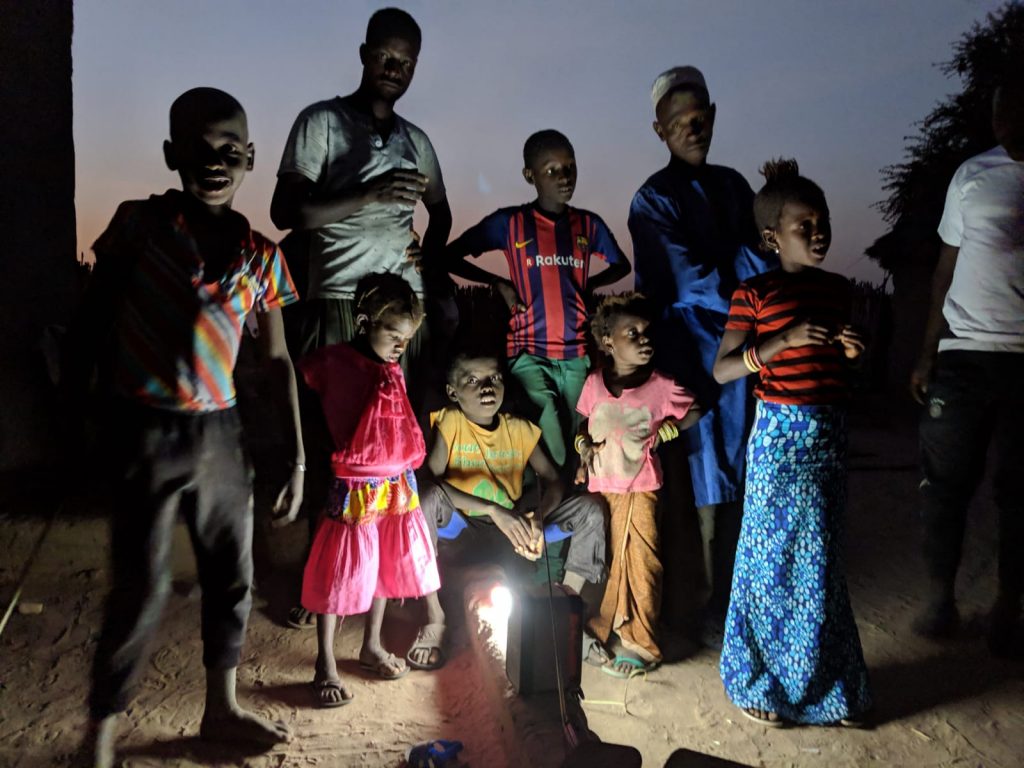
Nigeria alone has seen over $900 million in solar investments since 2018, with a further $750 million announced through a multinationally funded programme, yet experts say the gap between what is required and what is available remains significant.
Whether Renewvia can secure the necessary funding for its upcoming expansion will reveal two things: how interested investors are in funding large off-grid infrastructure projects, and whether the company can expand quickly enough to take advantage of the opportunities available to it.
