



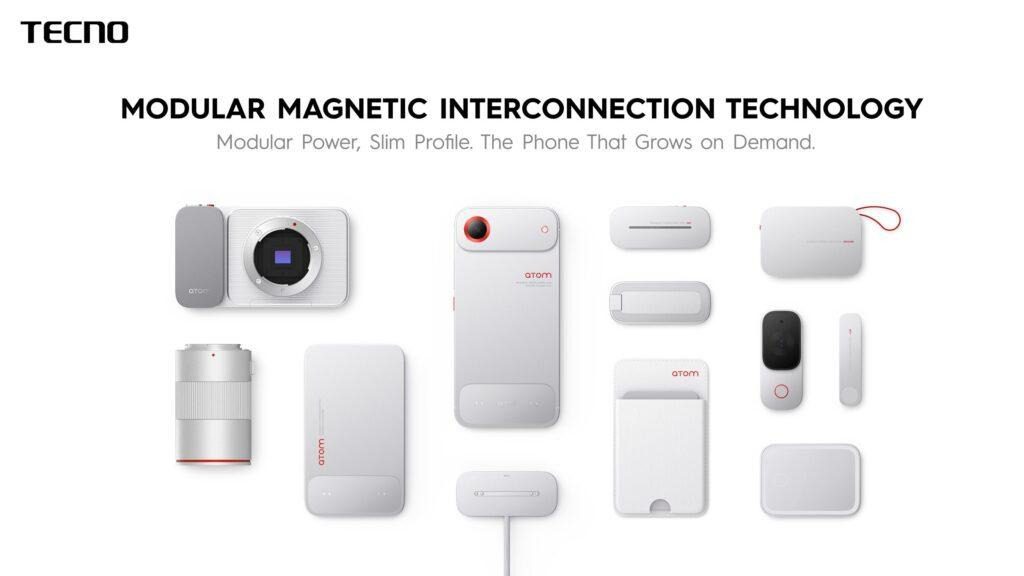
At Mobile World Congress 2026, TECNO introduced a range of concept devices aimed at solving a growing challenge in mobile tech: modern AI demands more processing power than traditional smartphone designs can comfortably support.
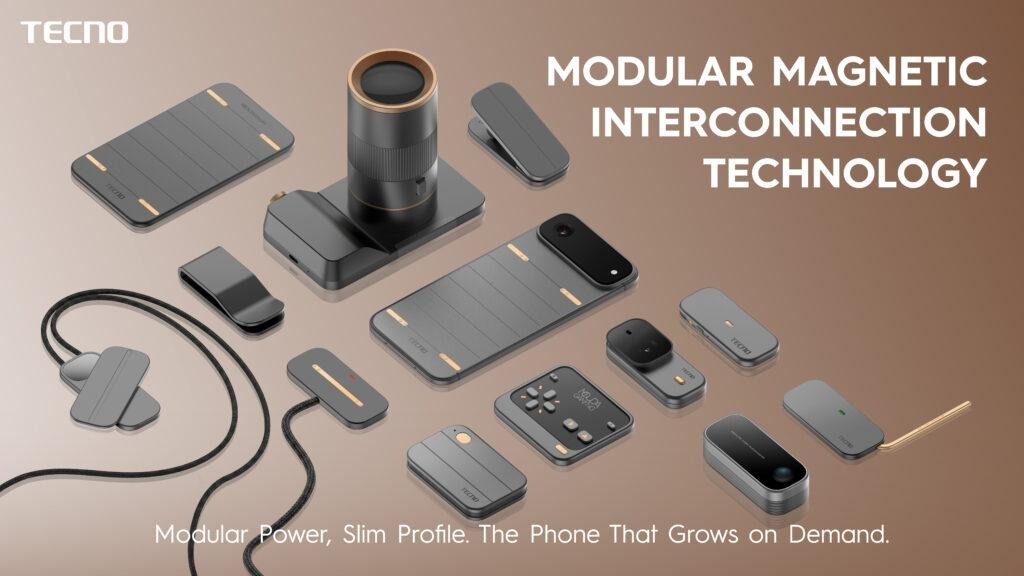
To address this, the company unveiled its Modular Magnetic Interconnection Technology, a system that allows users to attach external hardware components to their phones using magnets. These add-ons include stackable battery packs, clip-on action cameras, and telephoto lenses, all designed to connect seamlessly through intelligent interfaces. The idea is simple; keep the phone slim and lightweight for everyday use, while enabling extra performance or features only when needed.
Two Design Directions
TECNO presented this modular concept in two distinct styles. The ATOM edition emphasizes minimalism and refined aesthetics, while the MODA edition leans into a more expressive, tech-forward look. Despite their visual differences, both versions share the same philosophy: offloading bulky components to external modules instead of cramming everything into a single device.
POVA Ecosystem for Gaming
The company also expanded its ecosystem with the POVA lineup, built with gamers in mind. One highlight is POVA Metal, described as the first full-metal unibody 5G smartphone, powered by a Snapdragon chipset.
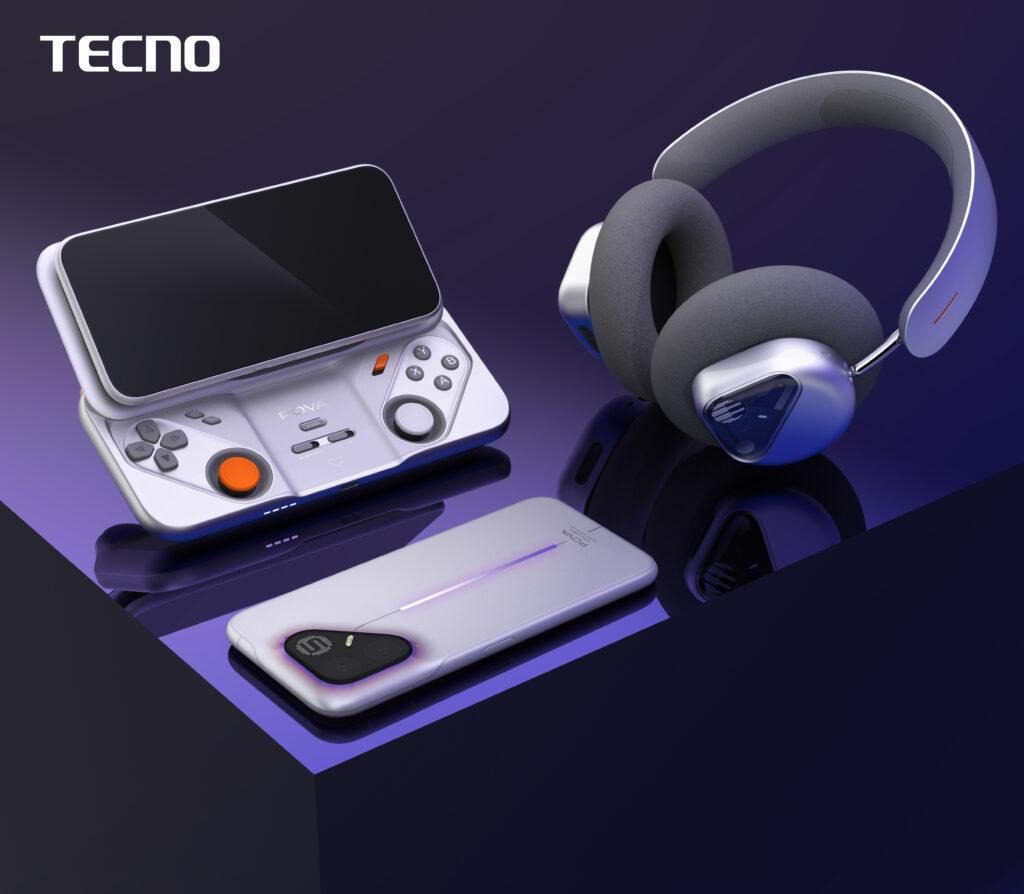
Another standout is the POVA Controller Slide, a gaming controller designed for both FPS and MOBA titles. It supports adjustable viewing angles between 0 and 25 degrees, includes targeted aiming features, and even offers wireless charging capabilities.
Completing the setup are POVA-branded earphones, featuring a futuristic look with dot-matrix lighting to match the rest of the ecosystem.
AI Processing Moves On-Device
TECNO also introduced its Edge-Side AIGC Preview Concept, which enables AI processing directly on the device rather than relying on cloud connectivity. This approach reduces latency and allows features to work even without internet access.
In collaboration with Arm Holdings, TECNO developed a Style Transfer Preview system that minimizes flickering and instability seen in older implementations. The result is a smoother, real-time preview experience running at 30 frames per second with split-screen functionality.
The company further optimized AI models to run fully offline while maintaining visual quality and consistent performance.
Experimental Designs and Materials
Among its more experimental ideas is AI EINK, which uses electronic ink technology to create a paper-like display. The back panel can dynamically change color by analyzing surroundings through the camera, allowing users to customize the look via an app.
Another concept, POVA Neon, introduces ionized inert gas lighting to produce a glowing effect on the device.
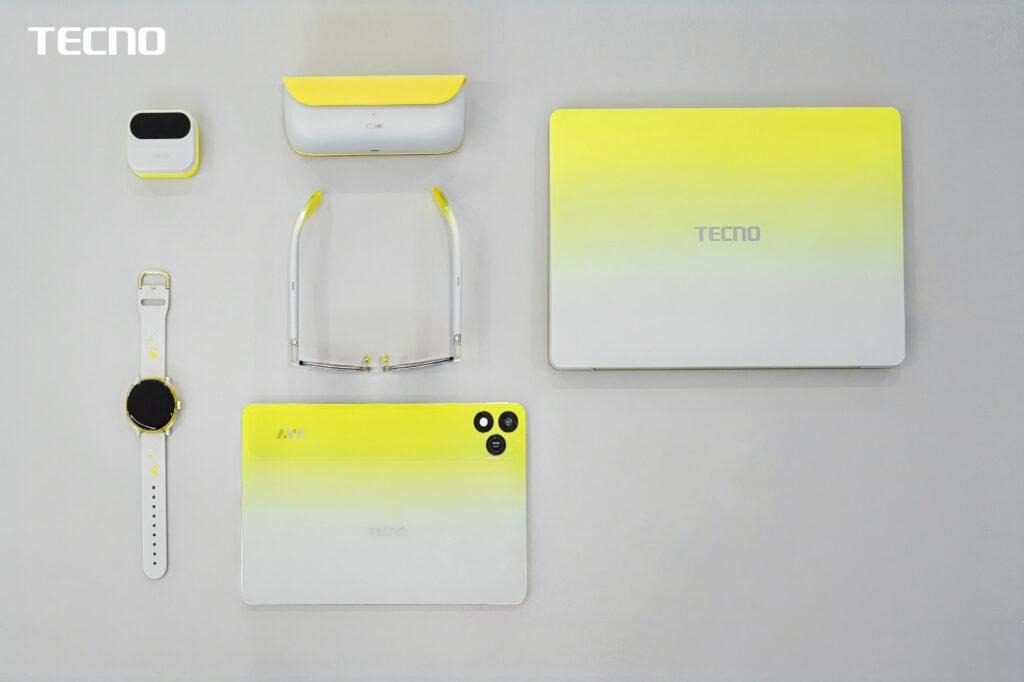
TECNO also showcased a broader Concept Design Suite, including a laptop, tablet, smartwatch, earbuds, smart glasses, and a power bank. All follow a “Music in Motion” design theme, blending citrus yellow accents with urban gray tones.
Ultra-Thin Tri-Fold Innovation
One of the most striking reveals was the TECNO Phantom Ultimate G Fold, a tri-fold smartphone designed to be both durable and extremely slim. It features a 9.94-inch display that folds inward twice, protecting the screen when closed.
The device measures just 11.49mm when folded and an ultra-thin 3.49mm when fully opened. Its hinge is built from ultra-high-strength steel rated at 2,000 MPa, while the back uses a 0.3mm Titan Fiber material for added durability without extra bulk.
TECNO displayed all of these concepts during the event at Fira Gran Via in Barcelona, giving a glimpse into how modular hardware and on-device AI could shape the future of smartphones.
For more updates, follow TECNO on Facebook, Instagram, and X(Twitter).
